Black Power: The Politics of Liberation – A Must-Read for the Black Community

As a proud member of the Black community, I know the weight of the world sometimes feels like it’s on our shoulders. But what if I told you that there’s a powerful book that can inspire change in the way we view ourselves, our community, and our future? Black Power: The Politics of Liberation by Stokely Carmichael (Kwame Ture) and Charles V. Hamilton has not only changed how I think about our past, but it’s also given me tools to reshape the future for my family and the generations to come.

When I first picked up this book, I didn’t know what to expect. But as I read, I felt a wave of empowerment wash over me. It reminded me that we as Black people have always had the strength and the ability to create our own future — one that is driven by pride, unity, and self-reliance. This is not just a history lesson — it’s a revolutionary call to action for our people, a message that still resonates powerfully today.

What Makes This Book So Important for the Black Community Today?

Published in 1967, Black Power is more than just a manifesto for political change; it’s a blueprint for Black empowerment. In a time when integration was seen as the ultimate goal, Carmichael and Hamilton said, “No. Our goal should be to build and strengthen our own communities.” They rejected the notion that our worth or place in society is defined by how we fit into systems created by others. Instead, they proposed the idea that we, as Black people, must work together to create the world we want to see — one that is built on our own terms.

For the Black community today, these messages are just as relevant. Whether it’s in the workplace, in schools, or in our neighborhoods, we still face systemic racism, poverty, and inequality. But this book teaches us that we don’t have to wait for others to give us permission to rise. We have the power to make our own change, to control our own destinies, and to teach our children to do the same.

The Core Lessons of Black Power: What We Can Learn

  1. Black Autonomy is Key
    One of the most powerful ideas in Black Power is the call for Black autonomy. Carmichael and Hamilton argue that true liberation can only be achieved if we have control over our political, social, and economic lives. This means not waiting for the government or other institutions to do the heavy lifting for us, but instead creating our own institutions and support systems. Imagine Black-owned businesses flourishing, schools that teach our history accurately, and organizations built to protect and uplift us. That’s the vision this book presents.
  2. Unity Among Us is Our Strength
    In this book, Carmichael and Hamilton stress the importance of solidarity. The struggles we face as a community are interconnected, and they can only be overcome when we come together. Whether it’s Black families supporting each other or Black entrepreneurs working together to build economic power, Black Power emphasizes that we need to stop seeing ourselves as individuals struggling alone. Our unity is our greatest strength.
  3. Pride in Our Blackness
    In a world that often tries to diminish our value, Black Power teaches us the importance of embracing who we are. It reminds us that our Blackness is beautiful, and it is powerful. It encourages us to learn and love our history, celebrate our achievements, and take pride in the fact that we come from a rich and diverse heritage. This pride is not just for us as individuals, but for our families and communities as a whole.
  4. Challenging a Broken System
    Perhaps the most radical idea in the book is the call to challenge the existing systems of power that have historically oppressed us. The idea that our goal should not be to integrate into a system that was never meant for us, but rather to create new systems where we thrive. Black Power forces us to think critically about the structures we work within and to ask, “Are they really serving us, or are they holding us back?” This question is just as important today as it was in 1967.

How “Black Power” Can Help the Black Community Today

In today’s world, where inequality and discrimination are still rampant, Black Power offers us a roadmap for change. It provides not just ideas, but actions we can take to strengthen ourselves and our communities. For parents like me, it’s essential to teach our children the lessons of self-reliance, unity, and pride. By sharing these ideas with them, we are setting them up for success in a world that often tries to tell them they are less than.

For those of us who have struggled to make our voices heard, this book gives us the courage to stand tall. It reminds us that we are not powerless in the face of adversity. We can, and must, fight for our rights, our freedom, and our futures. It’s a message that transcends time, inspiring us to fight for justice and build a world where Black people can truly flourish.

Closing Thoughts: A Call to Action

If you’ve been looking for a book that speaks directly to the heart of the Black experience — one that empowers, inspires, and challenges you — Black Power: The Politics of Liberation is exactly what you need. It’s not just about the past; it’s about how we move forward, together. For Black families, this book is a crucial tool for raising our children to be proud of who they are, to value their heritage, and to understand their true power.

As we continue to face challenges in society, Black Power reminds us that we are not alone. Our strength is in our unity, our pride, and our ability to create change on our own terms. Let’s keep pushing, let’s keep fighting, and let’s keep believing in the power of who we are.


Looking for a book that empowers the Black community? Black Power: The Politics of Liberation by Stokely Carmichael & Charles V. Hamilton is a must-read! Discover how it teaches pride, autonomy & unity today. #BlackPower #BlackCommunity #Empowerment #BookReview #BlackHistory

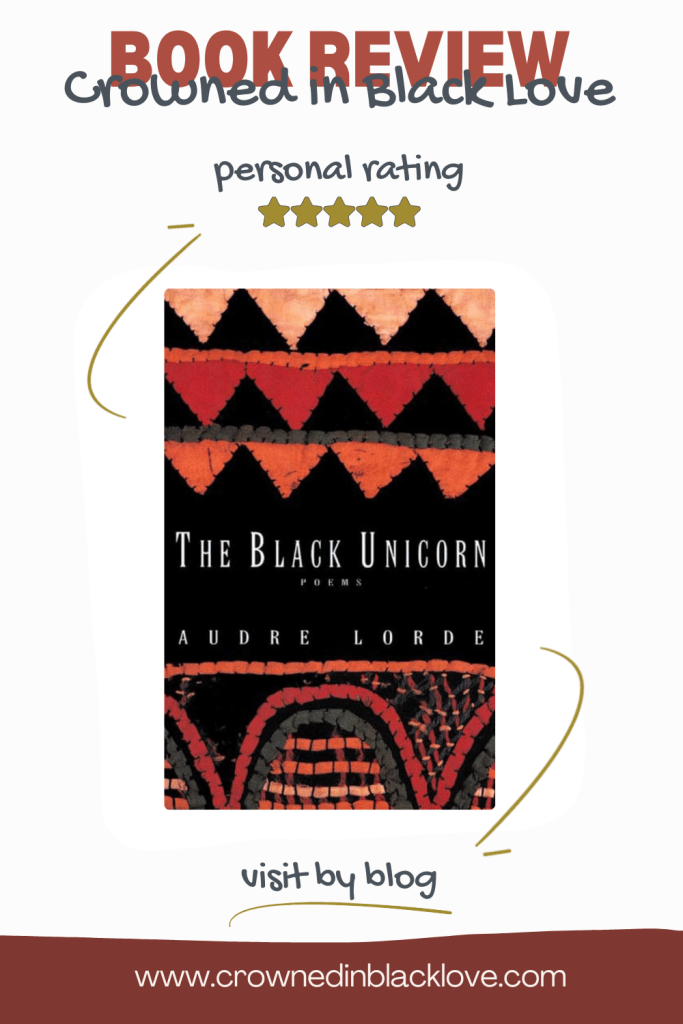
Book Review: The Black Unicorn: Poems by Audre Lorde

A Celebration of Black Identity, Resistance, and Empowerment

Audre Lorde’s The Black Unicorn: Poems is a brilliant and thought-provoking collection that explores the complexities of identity, race, gender, and sexuality. As one of the most significant voices in feminist and Black literature, Lorde’s poetry is not only an artistic expression but also a form of activism that challenges societal norms, explores the intersections of oppression, and celebrates the beauty and strength of marginalized identities. This collection is an essential read for anyone interested in understanding the multifaceted nature of Black identity, the struggle for equality, and the power of poetry as a tool for activism.

Why The Black Unicorn is Essential for the Black Community:

Audre Lorde’s work is deeply rooted in the experiences of marginalized communities, particularly Black women. The Black Unicorn offers an unapologetic exploration of the ways race, gender, and sexuality shape personal identity and the way others perceive and treat marginalized groups. Lorde’s poems are an affirmation of the strength of Blackness, womanhood, and queerness, and they serve as a call to resist societal norms that attempt to diminish or erase those identities.

In a world where these identities are often targeted for oppression and exclusion, The Black Unicorn offers Black communities a space to affirm their worth, claim their voices, and embrace their complexities. The poems in this collection resonate with a universal message: that Black people, particularly Black women and queer people, deserve space to exist in their full complexity and power.

Key Themes in The Black Unicorn: Poems:

  1. Identity: One of the central themes in Lorde’s collection is the exploration of personal and collective identity. Through her poems, Lorde challenges narrow and limiting definitions of identity, particularly as it relates to race, gender, and sexuality. Her work calls for the celebration of identity in all its dimensions, and for Black people to unapologetically embrace who they are.
  2. Race and Feminism: Lorde’s poetry is at the intersection of race and feminism, where she addresses the unique struggles faced by Black women, particularly in a society that marginalizes them both as women and as Black people. Through her powerful verse, she articulates the pain, joy, and resilience that define the Black woman’s experience in America. Her work serves as a challenge to both white feminism and traditional Black masculinity, calling for the empowerment of Black women and the recognition of their strength.
  3. Activism and Resistance: The Black Unicorn is a powerful work of activism. Lorde’s poetry confronts injustice head-on and advocates for resistance against oppression. Through her exploration of racism, sexism, and homophobia, Lorde calls for radical change, inspiring her readers to challenge the status quo and fight for equality and justice. Her words are a reminder that activism is not only a political act but also a deeply personal one, rooted in identity, love, and the will to resist.
  4. Poetry as Empowerment: Lorde’s use of poetry is more than just artistic expression — it’s a form of empowerment. Through her vivid imagery and compelling language, she provides a space for marginalized voices to be heard and recognized. Her poems reclaim space for Black people, particularly Black women, in a world that often seeks to silence them. Each poem in this collection is an act of self-affirmation and resistance, offering a space for readers to find strength and power in their own identities.

Lessons from The Black Unicorn: Poems for the Black Community:

  1. Embrace Complexity: Lorde’s work teaches the importance of embracing the complexity of Black identity. Black people are not monolithic, and The Black Unicorn encourages individuals to celebrate the multiplicity of identities within the community. Whether it’s race, gender, sexuality, or other aspects of one’s identity, Lorde’s poems highlight the importance of owning all parts of oneself.
  2. Resist and Reclaim Power: Lorde’s poetry encourages the Black community to resist oppressive forces and reclaim power over their narratives. Her poems are a call to arms for marginalized groups to take control of their stories, challenge oppressive structures, and demand justice. Through activism, art, and self-expression, Lorde shows that resistance is not only necessary but also deeply transformative.
  3. Celebrate Black Womanhood: Throughout The Black Unicorn, Lorde celebrates Black womanhood in its fullness, recognizing the beauty and strength that exists within Black women despite the oppressive forces that seek to diminish them. Her poems offer a powerful affirmation of Black women’s worth, calling for their voices to be heard and their experiences to be valued.
  4. Find Strength in Marginalized Voices: Lorde’s collection underscores the importance of listening to and amplifying marginalized voices. She emphasizes the power that comes from acknowledging and celebrating difference, whether that difference comes from race, gender, sexuality, or other aspects of identity. In a world that often ignores or suppresses these voices, Lorde encourages her readers to recognize the strength in diversity and to celebrate the power that comes from the margins.

How The Black Unicorn Can Help the Black Community Today:

In today’s world, where the struggles for racial justice, gender equality, and LGBTQ rights are ongoing, Lorde’s work is a vital tool for empowerment. The Black Unicorn offers Black communities a chance to reflect on the complexities of their own identities and the societal forces that continue to oppress them. It provides a powerful model for resistance and reminds Black people that their voices matter. Whether you are looking for personal affirmation, political motivation, or simply a celebration of Blackness, this collection offers invaluable lessons in resilience, activism, and pride.

Closing Thoughts:

The Black Unicorn: Poems by Audre Lorde is a timeless and profound collection that speaks to the complexities of Black identity, the strength of marginalized voices, and the power of activism. Lorde’s unapologetic exploration of race, gender, and sexuality serves as both a personal reflection and a collective call to action for the Black community. Her poetry is not just for reading but for living, for embracing, and for resisting. It is an empowering read for anyone seeking to understand the nuances of Black life and the ongoing fight for justice and equality.

Discover the powerful poetry of Audre Lorde in The Black Unicorn: Poems – a celebration of Black womanhood, activism, and identity. A must-read for anyone embracing the strength of marginalized voices. #BlackPoetry #Feminism #Activism #BlackIdentity

Book Review: Black Marxism: The Making of the Black Radical Tradition by Cedric J. Robinson

A Deep Dive into Black Radical Thought and Resistance

In Black Marxism: The Making of the Black Radical Tradition, Cedric J. Robinson challenges us to rethink how we understand Black resistance movements and their relationship to Marxist theory. This seminal work dives deep into the historical and ideological development of Black radicalism, showing how it has always been both a response to class struggle and, more fundamentally, a rejection of the oppressive structures of white supremacy. Robinson’s book provides a powerful critique of traditional Marxist thought while shedding light on the specific experiences and contributions of Black radical activists throughout history. For the Black community, this book offers both a history lesson and a critical framework for understanding modern struggles for justice.

Why Black Marxism is Essential for the Black Community:

In his analysis, Robinson argues that Black radicalism cannot be fully understood through the lens of traditional Marxism alone. While Marxist theory is often used to explain class struggle, Robinson asserts that it fails to address the unique ways in which Black people have resisted white supremacy, colonialism, and racial oppression. This is crucial for the Black community, as it pushes us to recognize that the fight for justice is not solely about class—it’s about dismantling racial hierarchies that have existed for centuries. By understanding how Black radicalism intersects with Marxist theory, we can better strategize our activism and push for structural change in a way that truly addresses the root causes of racial and economic inequality.

Key Lessons from Black Marxism for the Black Community:

  1. Black Radicalism is a Response to White Supremacy: Robinson makes a compelling argument that Black radical thought cannot be understood in isolation from the realities of white supremacy. Unlike traditional Marxism, which focuses primarily on class struggle, Black radicalism is also about resisting a racialized social order that has systematically marginalized Black people. For the Black community, this insight is essential because it highlights that the fight for equality is both a racial and class issue. This intersection of race and class must inform how we approach activism today.
  2. Challenging Traditional Marxist Thought: One of the most important contributions of Robinson’s work is his critique of classical Marxism. He argues that traditional Marxist thought, with its focus on class struggle, cannot fully explain the ways in which Black people have fought for justice. By focusing on the intersection of race and class, Robinson invites the Black community to rethink how we engage with mainstream political ideologies and encourages us to develop a more nuanced understanding of our struggle for liberation.
  3. Historical Roots of Black Radical Thought: Robinson delves into the history of Black resistance, highlighting key figures and movements that have shaped the Black radical tradition. From the Haitian Revolution to the work of figures like Marcus Garvey and the Black Panther Party, this book emphasizes the importance of recognizing and celebrating the long history of Black activism. For the Black community, this historical context provides both inspiration and guidance for contemporary efforts to combat racial injustice.
  4. The Importance of Black Intellectual Thought: Robinson’s exploration of Black Marxism shows how intellectuals like Du Bois, C.L.R. James, and Frantz Fanon contributed to the development of Black radical thought. This history of intellectual resistance reminds the Black community that activism is not just about protests in the streets—it’s also about the power of ideas. By embracing Black intellectual traditions and contributing our own voices to the conversation, we can continue to shape the future of resistance movements.
  5. The Relationship Between Capitalism and Racism: Robinson argues that capitalism and white supremacy are inextricably linked. The exploitation of Black people in the U.S. and throughout the world cannot be understood without recognizing how racial oppression has been embedded within capitalist systems. For the Black community, this connection offers a critical lens through which to view economic inequality and systemic injustice. It underscores the importance of building a movement that addresses both economic and racial oppression simultaneously.

How Black Marxism Helps the Black Community Today:

  • Black Marxism encourages the Black community to think critically about the structures of power that perpetuate inequality. By understanding the historical relationship between race and class, we can develop more effective strategies to challenge the status quo.
  • Robinson’s work provides a powerful foundation for activists who want to connect the dots between economic exploitation and racial oppression. It offers both a theoretical framework and practical examples of how to resist systems of injustice.
  • By recognizing that Black radicalism is rooted in a long history of resistance, the Black community can draw strength from past struggles and continue to push forward for justice in the present.

Closing Thoughts:

Black Marxism by Cedric J. Robinson is a profound and thought-provoking exploration of the ideological roots of Black radicalism. By examining the intersection of race and class, Robinson challenges us to rethink how we approach activism and resistance. For the Black community, this book is not just a history lesson—it’s a call to action to continue fighting against the systems that have long oppressed us. With a clear-eyed understanding of the relationship between capitalism and white supremacy, we can better understand how to build a more just and equitable future. This book is a vital resource for anyone looking to deepen their understanding of the roots of Black activism and the ways in which we can continue to fight for liberation today.

Cedric J. Robinson’s Black Marxism explores the intersection of race and class in Black radical thought. A must-read for understanding how Black activism challenges both capitalism & white supremacy! #BlackHistory #SocialJustice #Activism

Book Review: The Bluest Eye by Toni Morrison

A Heart-Wrenching Exploration of Beauty, Trauma, and Identity

Toni Morrison’s The Bluest Eye is more than just a novel – it’s an emotional journey that delves deep into the complexities of race, beauty, and self-worth. As her debut work, it boldly tackles the internal struggles faced by Black individuals, particularly Black girls, growing up in a society that often devalues them. Through the eyes of Pecola Breedlove, Morrison crafts a haunting and poignant narrative that challenges societal ideals of beauty and explores the devastating consequences of trauma. For the Black community, this novel serves as a powerful reminder of the importance of self-love, acceptance, and the impact of systemic racism on individual identity.

Why The Bluest Eye is Important for the Black Community:

Morrison’s exploration of beauty and identity speaks directly to the heart of the Black experience in America. The novel focuses on Pecola, a young Black girl who becomes obsessed with the idea of having blue eyes, believing that beauty lies in conforming to white, Eurocentric standards. This story is a reflection of how Black people, particularly Black women, have been conditioned to feel inferior due to the perpetuation of white beauty standards.

For the Black community, The Bluest Eye is not just a story of personal tragedy; it’s a commentary on the generational trauma caused by racism and the destructive effects of internalized hatred. Morrison masterfully depicts how societal pressures can distort one’s sense of self, leading to destructive cycles of trauma. This book urges us to examine how we define beauty, and it challenges us to celebrate our authentic selves, free from the oppressive ideals of others.

Key Lessons from The Bluest Eye for the Black Community:

  1. The Dangers of Internalized Racism: The central theme of Pecola’s desire for blue eyes highlights the destructive nature of internalized racism. She believes that her worth is tied to conforming to a standard of beauty that doesn’t reflect her own Blackness. For Black individuals, this book encourages us to examine how we internalize harmful stereotypes and societal expectations. It’s a call to redefine beauty on our own terms and embrace our authentic identities, rather than seeking validation from external sources.
  2. The Impact of Trauma on Identity: The Bluest Eye paints a painful picture of how trauma – particularly racial trauma – can shape one’s sense of self. Pecola’s struggles are compounded by neglect, abuse, and societal rejection, leading to a breakdown of her identity. For Black communities, this book sheds light on the long-lasting effects of trauma and the importance of healing. It’s a reminder that acknowledging and addressing our collective trauma is essential to breaking cycles of pain and fostering mental and emotional wellness.
  3. The Importance of Community and Support: While Pecola’s tragic story unfolds, Morrison also examines the roles that community and family play in shaping one’s identity. The lack of support and love for Pecola contributes to her sense of worthlessness. For the Black community, this underscores the necessity of building strong, supportive networks that uplift and nurture each other. This novel highlights the need for solidarity and care, especially when it comes to supporting our youth and fostering a sense of belonging.
  4. Reclaiming Black Womanhood: The Bluest Eye is a powerful exploration of Black womanhood and the societal forces that seek to undermine it. Morrison doesn’t just tell Pecola’s story; she examines the broader experiences of Black women and the pressures they face in a racist, patriarchal society. This book is an invitation for Black women to reclaim their beauty, their worth, and their power, regardless of the narrow standards imposed upon them.

How The Bluest Eye Helps the Black Community Today:

The Bluest Eye continues to resonate with Black communities today as it offers a poignant reflection on the enduring struggles related to race, identity, and beauty. In a society where Eurocentric beauty standards still hold sway, this book is an essential tool for challenging harmful ideals and promoting a more inclusive definition of beauty. For Black people, especially young Black girls, Morrison’s novel provides a space for self-reflection and healing.

By exploring the consequences of racism, trauma, and the internalization of white beauty standards, The Bluest Eye encourages the Black community to embrace self-love, healing, and solidarity. It reminds us that our worth is not determined by the validation of others but by our ability to love ourselves and each other.

Closing Thoughts:

Toni Morrison’s The Bluest Eye is a heartbreaking yet essential read for understanding the deep complexities of race, beauty, and identity in America. Through Pecola’s tragic journey, Morrison confronts the painful effects of racism, societal pressures, and generational trauma, urging readers to challenge and reshape their perceptions of beauty and self-worth. For the Black community, this novel is a call to embrace our authentic selves, heal from the wounds of the past, and build a future where we can love ourselves without apology.

Toni Morrison’s The Bluest Eye challenges harmful beauty standards and examines the impact of racism and trauma on Black identity. It’s a powerful call for self-love and embracing Black authenticity. #ToniMorrison #BlackBeauty #Identity #TheBluestEye

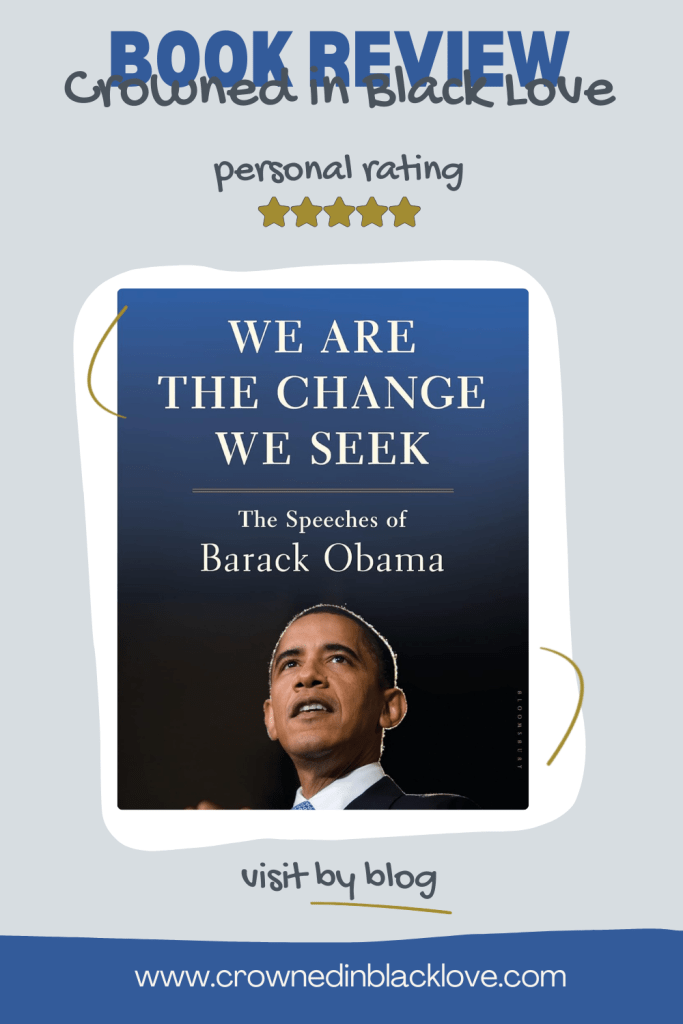
Book Review: We Are the Change We Seek: The Speeches of Barack Obama

A Voice for Justice, Unity, and Hope

Barack Obama’s journey from community organizer to the first Black president of the United States is nothing short of extraordinary. Throughout his political career, his speeches have often been a beacon of hope, rallying people around the cause of equality, justice, and the pursuit of a better future. We Are the Change We Seek: The Speeches of Barack Obama, edited by E.J. Dionne Jr., is an incredible compilation of his most powerful addresses. For Black communities, this book is more than a collection of words; it’s a tool for understanding how the power of speech can drive change and inspire action.

Why This Book Is Essential for the Black Community:

In the face of systemic racism, inequality, and social injustice, Obama’s speeches offered a voice of reason, reminding us that change is not only possible, but it is also our responsibility. The speeches within this book speak to the struggles that Black Americans face and the collective power we possess to transform our communities and our nation. Obama’s ability to blend hope, determination, and clarity is what makes his words resonate deeply within our fight for justice.

From his historic victory speech in 2008 to his remarks on racial tensions and his reflections on the pursuit of justice, Obama’s speeches are both a call to action and a vision for what America can be. By sharing these speeches, We Are the Change We Seek provides a roadmap for Black communities to advocate for their rights, demand justice, and foster unity in times of division.

Key Lessons from We Are the Change We Seek for the Black Community:

  1. The Power of Unity: One of Obama’s key messages is that true progress only comes when we work together. In his speeches, he often emphasizes that unity transcends race, party affiliation, and background. For Black communities, this reminds us that in our fight for justice, we must build coalitions with others who are willing to stand with us. The power of collective action is undeniable, and Obama’s words are a testament to that.
  2. The Importance of Hope and Perseverance: Throughout his speeches, Obama often highlighted the importance of hope—especially during the most challenging times. For Black communities, this is crucial, as systemic oppression can sometimes make it feel like progress is impossible. Obama’s speeches are a reminder that, though the road is long, hope, perseverance, and belief in a better future are critical in pushing forward.
  3. Confronting Race and Injustice: Obama’s reflections on race in America are some of the most poignant in his speeches. He didn’t shy away from acknowledging the deep-seated issues of racism, nor did he avoid the uncomfortable truths that needed to be discussed. For Black communities, his words are empowering. They show that confronting injustice head-on is essential for healing and for creating a society where everyone is treated with dignity and respect.
  4. The Role of Leadership in the Fight for Justice: Obama’s speeches also provide insight into the role of leadership in social change. His calls for leaders to act with integrity and courage resonate deeply in today’s climate, where Black leaders must continue to rise above obstacles and lead by example. We Are the Change We Seek encourages us to not only support leaders but also to take up leadership ourselves in our communities and beyond.

How This Book Helps the Black Community Today:

In the current climate, where Black Americans continue to fight against systemic racism and inequality, Obama’s speeches offer a much-needed sense of direction and hope. The themes of race, unity, and justice found in his addresses resonate as deeply today as they did during his presidency. In We Are the Change We Seek, readers can find inspiration to continue the fight for equality and justice, armed with the powerful words of a leader who understood the struggles of marginalized communities.

Obama’s speeches also serve as a guide for young Black people who may be navigating their own paths toward leadership. His messages encourage critical thinking, resilience, and activism. The book underscores that the fight for equality is ongoing and that each of us can contribute to the change we seek.

Closing Thoughts:

We Are the Change We Seek is more than just a collection of speeches. It’s a legacy, a testament to the power of words and the profound impact they can have on society. For the Black community, this book is a reminder that we are not only capable of achieving justice and equality, but that we are the very change we seek. Obama’s words have the power to inspire, to unite, and to propel us toward a better future. As we continue our fight for justice, let us remember: the change we desire begins with us.

We Are the Change We Seek by Barack Obama is a must-read for understanding how the power of words drives change. Obama’s speeches on race, unity, and justice offer inspiration for today’s fight for equality. #Obama #Activism #Leadership #RacialJustice #Change