The Architecture of Investment: How Federal Power Foundations Our HBCUs

In our pursuit of being Crowned in Black Love, we recognize that our sovereignty is built on the strength of our institutions. Historically Black Colleges and Universities (HBCUs) have always been the engines of our progress. However, keeping these engines running requires more than just community support; it requires navigating the complex halls of federal power.

When we look at the recent historic levels of funding—specifically the shifts seen under the Biden and Trump administrations—it’s important to ask: Was this money just sitting there, or was it fought for?

Federal HBCU Funding by Administration & Term

PresidentTermApproximate Total FundingKey Accomplishments & Status
Joe Biden2021–2025$17+ BillionCurrent Record Holder. Includes $11.4B in federal grants and debt relief, and over $4B in student financial aid.
Donald TrumpTerm 2 (2025–Present)In ProgressExecutive Restructuring. Re-established the White House Initiative on HBCUs in the Executive Office of the President (April 2026).
Donald TrumpTerm 1 (2017–2021)$5+ BillionThe FUTURE Act. Permanently restored $255M in annual funding and forgave $322M in capital financing debt.
Barack Obama2009–2017$4–5 BillionConsistent Support. Averaged $1.8B to $2.4B annually in total federal appropriations, grants, and contracts.
George W. Bush2001–2009$1.1 Billion (5-yr est.)Research Capacity. Focused on enhancing R&D infrastructure and transferred the HBCU Initiative to the Secretary of Education.
Bill Clinton1993–2001$1.24+ Billion (FY 1995)Strategic Expansion. Oversaw a 21% jump in agency awards and research grants between 1992 and 1995.

The “Fight” Behind the Funding

Many wonder how the numbers reached such heights during recent terms. It wasn’t just “found money”; it was a combination of legislative permanence and aggressive executive action.

1. The End of “Yearly Begging”: The FUTURE Act

For decades, HBCU leaders had to lobby Congress every single year for a vital $255 million pot of STEM funding. If it wasn’t renewed, the money vanished. In 2019, after a long bipartisan battle, the FUTURE Act was signed into law, making that $255 million permanent. This provided fiscal stability that our schools had never seen before.

2. Clearing the Slate: Strategic Debt Forgiveness

A significant portion of the funding seen in the Trump and Biden eras came from Executive Action to cancel crushing debt. In 2018, $322 million in Hurricane Katrina-related loans were forgiven for schools like Dillard and Xavier. Later, the Biden administration expanded this, canceling debt for 45 public and private HBCUs to allow them to reinvest in their students.

3. Direct Access: Moving the Seat of Power

In both his first and second terms (specifically in April 2025), President Trump signed Executive Orders moving the White House Initiative on HBCUs directly into the White House. This wasn’t a financial move, but a power move—giving HBCU presidents a direct line to the President’s staff rather than being buried within the Department of Education.

4. Administrative Redirects

Sometimes, the money comes from re-prioritizing what is already there. In early 2025, the Department of Education redirected $435 million in discretionary “Title III” funds specifically to HBCUs, nearly doubling the available awards for that year.

The Bottom Line

Whether through the record-breaking grants of the Biden administration or the permanent legislative stability of the Trump years, the message is clear: Our legacy is worth the fight. As we look toward the future, our role is to stay informed, keep our institutions accountable, and ensure that the “Crown” remains well-funded and unbowed.

Here is the breakdown of how it actually happened:

1. The Strategy: “Redirection” Over New Spending

In his second term (specifically 2025–2026), much of the “historic” funding wasn’t necessarily brand-new money from the taxpayer. Instead, it was a strategic redirection of funds.

  • The Swap: The administration cut roughly $435 million from various minority-serving programs at other types of institutions, labeling them “ineffective and discriminatory”.
  • The Result: That money was moved specifically into the HBCU bucket. This allowed the administration to tout a massive funding increase for HBCUs without increasing the overall federal education budget.

2. The Pressure: HBCU Leaders at the Table

The funding didn’t happen in a vacuum. Advocacy groups like the UNCF and the Thurgood Marshall College Fund were relentless in their “fight”.

  • The Negotiated Win: Leaders made it clear that for HBCUs to survive, they needed “permanent” funding rather than yearly extensions.
  • The Signature: In 2019, Trump signed the FUTURE Act, which made $255 million in annual funding permanent. He frequently used this as proof of his commitment, often stating he “saved” these colleges after previous administrations hadn’t secured their long-term funding.

3. The Shift: Excellence vs. DEI

A major part of the “why” involves a shift in political ideology.

  • The Ideological Pivot: In early 2025, the administration issued an executive order that stripped away references to Diversity, Equity, and Inclusion (DEI).
  • The “Innovation” Label: By framing HBCUs as “beacons of educational excellence and innovation” rather than “minority aid programs,” the administration was able to justify funding them while simultaneously cutting other social safety net programs.

4. Summary of the “Fight” vs. the “Gift”

ActionWas it a “Fight”?The Reality
FUTURE ActYesBipartisan pressure forced a permanent funding solution.
$435M RedirectNoAn administrative choice to move money away from other minority programs.
Debt ForgivenessYesHBCU presidents lobbied for relief from 20-year-old disaster loans.
White House MoveNoA symbolic and strategic move to keep HBCU leaders under direct oversight.

The Bottom Line: While there was significant funding, critics argue it was a “redirect ruse” that boosted institutional checks while cutting the broader student aid (like Parent PLUS loan caps) that families need to actually attend these schools.

Systemic & Equity Rollbacks

Critics, including groups like the NAACP, argue that while he “cut checks” to institutions, his broader policies dismantled the protections Black individuals need to succeed:

  • Eliminating DEI and Equity Doctrine: In 2025, he signed executive orders revoking diversity, equity, and inclusion (DEI) initiatives and eliminated “disparate impact liability”—a legal tool used to prove when policies (like housing or hiring) unintentionally harm Black people.
  • Educational “Loyalty” Requirements: In late 2025, his administration proposed a “Compact for Academic Excellence” that tied federal funding to requirements that schools freeze tuition and suppress certain types of social criticism. Most HBCUs refused to comply, viewing it as an infringement on their academic freedom.
  • Rollback of Civil Rights Protections: His administration rolled back guidance on school discipline policies meant to address racial disparities, which critics say puts Black students at higher risk for the “school-to-prison pipeline”.
  • Weakening Consumer Protection: Orders that loosened environmental and mortgage regulations may increase lender participation but also heighten the risk of predatory lending and discriminatory practices that have historically stripped wealth from Black families.

The “Legacy” Conclusion

Ultimately, the debate boils down to a choice of philosophy:

  • Critics argue he is a hindrance because he removed the safety nets—stripping away the civil rights protections and equity strategies that prevent Black individuals from being marginalized in the broader economy.

As you build your own legacy, ask yourself: Is a strong foundation for our colleges enough if the protections for the students attending them are being removed? True progression likely requires both the funding for the institutions and the protection of the people.

What are your thoughts about, The Architecture of Investment: How Federal Power Foundations Our HBCUs

Money doesn’t just appear; it’s fought for. 👑 Today we’re looking at the legislative wins and executive actions that fueled record HBCU funding from the 90s to 2026. #HBCU #Legacy #BlackExcellence

Black Power: The Politics of Liberation – A Must-Read for the Black Community

As a proud member of the Black community, I know the weight of the world sometimes feels like it’s on our shoulders. But what if I told you that there’s a powerful book that can inspire change in the way we view ourselves, our community, and our future? Black Power: The Politics of Liberation by Stokely Carmichael (Kwame Ture) and Charles V. Hamilton has not only changed how I think about our past, but it’s also given me tools to reshape the future for my family and the generations to come.

When I first picked up this book, I didn’t know what to expect. But as I read, I felt a wave of empowerment wash over me. It reminded me that we as Black people have always had the strength and the ability to create our own future — one that is driven by pride, unity, and self-reliance. This is not just a history lesson — it’s a revolutionary call to action for our people, a message that still resonates powerfully today.

What Makes This Book So Important for the Black Community Today?

Published in 1967, Black Power is more than just a manifesto for political change; it’s a blueprint for Black empowerment. In a time when integration was seen as the ultimate goal, Carmichael and Hamilton said, “No. Our goal should be to build and strengthen our own communities.” They rejected the notion that our worth or place in society is defined by how we fit into systems created by others. Instead, they proposed the idea that we, as Black people, must work together to create the world we want to see — one that is built on our own terms.

For the Black community today, these messages are just as relevant. Whether it’s in the workplace, in schools, or in our neighborhoods, we still face systemic racism, poverty, and inequality. But this book teaches us that we don’t have to wait for others to give us permission to rise. We have the power to make our own change, to control our own destinies, and to teach our children to do the same.

The Core Lessons of Black Power: What We Can Learn

  1. Black Autonomy is Key
    One of the most powerful ideas in Black Power is the call for Black autonomy. Carmichael and Hamilton argue that true liberation can only be achieved if we have control over our political, social, and economic lives. This means not waiting for the government or other institutions to do the heavy lifting for us, but instead creating our own institutions and support systems. Imagine Black-owned businesses flourishing, schools that teach our history accurately, and organizations built to protect and uplift us. That’s the vision this book presents.
  2. Unity Among Us is Our Strength
    In this book, Carmichael and Hamilton stress the importance of solidarity. The struggles we face as a community are interconnected, and they can only be overcome when we come together. Whether it’s Black families supporting each other or Black entrepreneurs working together to build economic power, Black Power emphasizes that we need to stop seeing ourselves as individuals struggling alone. Our unity is our greatest strength.
  3. Pride in Our Blackness
    In a world that often tries to diminish our value, Black Power teaches us the importance of embracing who we are. It reminds us that our Blackness is beautiful, and it is powerful. It encourages us to learn and love our history, celebrate our achievements, and take pride in the fact that we come from a rich and diverse heritage. This pride is not just for us as individuals, but for our families and communities as a whole.
  4. Challenging a Broken System
    Perhaps the most radical idea in the book is the call to challenge the existing systems of power that have historically oppressed us. The idea that our goal should not be to integrate into a system that was never meant for us, but rather to create new systems where we thrive. Black Power forces us to think critically about the structures we work within and to ask, “Are they really serving us, or are they holding us back?” This question is just as important today as it was in 1967.

How “Black Power” Can Help the Black Community Today

In today’s world, where inequality and discrimination are still rampant, Black Power offers us a roadmap for change. It provides not just ideas, but actions we can take to strengthen ourselves and our communities. For parents like me, it’s essential to teach our children the lessons of self-reliance, unity, and pride. By sharing these ideas with them, we are setting them up for success in a world that often tries to tell them they are less than.

For those of us who have struggled to make our voices heard, this book gives us the courage to stand tall. It reminds us that we are not powerless in the face of adversity. We can, and must, fight for our rights, our freedom, and our futures. It’s a message that transcends time, inspiring us to fight for justice and build a world where Black people can truly flourish.

Closing Thoughts: A Call to Action

If you’ve been looking for a book that speaks directly to the heart of the Black experience — one that empowers, inspires, and challenges you — Black Power: The Politics of Liberation is exactly what you need. It’s not just about the past; it’s about how we move forward, together. For Black families, this book is a crucial tool for raising our children to be proud of who they are, to value their heritage, and to understand their true power.

As we continue to face challenges in society, Black Power reminds us that we are not alone. Our strength is in our unity, our pride, and our ability to create change on our own terms. Let’s keep pushing, let’s keep fighting, and let’s keep believing in the power of who we are.


Looking for a book that empowers the Black community? Black Power: The Politics of Liberation by Stokely Carmichael & Charles V. Hamilton is a must-read! Discover how it teaches pride, autonomy & unity today. #BlackPower #BlackCommunity #Empowerment #BookReview #BlackHistory

P.A.R.E.N.T.I.N.G.: The Blueprint for Raising Strong Black Families

Parenting is one of the most rewarding, yet challenging, roles anyone can take on. As a Black parent, you’re not just raising your children; you’re also preparing them for a world that can sometimes be tough on us. That’s why it’s so important to build a foundation of love, strength, and resilience. When I first came across the P.A.R.E.N.T.I.N.G. acronym, it struck me as the perfect guide for how we can shape the next generation in the Black community. Each letter represents qualities that, when embraced, can help us raise empowered, confident, and loving children. Let’s dive into why P.A.R.E.N.T.I.N.G. is more than just an acronym—it’s a way of life.

P – Patience: The Key to Nurturing Growth

Parenting requires an immense amount of patience. Our children are growing, learning, and sometimes challenging us at every turn. In the Black community, patience is even more important as we often have to teach our children about the unique challenges they may face in the world. Patience allows us to guide them with understanding, rather than frustration. It’s about nurturing their growth, not rushing it.

A – Accountability: Teaching Responsibility from the Start

Accountability is crucial for both parents and children. As parents, we have to model accountability by owning our actions and setting a good example. For our kids, we need to teach them responsibility and the importance of their choices. In the Black community, where our children are often faced with systemic challenges, teaching accountability helps them understand the importance of standing by their actions and decisions—good or bad.

R – Respect: Building a Foundation of Mutual Understanding

Respect is one of the most important qualities we can teach our children. This means respecting others, respecting themselves, and respecting their environment. In our community, respect goes beyond just the home; it extends to understanding the broader cultural and societal values that shape us. Teaching our children respect ensures that they grow into individuals who value and uplift others, creating a more harmonious world for everyone.

E – Empathy: Walking in Someone Else’s Shoes

Empathy is a quality that every parent should aim to instill in their children. It’s about teaching them to understand and share the feelings of others. In the Black community, where we often face adversity, empathy becomes even more important. By teaching our children to be compassionate and kind, we prepare them to be leaders who will stand up for justice, equality, and the well-being of others.

N – Nurturing: Creating an Environment of Love and Safety

Every child needs a nurturing environment to thrive. This means providing love, security, and a safe space where they can be themselves. In the Black community, nurturing our children involves celebrating their uniqueness and helping them see the beauty in their culture, identity, and history. A nurturing home helps children feel loved and accepted, which boosts their self-esteem and confidence.

T – Teamwork: Working Together as a Family

Parenting is never a one-person job. Teamwork between partners, extended family members, and the community is essential in raising strong children. In the Black community, where we often rely on our family units for support, teaching teamwork at home shows children the value of working together for the greater good. It helps them understand that strong relationships are built on collaboration, trust, and mutual support.

I – Integrity: Standing Firm in Our Values

Integrity is about doing what’s right, even when it’s not easy. As parents, we must lead by example, showing our children the importance of honesty, trustworthiness, and sticking to their values. In the Black community, where our integrity is sometimes questioned, it’s important to teach our children the strength of being true to themselves and their beliefs, no matter what.

N – Nurturing: Encouraging Personal Growth

Another important aspect of nurturing is encouraging personal growth. It’s about being there to support your child’s development, whether that’s academic, emotional, or social. We must empower our children to explore their talents, chase their dreams, and never settle for less than they deserve. In our community, where access to opportunities can sometimes be limited, nurturing personal growth means giving them the tools and mindset to succeed against all odds.

G – Gratitude: Cultivating a Spirit of Appreciation

Gratitude is a key part of creating a positive and resilient mindset in children. Teaching them to appreciate what they have, even in challenging circumstances, helps them develop a sense of humility and contentment. In the Black community, where we often don’t have as many resources, gratitude can help our children value the small victories and the blessings in their lives.

E – Equality: Teaching Fairness and Justice

Teaching equality and fairness is crucial for parenting in today’s world. It’s about helping our children understand that everyone deserves to be treated equally and with respect. In the Black community, where we face inequality, it’s vital that we equip our children with the knowledge and courage to stand up for justice and equity, ensuring they grow up to be advocates for positive change.

In Conclusion:

Parenting is one of the most important jobs we’ll ever have, and the P.A.R.E.N.T.I.N.G. acronym provides us with a powerful guide for raising the next generation. By incorporating Patience, Accountability, Respect, Empathy, Nurturing, Teamwork, Integrity, Nurturing (again!), Gratitude, and Equality into our parenting approach, we create a strong foundation for our children to succeed and thrive.

As Black parents, we know the importance of raising children who are not only resilient but also compassionate and empowered. So, let’s embrace the P.A.R.E.N.T.I.N.G. blueprint and build stronger families, stronger communities, and a brighter future for our children.

Raising strong, resilient kids in the Black community starts with love and guidance. Check out how the P.A.R.E.N.T.I.N.G. acronym can help parents nurture empowered, confident children today. 💪🏽👶🏽 #BlackParenting #FamilyGoals #ParentingTips

M.A.R.R.I.A.G.E.: The Blueprint for Stronger Black Marriages

Marriage in the Black community holds so much significance—it’s about love, family, and building a future together. But what truly makes a marriage strong? It’s not just about saying “I do”; it’s about nurturing and embodying qualities that keep the relationship healthy and lasting. When I came across the M.A.R.R.I.A.G.E. acronym, it hit me that this is the perfect blueprint for Black marriages, focusing on key principles that can help us grow and thrive together. Let’s dive into why M.A.R.R.I.A.G.E. is not just a word, but a mindset that can strengthen any marriage.

M – Mutual Respect: The Heart of Every Strong Union

Respect is the foundation of any relationship, but in marriage, it becomes even more critical. Mutual respect means valuing each other’s opinions, dreams, and needs. In the Black community, where we are often fighting against external forces, it’s crucial to have a safe space within our marriages where we are seen, heard, and loved for who we truly are. Mutual respect means building each other up, not tearing each other down.

A – Accountability: Owning Up to Our Actions

Accountability isn’t always easy, but it’s essential in a marriage. It means owning up to our mistakes, being honest about our shortcomings, and taking responsibility for our actions. In the Black community, where we are often expected to be strong in the face of adversity, it’s important to have a partner who holds us accountable, lovingly and constructively. This allows both partners to grow and evolve.

R – Respect: The Cornerstone of Partnership

While respect is highlighted earlier, this one emphasizes respect as a core value that supports all other aspects of marriage. It’s about honoring each other’s individuality while working together as a team. Respect in marriage is about acknowledging that both partners bring something valuable to the table. This mutual admiration leads to stronger, more supportive unions.

R – Responsibility: Upholding Your Role

Marriage is a partnership, and with that partnership comes responsibility. Whether it’s sharing duties, taking care of the home, or supporting each other’s dreams, both partners need to step up and do their part. Responsibility in a marriage means doing your best to fulfill your role, without expecting the other to pick up the slack. In the Black community, where we know the importance of family and community, responsibility means showing up for each other every day.

I – Integrity: Doing the Right Thing, Even When No One Is Watching

Integrity in marriage means being honest, transparent, and trustworthy. It’s about doing what you say you’re going to do, whether it’s about your word or your actions. Integrity builds the trust that is essential to the success of a marriage. In a world where trust can sometimes be hard to find, it’s important to have a partner who stands by their values and keeps the marriage sacred.

A – Affection: Showing Love and Appreciation

Affection is essential to keep the spark alive in any marriage. It’s the hugs, the kisses, the “I love yous,” and the gestures that make us feel appreciated. In the Black community, affection can sometimes be overlooked as we deal with external stressors, but it’s important to remember that showing love is an essential part of keeping the relationship healthy and connected. Affection strengthens the bond and reminds both partners why they fell in love in the first place.

G – Growth: Evolving Together

A marriage that stays stagnant will eventually wither. Growth means embracing change, learning together, and supporting each other’s personal and professional journeys. It’s about encouraging your partner to become the best version of themselves, just as they do for you. Growth in marriage means you are not the same person you were when you first met, but you have evolved together—stronger and more united.

E – Equality: A Relationship of Balance

Equality in marriage means both partners have an equal say, equal power, and equal respect. It’s about sharing responsibilities, dreams, and challenges in a balanced way. Equality fosters a partnership where both people feel valued and appreciated. In the Black community, where we often face systemic inequalities, fostering equality in our marriages is essential for mutual growth and love.

In Conclusion:

Marriage is a beautiful, challenging, and rewarding journey. The M.A.R.R.I.A.G.E. acronym offers a clear roadmap for how we can strengthen our relationships and build something that lasts. From mutual respect to accountability, integrity to affection, these qualities are the glue that holds marriages together. For the Black community, nurturing these principles can help us create powerful, thriving partnerships that stand the test of time.

So, whether you’re newly married or been together for years, take a moment to reflect on how you can bring these qualities into your relationship. A marriage based on M.A.R.R.I.A.G.E. isn’t just about surviving—it’s about thriving together, hand in hand.

Want a stronger marriage? Learn how the M.A.R.R.I.A.G.E. acronym—Mutual Respect, Accountability, Responsibility, Integrity, Affection, Growth, and Equality—can help create lasting love in Black marriages. 💍 #BlackLove #MarriageGoals #RelationshipAdvice

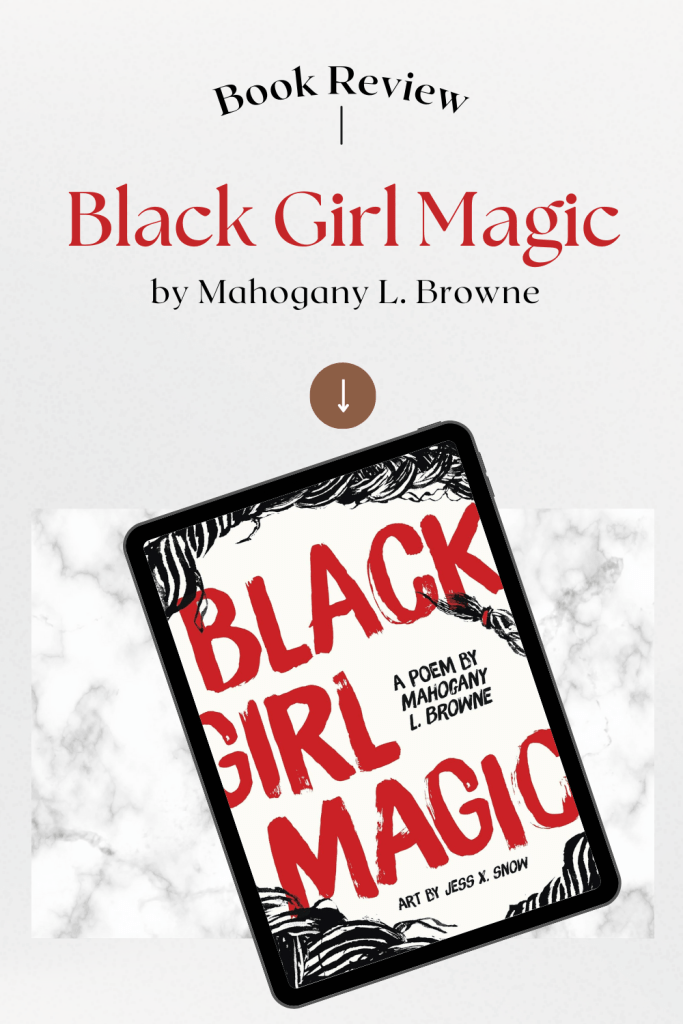
Book Review: Black Girl Magic by Mahogany L. Browne

A Tribute to Black Women’s Strength and Resilience

Black Girl Magic by Mahogany L. Browne is a powerful collection of poems that celebrates the beauty, strength, and resilience of Black women. This collection is an empowering tribute to Black womanhood and offers a heartfelt and unapologetic exploration of the lives, struggles, and triumphs of Black women. Through her captivating verses, Browne provides a voice to the experiences of Black women, celebrating their complexities, triumphs, and unbreakable spirit.

Why Black Girl Magic is Essential for the Black Community:

Browne’s Black Girl Magic isn’t just a collection of poems; it’s a powerful affirmation for Black women. In a society that often fails to uplift Black women, this book serves as a profound reminder of their worth, power, and resilience. It pushes back against the stereotypes and adversity that Black women often face and reinforces the importance of celebrating their stories, strengths, and uniqueness.

This book is an essential read for the Black community because it not only celebrates Black women, but it also empowers them to embrace their authenticity. Browne’s words encourage self-love, defiance, and the recognition of one’s inherent beauty and strength.

Key Themes in Black Girl Magic:

  1. Black Womanhood: Browne’s poetry emphasizes the importance of embracing one’s identity as a Black woman. The poems reflect the multifaceted nature of Black womanhood — encompassing strength, vulnerability, joy, and pain. Black Girl Magic challenges the limiting narratives often placed on Black women and encourages them to celebrate who they are.
  2. Empowerment and Pride: The collection speaks directly to the empowerment of Black women. It is a celebration of Black girls and women who are unapologetically themselves. The poems highlight the resilience Black women show in the face of societal challenges and encourage them to take pride in their identity, history, and culture.
  3. Resilience in the Face of Adversity: Browne’s work also highlights the resilience that Black women show as they navigate the challenges of a world that often marginalizes them. Each poem becomes a testament to the strength and endurance that lies within Black women, no matter how difficult their circumstances may be.
  4. Poetry as Empowerment: Browne’s lyrical mastery creates a space where the power of words shines through as a tool for empowerment. In each poem, she encourages Black women to find their voice and assert their presence. The act of writing and reading poetry becomes an important means of reclaiming space and power in a world that may not always acknowledge them.

Lessons from Black Girl Magic for the Black Community:

  1. Embrace Your Magic: The core lesson of this book is the importance of recognizing and embracing one’s “magic.” Browne uses the term Black Girl Magic to refer not only to a cultural movement but also to the inherent power and beauty of Black women. It’s a call to reject societal norms that seek to diminish their value and instead celebrate the strength, grace, and brilliance within them.
  2. Building Community Through Shared Experiences: Browne’s poetry also builds a sense of community for Black women. Through her words, readers find solidarity and understanding. The shared experiences of joy, struggle, love, and resilience unite them in a powerful bond that goes beyond the individual.
  3. Healing Through Art: Art, particularly poetry, becomes a tool for healing in Black Girl Magic. Browne’s poems allow readers to express their pain, joy, and experiences. For the Black community, this collection offers a form of catharsis and a way to reclaim control over their narrative.
  4. The Power of Representation: Representation matters, and this collection offers an important moment for Black women to see themselves reflected in the pages. Browne’s writing affirms that the experiences of Black women are valid, meaningful, and worthy of being celebrated. For younger generations, it shows them that their stories are worthy of being told and that they too carry a powerful legacy.

How Black Girl Magic Can Help the Black Community Today:

In a world where Black women continue to face systemic racism, sexism, and invisibility, Black Girl Magic offers a necessary and empowering response. It’s a reminder to Black women that they are beautiful, strong, and worthy of being celebrated. This book can be a catalyst for self-empowerment, pride, and healing, encouraging Black women to embrace their identity and history with confidence.

For the broader Black community, the collection emphasizes the importance of supporting and uplifting Black women. Browne’s work challenges us to do more to value the contributions of Black women and create spaces where they can thrive.

Closing Thoughts:

Black Girl Magic by Mahogany L. Browne is an exceptional collection of poems that honors Black womanhood, celebrates resilience, and uplifts the spirit of Black women everywhere. It is a powerful reminder that Black women are magic, and their stories deserve to be told, heard, and cherished. Whether you are a Black woman or an ally, this book is a must-read for anyone seeking to understand the complexities and beauty of Black womanhood, and to celebrate the strength and resilience that comes with it.

Celebrating #BlackGirlMagic! 🌟 Mahogany L. Browne’s poetry collection is a powerful tribute to Black womanhood, strength, and resilience. Every Black woman deserves to read this! #Empowerment #Poetry #BlackWomen