Honoring Black Mothers: The Backbone of Love and Legacy

A Day to Do More Than Celebrate

Mother’s Day is a beautiful time to say thank you, give flowers, share meals, and express love. But for me, it is also a time to pause and really think about what Black mothers mean to our families and our communities.

Black mothers have always been central to our survival, our strength, and our legacy. They are not only caregivers. They are builders, protectors, teachers, nurturers, and often the emotional foundation holding everything together. Their role has never been small, and it has never been simple.

Why Black Mothers Matter So Deeply

Black mothers carry a unique kind of responsibility. Many are raising children while also managing work, household demands, emotional labor, and the weight of a world that has not always been kind to Black families. Research continues to show serious racial disparities in maternal health, with Black women experiencing far higher pregnancy related mortality than White women.

That reality matters because it reminds us that honoring Black mothers is not just about appreciation. It is also about understanding what they have had to endure just to care for their families. Black motherhood has often required strength in places where support should have been given freely.

A Legacy of Strength and Sacrifice

Black mothers have long been the ones who keep families moving forward, even in hard seasons. They teach children how to stand tall, how to love well, and how to survive with dignity. In many Black families, motherhood extends beyond biology too. Grandmothers, aunts, sisters, and chosen family members often step in and help raise children, creating a strong village of care.

That kind of collective love is part of what makes Black motherhood so powerful. It is not just about one woman doing everything alone. It is about a culture of caring, guiding, correcting, protecting, and pouring into the next generation.

What Black Mothers Build

Black mothers do more than meet needs in the present. They shape the future.

They teach children how to handle disappointment, how to love themselves, how to show up for others, and how to carry pride in who they are. Research on Black mothers’ support networks shows that villages around them can strengthen children’s identity, confidence, and sense of belonging, while also giving mothers space to rest and restore themselves.

That is important because so much of what we call legacy begins in the home. The lessons a mother teaches, the love she gives, and the example she sets can influence a child for life. Black mothers are often the first people to show children what resilience looks like in real time.

Why This Still Matters Today

This conversation matters because Black mothers are still carrying heavy loads, and too often those loads go unnoticed. Studies and reports continue to show gaps in maternal health, access to care, and support for emotional well being. Those are not small issues. They affect families, children, and the future of our communities.

It also matters because how we honor Black mothers shapes how our children learn to value care. If we want strong families, we have to be serious about supporting the women who so often hold them together. That means appreciation, yes, but it also means action.

How We Can Truly Honor Black Mothers

Honoring Black mothers should go beyond one day a year. It should show up in real, everyday ways.

  • Give rest as well as gifts.
  • Share the load instead of assuming she can carry it all.
  • Listen without rushing to fix.
  • Speak gratitude often and specifically.
  • Protect her peace, her time, and her health.
  • Support community spaces and resources that care for Black mothers.

Simple appreciation is beautiful. Consistent support is better.

A Mother’s Day Reflection

To every Black mother reading this, thank you.

Thank you for the love you give, the sacrifices you make, and the strength you carry. Thank you for the way you teach, correct, nurture, and protect. Thank you for building families and communities through your care. What you do matters more than words can fully express.

And to everyone else, let this be a reminder that Black mothers deserve more than praise. They deserve to be supported, valued, and cared for in return.

Call to Action

This Mother’s Day, let’s do more than celebrate.

Let’s honor Black mothers with intention. Let’s give them rest, support, appreciation, and real help. Let’s make sure our love shows up in action, not just in words.

If you are a mother, take a moment to receive that love too. If you love a Black mother, let her know she is seen. If you are part of a family, ask yourself how you can help carry the load more gently.

Because Black mothers have been the backbone of love and legacy for generations, and that deserves to be honored every day.

What are your thoughts about Honoring Black Mothers: The Backbone of Love and Legacy

Black mothers are the foundation of love, strength, and legacy. This Mother’s Day, let’s go beyond words and show real support and appreciation. #CrownedInBlackLove #MothersDay #BlackMothers #FamilyLegacy

The Power of Black Fathers in the Home

More Than a Stereotype

There is something powerful about Black fatherhood that deserves more attention, more respect, and more celebration.

Too often, the conversation around Black fathers is shaped by stereotypes, assumptions, and incomplete stories. But the truth is this: Black fathers are present, loving, influential, and essential to the health of our families and communities.

Their role is not small. Their presence matters.

And when Black fathers are active, intentional, and emotionally connected in the home, it changes everything.

Presence Is Powerful

One of the most important gifts a father can give is presence.

Not just being physically in the house, but being emotionally available, consistent, and engaged.

A present father makes a child feel seen. He helps create a sense of safety. He teaches children that they are worthy of time, attention, and care.

Presence is not about perfection. It is about showing up.

It is about being there for the everyday moments, not just the big milestones. Helping with homework. Asking questions. Listening without distraction. Offering support when life feels heavy.

Those moments may seem simple, but they build deep trust over time.

Black Fathers as Leaders

Black fathers play a powerful leadership role in the home.

That does not mean controlling everything. It means leading with love, responsibility, wisdom, and example.

Children learn leadership not only from what fathers say, but from how they live. A father who leads with patience, integrity, and accountability shows his family what strength really looks like.

Real leadership is not loud. It is steady.

It is the kind of leadership that protects, guides, and nurtures while also making space for growth and honesty.

Emotional Connection Matters

For a long time, many people were taught that fathers should only provide, protect, and stay strong.

But emotional connection is just as important.

Black fathers who hug their children, say “I love you,” ask about feelings, and create space for vulnerability are helping break harmful cycles. They are showing that strength and softness can exist together.

That matters.

Because children who feel emotionally connected to their fathers often grow up with a stronger sense of confidence, identity, and belonging.

And in the home, emotional connection helps build trust between partners too. It creates an atmosphere where love feels real, not just assumed.

Breaking the Stereotypes

Black fathers have been misrepresented for far too long.

The stereotype that Black men are absent or disconnected is not only false, it is damaging. It ignores the many fathers who are showing up every day in ways that are meaningful and life changing.

Black fathers:

  • Teach their children discipline and love.
  • Protect their families.
  • Provide emotional and spiritual support.
  • Model responsibility and commitment.
  • Help shape healthy identity and self-worth.

We need to tell the truth about Black fatherhood more often.

Because when children see strong, loving fathers in the home, they learn that Black men are not missing from the story. They are part of the foundation.

What Black Fatherhood Builds

A strong Black father does more than care for his own children.

He helps build:

  • Confidence in his children.
  • Stability in the home.
  • Respect in relationships.
  • Trust across generations.
  • Legacy that lasts.

His presence helps shape how children understand love, authority, accountability, and family.

That is not just parenting. That is legacy work.

Ways Fathers Can Strengthen the Home

If you are a father, or if you love a father, here are a few ways to strengthen the home every day:

1. Be consistent
Show up in the small moments, not just the major ones.

2. Listen well
Let your children and partner feel heard.

3. Speak life
Use your words to build, encourage, and affirm.

4. Be emotionally available
Let your family see that your care is not limited to providing. It includes connecting.

5. Lead with example
Children will remember what they see more than what they are told.

6. Make time count
Your attention is one of the greatest gifts you can give.

Why This Matters for Black Families

Black fathers help shape the emotional and spiritual health of the family.

When fathers are present and engaged, they help create homes where children feel grounded and supported. They also help strengthen relationships by sharing the responsibility of love, care, and leadership.

This matters because our homes are where legacy begins.

And when fathers are fully part of that foundation, the impact reaches far beyond one generation.

Call to Action

This is a reminder to honor Black fathers not just with words, but with truth.

Celebrate the fathers who show up.
Encourage the fathers who are learning.
Support the fathers who are leading with love.
And if you are a father, know that your presence matters more than you may realize.

Keep showing up.
Keep loving out loud.
Keep building a legacy your children can feel.

Because Black fatherhood is powerful.
And the home is stronger because of it.

What are your thoughts about The Power of Black Fathers in the Home

Black fathers in the home shape confidence, stability, and legacy. Their presence, leadership, and emotional connection matter deeply. #CrownedInBlackLove #BlackFathers #Fatherhood #FamilyLegacy

Building Emotional Intelligence: A Key to Raising Confident Black Children

Hey there, beautiful families! As parents, one of the most important gifts we can give our children is emotional intelligence. It’s more than just making them feel good about themselves—it’s about helping them understand and manage their emotions in a world that sometimes doesn’t give them enough space to express who they really are. Teaching emotional intelligence in Black children is a powerful way to set them up for a lifetime of confidence, resilience, and self-love. Let’s dive into why it’s so crucial and how we can raise our children to not only survive but thrive.

Building Emotional Intelligence:

1. Understanding Emotions
Emotional intelligence starts with the ability to recognize and name emotions. For many Black children, their feelings can sometimes get overlooked or dismissed by society. As parents, we must give them the tools to understand their emotions, whether it’s joy, anger, sadness, or frustration. Help them put names to these emotions so they can identify how they’re feeling, which is the first step toward learning how to manage those feelings.

2. Expressing Emotions Healthily
Encouraging your child to talk about how they feel can be a game-changer. Whether they’re happy, sad, frustrated, or proud, they need to know it’s okay to express themselves. The key is to create a space where their feelings are validated and heard. For example, when they come to you with a concern or joy, listen without judgment and offer affirmations like “I understand how you feel” or “It’s okay to be upset.” This simple act of validation helps them grow emotionally stronger and more confident.

3. Building Empathy and Understanding
Emotional intelligence isn’t just about understanding your own emotions—it’s also about understanding others’. Teaching your child to recognize and empathize with the feelings of others builds compassion and strong social connections. Encourage your child to think about how their actions might affect others. This not only builds emotional intelligence but also nurtures their ability to be a kind, thoughtful, and inclusive individual.

Pro Tip:
Create a daily practice of sharing feelings as a family. Whether at dinner or before bedtime, ask your child to share one thing that made them happy or upset that day. When they see their emotions respected, they’ll feel safe to share even deeper feelings in the future.

In Closing:

Building emotional intelligence in our children is one of the most important ways to raise confident, resilient, and loving individuals. In a world that can sometimes try to silence our voices, let’s raise children who understand the power of their emotions and the strength they carry within. So, let’s continue to nurture our babies with love, understanding, and the emotional tools they need to navigate this world confidently. Together, we are raising the next generation of Black excellence—one emotionally intelligent child at a time.

Nurturing emotional intelligence in Black children is key to raising confident, resilient, and self-assured individuals. Learn how to foster emotional expression, empathy, and confidence in your little ones. #BlackParenting #EmotionalIntelligence #BlackExcellence

Building Emotional Intelligence: A Key to Raising Confident Black Children

Hey there, beautiful families! As parents, one of the most important gifts we can give our children is emotional intelligence. It’s more than just making them feel good about themselves—it’s about helping them understand and manage their emotions in a world that sometimes doesn’t give them enough space to express who they really are. Teaching emotional intelligence in Black children is a powerful way to set them up for a lifetime of confidence, resilience, and self-love. Let’s dive into why it’s so crucial and how we can raise our children to not only survive but thrive.


1. Teaching the Vocabulary of Emotions

It’s important to help your child learn how to name and understand their emotions. This means going beyond just “happy” and “sad” and introducing words like “frustrated,” “excited,” “nervous,” “grateful,” and “proud.” The more emotionally literate our children become, the better they can navigate their feelings and communicate effectively.

Example:
When your child is upset after an argument with a sibling, you might say, “It seems like you’re feeling really frustrated right now. What made you feel that way?” This helps your child not only recognize their own emotions but also gives them the language to express themselves more clearly.

Ways to Help:

  • Use books or media that focus on emotions and how characters feel in different situations. After reading, ask questions about the characters’ emotions: “How do you think they felt when that happened?”
  • Create a “feelings chart” with different facial expressions or emotions written on it. Encourage your child to point to how they’re feeling each day.

2. Encourage Open Conversations About Emotions

Creating a space where your child feels comfortable talking about their emotions is crucial. Emotional intelligence starts with the ability to talk about and process one’s feelings. As parents, we need to listen actively, validate those feelings, and provide a safe, nonjudgmental environment where they can express themselves.

Example:
After a long school day, ask your child, “How was your day today? Did anything make you feel really happy or upset?” When they share their feelings, make sure to listen with empathy and say things like, “I hear you. That sounds tough.”

Ways to Help:

  • Set aside a specific time each day to talk about emotions. This could be during dinner, while driving home, or just before bed. Make it a routine so they know it’s okay to share their feelings at any time.
  • When your child expresses frustration or anger, rather than dismissing it, say something like, “I understand that you’re upset. Let’s talk about why.”
emotional intelligence in Black children

3. Modeling Emotional Regulation

Children learn by example. As parents, showing how we regulate our emotions teaches them how to do the same. Emotional intelligence is about knowing when to step back, take a deep breath, and choose a calm response over an emotional reaction.

Example:
If you’re feeling stressed, you might say to your child, “I’m feeling frustrated right now, but I’m going to take a deep breath and calm down before we continue this conversation.” Modeling this gives them the tools they need to cope with their own emotions.

Ways to Help:

  • Practice deep breathing or mindfulness techniques with your child. For instance, “Let’s take a deep breath together. In through your nose, out through your mouth.”
  • Use positive self-talk: When you feel overwhelmed, say something like, “I’m feeling frustrated, but I know I can handle it.” This helps your child see how to approach emotions calmly.

4. Encouraging Empathy and Perspective-Taking

Emotional intelligence isn’t just about understanding your own emotions—it’s also about understanding the feelings of others. Teaching your child empathy is crucial for their social development and emotional maturity. Empathy helps them connect with others and respond in thoughtful, kind ways.

Example:
If your child accidentally hurts a friend’s feelings, guide them to think about the other person’s emotions. You could say, “How do you think your friend feels right now? What can we do to make it right?”

Ways to Help:

  • Play “feelings charades,” where you both act out different emotions, and the other person guesses what emotion you’re expressing. This helps your child recognize emotions in others.
  • Discuss real-life situations—like news stories or things they’ve witnessed—and ask your child how they think the people involved might feel. This encourages them to consider others’ emotions.

5. Providing Positive Reinforcement for Emotional Growth

Positive reinforcement plays a key role in emotional development. When your child successfully manages their emotions or shows empathy, it’s important to praise and celebrate these moments. This not only boosts their confidence but also reinforces emotionally intelligent behaviors.

Example:
If your child successfully calms down after a tantrum or expresses their feelings in a healthy way, praise them by saying, “I’m really proud of how you calmed yourself down when you felt frustrated. That shows a lot of strength!”

Ways to Help:

  • Create a reward system for emotional milestones. For example, after a week of consistently expressing emotions in healthy ways, give your child an extra special treat or time with you.
  • Praise the effort, not just the result. Acknowledge the emotional work your child put in: “You did a great job of taking a break when you felt upset. That’s a really mature choice.”

6. Teaching Conflict Resolution

Part of emotional intelligence is knowing how to resolve conflicts in a healthy way. Conflict is inevitable, but teaching your child how to resolve disagreements with kindness and understanding is key to their emotional growth.

Example:
When your child has a disagreement with a sibling, guide them toward a peaceful resolution: “Instead of yelling, let’s use our words to explain how we feel. What could you say to your brother to help him understand?”

Ways to Help:

  • Teach problem-solving skills. Ask your child, “What do you think is a fair way to solve this?” This helps them learn to work through problems thoughtfully.
  • Role-play conflict scenarios with your child. Practice resolving disagreements calmly, using phrases like, “I don’t like it when you do that. It makes me feel sad. Can we try something different next time?”

Closing Thoughts:

Building emotional intelligence in Black children is one of the most powerful gifts we can give them. It’s not just about helping them identify their emotions, but about empowering them to express, understand, and manage their feelings in a way that promotes confidence, empathy, and resilience. In a world that often doesn’t validate our children’s experiences, let’s be the ones who give them the tools to navigate life with emotional strength and love.

Together, we’re raising the next generation of emotionally intelligent leaders—one child at a time.

Nurturing emotional intelligence in Black children is key to raising confident, resilient, and self-assured individuals. Learn how to foster emotional expression, empathy, and confidence in your little ones. #BlackParenting #EmotionalIntelligence #BlackExcellence

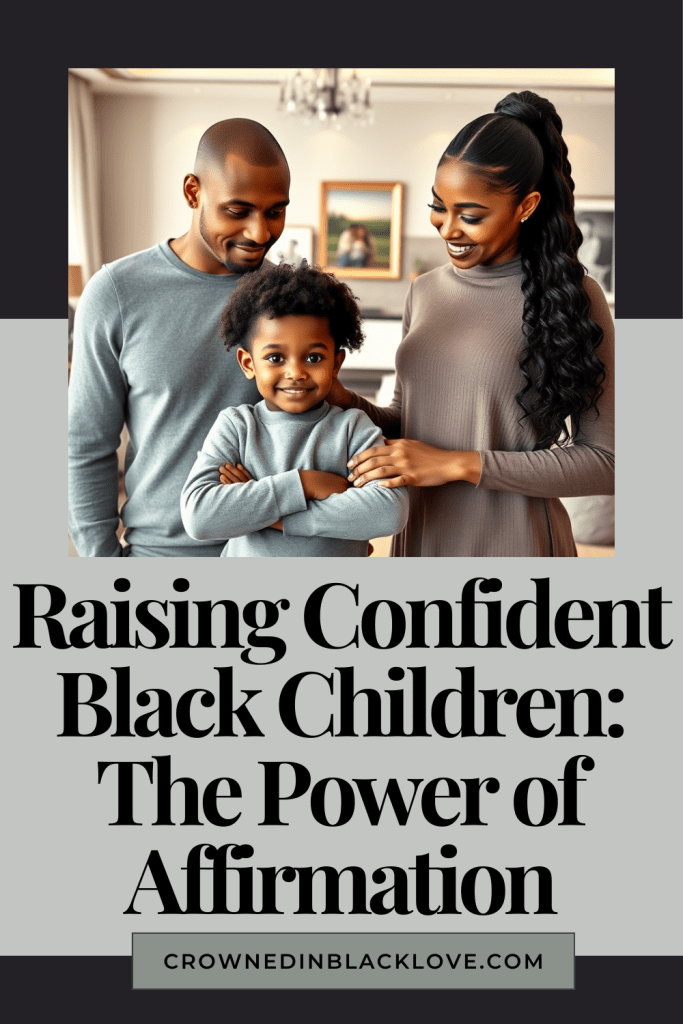
Raising Confident Black Children: The Power of Affirmation

As parents, one of the most important gifts we can give our children is the ability to stand tall, proud of who they are and where they come from. Raising confident Black children means equipping them with the tools to navigate a world that often doesn’t recognize their full worth. Affirmation is one of the most powerful tools we have to build their self-esteem, cultural pride, and emotional intelligence. By regularly affirming their value, we teach them to embrace their Black identity with strength and pride. Let’s explore how we can raise confident Black children through the power of positive reinforcement and affirmation.


1. The Power of Affirmations

Positive affirmations are more than just words—they are seeds that grow into strong, confident mindsets. For Black children, hearing affirmations about their worth and potential is crucial. Phrases like “You are brilliant,” “Your Black skin is beautiful,” and “Your voice matters” help to counter negative stereotypes and reinforce their self-worth.

  • Pro Tip: Start each day with affirmations. Make it a ritual to say empowering statements that remind your child of their brilliance and beauty. It can be something as simple as “You are amazing just as you are.”

2. Instilling Cultural Pride

Children who are proud of their heritage carry that pride wherever they go. Teaching Black children about the rich history, culture, and accomplishments of their ancestors not only helps them feel connected to their roots but also instills confidence in their identity. Let them know that they come from a long line of kings, queens, freedom fighters, scholars, and creators who have shaped the world.

  • Pro Tip: Share stories of influential Black figures, both past and present, with your child. Books, movies, and family conversations are great ways to celebrate Black culture. Maya Angelou, Thurgood Marshall, and Oprah Winfrey are just a few role models to start with.

3. Building Emotional Intelligence

Confidence is not just about how a child sees themselves, but also how they understand and manage their emotions. Encouraging emotional intelligence in Black children helps them handle challenges with resilience and self-assurance. Teaching them to express their feelings, communicate effectively, and build empathy is a critical part of raising a well-rounded and confident individual.

  • Pro Tip: Encourage your child to talk about how they feel—whether they’re happy, sad, frustrated, or proud. Provide a safe space for emotional expression and validate their feelings. This teaches them that it’s okay to be vulnerable and that their emotions are important.

4. Modeling Confidence and Self-Love

Children learn by example, so modeling self-love and confidence is key. When they see you celebrating your own identity and embracing who you are, they’ll be more likely to do the same. Show your child how to stand tall, be proud of who they are, and treat themselves with love and respect.

  • Pro Tip: Show your child how you affirm your own worth. Whether it’s speaking positively about yourself in front of them or practicing self-care, your actions speak louder than words. They will learn from the way you carry yourself.

5. Creating a Supportive Environment

Confidence grows in a supportive environment where children feel safe to be themselves. Surround your child with people who uplift them, celebrate their uniqueness, and encourage them to reach for their dreams. A strong community can help reinforce their confidence, especially when they see others who look like them succeeding.

  • Pro Tip: Foster relationships with other families and communities that value Black culture and identity. Create spaces where your child can be surrounded by like-minded individuals who encourage and support each other.

In Closing:

Raising confident Black children isn’t just about helping them navigate the world—it’s about teaching them to embrace their identity, their heritage, and their greatness. Through affirmations, cultural pride, emotional intelligence, and a supportive environment, we can raise children who are strong, proud, and ready to take on the world. Their confidence will not only empower them but will inspire future generations to carry that torch forward.

The power of affirmation can raise confident Black children who are proud of who they are. Start with daily affirmations, cultural pride, and emotional intelligence! #BlackParenting #Confidence #BlackLove 💫