Hey there, beautiful families! As parents, one of the most important gifts we can give our children is emotional intelligence. It’s more than just making them feel good about themselves—it’s about helping them understand and manage their emotions in a world that sometimes doesn’t give them enough space to express who they really are. Teaching emotional intelligence in Black children is a powerful way to set them up for a lifetime of confidence, resilience, and self-love. Let’s dive into why it’s so crucial and how we can raise our children to not only survive but thrive.
Building Emotional Intelligence:
1. Understanding Emotions Emotional intelligence starts with the ability to recognize and name emotions. For many Black children, their feelings can sometimes get overlooked or dismissed by society. As parents, we must give them the tools to understand their emotions, whether it’s joy, anger, sadness, or frustration. Help them put names to these emotions so they can identify how they’re feeling, which is the first step toward learning how to manage those feelings.
2. Expressing Emotions Healthily Encouraging your child to talk about how they feel can be a game-changer. Whether they’re happy, sad, frustrated, or proud, they need to know it’s okay to express themselves. The key is to create a space where their feelings are validated and heard. For example, when they come to you with a concern or joy, listen without judgment and offer affirmations like “I understand how you feel” or “It’s okay to be upset.” This simple act of validation helps them grow emotionally stronger and more confident.
3. Building Empathy and Understanding Emotional intelligence isn’t just about understanding your own emotions—it’s also about understanding others’. Teaching your child to recognize and empathize with the feelings of others builds compassion and strong social connections. Encourage your child to think about how their actions might affect others. This not only builds emotional intelligence but also nurtures their ability to be a kind, thoughtful, and inclusive individual.
Pro Tip: Create a daily practice of sharing feelings as a family. Whether at dinner or before bedtime, ask your child to share one thing that made them happy or upset that day. When they see their emotions respected, they’ll feel safe to share even deeper feelings in the future.
In Closing:
Building emotional intelligence in our children is one of the most important ways to raise confident, resilient, and loving individuals. In a world that can sometimes try to silence our voices, let’s raise children who understand the power of their emotions and the strength they carry within. So, let’s continue to nurture our babies with love, understanding, and the emotional tools they need to navigate this world confidently. Together, we are raising the next generation of Black excellence—one emotionally intelligent child at a time.
Nurturing emotional intelligence in Black children is key to raising confident, resilient, and self-assured individuals. Learn how to foster emotional expression, empathy, and confidence in your little ones. #BlackParenting #EmotionalIntelligence #BlackExcellence
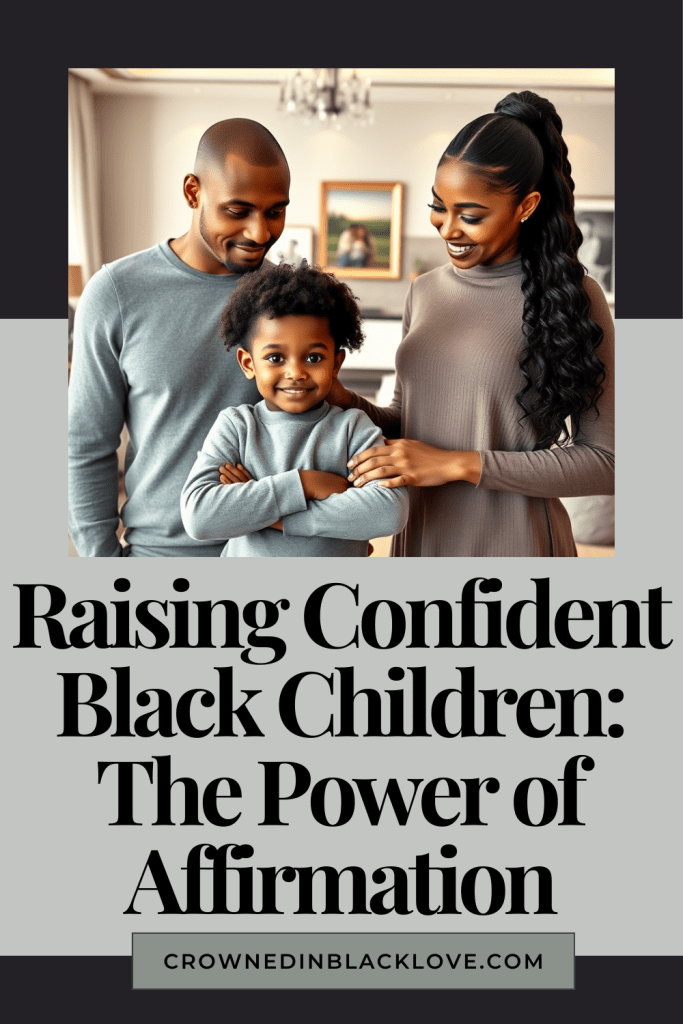
As parents, one of the most important gifts we can give our children is the ability to stand tall, proud of who they are and where they come from. Raising confident Black children means equipping them with the tools to navigate a world that often doesn’t recognize their full worth. Affirmation is one of the most powerful tools we have to build their self-esteem, cultural pride, and emotional intelligence. By regularly affirming their value, we teach them to embrace their Black identity with strength and pride. Let’s explore how we can raise confident Black children through the power of positive reinforcement and affirmation.
1. The Power of Affirmations
Positive affirmations are more than just words—they are seeds that grow into strong, confident mindsets. For Black children, hearing affirmations about their worth and potential is crucial. Phrases like “You are brilliant,” “Your Black skin is beautiful,” and “Your voice matters” help to counter negative stereotypes and reinforce their self-worth.
Pro Tip: Start each day with affirmations. Make it a ritual to say empowering statements that remind your child of their brilliance and beauty. It can be something as simple as “You are amazing just as you are.”
2. Instilling Cultural Pride
Children who are proud of their heritage carry that pride wherever they go. Teaching Black children about the rich history, culture, and accomplishments of their ancestors not only helps them feel connected to their roots but also instills confidence in their identity. Let them know that they come from a long line of kings, queens, freedom fighters, scholars, and creators who have shaped the world.
Pro Tip: Share stories of influential Black figures, both past and present, with your child. Books, movies, and family conversations are great ways to celebrate Black culture. Maya Angelou, Thurgood Marshall, and Oprah Winfrey are just a few role models to start with.
3. Building Emotional Intelligence
Confidence is not just about how a child sees themselves, but also how they understand and manage their emotions. Encouraging emotional intelligence in Black children helps them handle challenges with resilience and self-assurance. Teaching them to express their feelings, communicate effectively, and build empathy is a critical part of raising a well-rounded and confident individual.
Pro Tip: Encourage your child to talk about how they feel—whether they’re happy, sad, frustrated, or proud. Provide a safe space for emotional expression and validate their feelings. This teaches them that it’s okay to be vulnerable and that their emotions are important.
4. Modeling Confidence and Self-Love
Children learn by example, so modeling self-love and confidence is key. When they see you celebrating your own identity and embracing who you are, they’ll be more likely to do the same. Show your child how to stand tall, be proud of who they are, and treat themselves with love and respect.
Pro Tip: Show your child how you affirm your own worth. Whether it’s speaking positively about yourself in front of them or practicing self-care, your actions speak louder than words. They will learn from the way you carry yourself.
5. Creating a Supportive Environment
Confidence grows in a supportive environment where children feel safe to be themselves. Surround your child with people who uplift them, celebrate their uniqueness, and encourage them to reach for their dreams. A strong community can help reinforce their confidence, especially when they see others who look like them succeeding.
Pro Tip: Foster relationships with other families and communities that value Black culture and identity. Create spaces where your child can be surrounded by like-minded individuals who encourage and support each other.
In Closing:
Raising confident Black children isn’t just about helping them navigate the world—it’s about teaching them to embrace their identity, their heritage, and their greatness. Through affirmations, cultural pride, emotional intelligence, and a supportive environment, we can raise children who are strong, proud, and ready to take on the world. Their confidence will not only empower them but will inspire future generations to carry that torch forward.
The power of affirmation can raise confident Black children who are proud of who they are. Start with daily affirmations, cultural pride, and emotional intelligence! #BlackParenting #Confidence #BlackLove 💫
Hey, family! If you haven’t seen War Room yet, you’re missing out. This movie is more than just a feel-good story—it’s a powerful reminder of the strength we have as Black people and the importance of love, faith, and family. Watching this movie made me reflect on how much we rely on each other, how prayer can change lives, and how we can use the lessons of the film to build stronger families and communities. Let me tell you why this movie is perfect for us.
War Room (2015), directed by Alex and Stephen Kendrick, is a Christian drama that has garnered widespread acclaim for its portrayal of faith, marriage, and the transformative power of prayer. While the film appeals to a broad audience, its message is especially impactful for the Black community. With strong performances from lead actors Priscilla Shirer and T.C. Stallings, War Room offers not just an engaging story, but a profound lesson in building stronger families, supporting one another, and relying on faith during challenging times.
A Story of Redemption and Transformation
At its core, War Room focuses on the struggles and triumphs of a married couple, Elizabeth and Tony Jordan. Their relationship is on the brink of collapse due to financial struggles, infidelity, and a lack of communication. However, the turning point comes when Elizabeth meets Miss Clara, an older, wise woman who introduces her to the concept of a “war room” – a private, sacred space where prayer becomes the weapon to fight for her marriage, her family, and her peace of mind.
For the Black community, the movie highlights an essential aspect of life: the importance of building and maintaining strong relationships and family bonds. With many Black families facing systemic challenges, financial hardships, and societal pressures, War Room serves as a reminder that despite external circumstances, the foundation of love and faith can help families persevere through adversity.
Why War Room is Great for the Black Community
Emphasis on Faith as a Source of Strength
For many in the Black community, faith has historically been a cornerstone of resilience. From the Civil Rights Movement to today, prayer and belief in God have provided strength in times of hardship. War Room showcases the power of prayer, not as a passive act, but as an active form of warfare. Miss Clara’s teachings to Elizabeth, emphasizing that prayer is a direct way to engage with the challenges we face, can resonate deeply within the Black community, where spirituality often plays an integral role in day-to-day life.
Marriage and Family as Central Pillars
In the face of external pressures, War Room underscores the importance of fighting for the stability and strength of the family unit. The portrayal of a Black marriage going through difficult times speaks to the broader realities many Black couples face. The movie emphasizes the necessity of communication, trust, and mutual respect, while also advocating for the power of prayer as a unifying force. By focusing on family, War Room teaches that the strength of the Black community starts in the home – through nurturing healthy relationships, guiding children with love, and standing firm in faith.
Mentorship and Support Among Black Women
Miss Clara, the elderly Black woman who mentors Elizabeth, is a powerful figure in the film. She represents wisdom, strength, and the nurturing spirit of older generations in the Black community. Her willingness to guide Elizabeth and share her own struggles provides a beautiful example of mentorship and intergenerational support. Black women, often at the heart of family dynamics, are shown here as a source of not only strength but wisdom, reminding viewers of the importance of women supporting each other through shared faith and experiences.
Dealing with Struggles in a Positive Light
The struggles depicted in War Room – financial stress, infidelity, and miscommunication – are issues many Black families can relate to. However, the movie offers a hopeful and constructive approach to dealing with these challenges. Instead of perpetuating negative stereotypes or hopelessness, it emphasizes solutions grounded in faith, accountability, and action. The movie reinforces that challenges don’t have to lead to separation or destruction; they can lead to healing and transformation through faith and prayer.
Lessons Learned from War Room
Prayer Is Powerful – Use It to Strengthen Relationships
One of the most significant takeaways from War Room is the importance of prayer as an active tool for transformation. The “war room” is more than a physical space – it is a mindset. By carving out time to pray intentionally for the people and situations that matter most, individuals can experience personal growth, peace, and resolution. This lesson encourages the Black community to prioritize faith, whether it’s through individual prayer or shared spiritual practices with family members.
Communication Is Key in Marriage and Family Life
The breakdown of communication is a central theme in War Room, with Elizabeth and Tony’s marriage on the brink of collapse due to their inability to effectively communicate. The film teaches that open, honest, and empathetic communication is essential for healthy relationships. This lesson is particularly vital in the Black community, where generational trauma and societal stressors can sometimes create barriers to effective communication. By fostering honest conversations, couples and families can heal and grow stronger together.
The Power of Forgiveness and Second Chances
Throughout War Room, we see the importance of forgiveness, particularly when it comes to healing relationships. The characters must confront their mistakes, ask for forgiveness, and give second chances. This lesson is crucial in the Black community, where forgiveness can often be a path to healing both personal and collective wounds.
Mentorship and Support from Elders
The relationship between Miss Clara and Elizabeth showcases the beauty of mentorship and how wisdom from older generations can help guide younger ones. In the Black community, where strong communal ties are often a source of support, the value of mentorship cannot be overstated. War Room reminds us that the guidance and wisdom passed down from elders can be transformative, particularly in times of hardship.
How War Room Can Help the Black Community Today
In a world where Black families face unique challenges – from systemic injustice to economic disparities – War Room provides a hopeful reminder of the strength that lies within the family and community. The film encourages the Black community to:
Rely on Faith: Trust in God and the power of prayer to overcome life’s struggles.
Communicate and Build Relationships: Strengthen marriages, families, and communities by prioritizing communication and mutual support.
Value Mentorship: Older generations have a wealth of wisdom to share; seeking and offering mentorship can create a stronger, more unified community.
Practice Forgiveness: Let go of past hurts and work toward healing for personal and relational growth.
Conclusion
In the end, War Room isn’t just a movie—it’s a guide to living better, loving better, and fighting for the things that matter most. It reminds us of the strength we have as Black people when we come together in faith and love. If you haven’t seen it yet, I promise it’ll change your perspective on what it means to fight for your family and your future. Let’s take these lessons to heart and use them to strengthen our community.
Looking for a movie that’ll inspire and uplift? War Room is a must-see for the Black community! It’s all about love, faith, and fighting for your family. Read why this movie is so powerful for us today. #BlackLove #Family #Faith #WarRoom
Marriage isn’t always a smooth ride. It takes effort, commitment, and a little creativity to keep the spark alive. Over time, routines can settle in, and the passion that once came so easily might start to feel like a distant memory. But here’s the good news: with a little intentionality and care, you can reignite that connection. In fact, some of the best moments in a relationship happen when you take the time to nurture your bond. So, if you’re ready to keep that fire burning, here are five relationship tips that will help you stay close, communicate better, and strengthen your marriage.
Keep the Spark Alive in Your Marriage
1. Communicate Openly and Honestly
Let’s be real: sometimes we assume our partner knows exactly what we need or feel, but that’s not always the case. Good communication is the foundation of any strong relationship. Make time to talk openly about your feelings, dreams, and challenges. Whether it’s a deep conversation or a simple check-in, being honest and transparent with each other helps build trust and keeps misunderstandings to a minimum.
Pro Tip: Try setting aside “talk time” each day, even if it’s just for 10 minutes, to catch up and discuss what’s on your mind.
2. Embrace Each Other’s Love Language
You’ve probably heard of love languages before, but understanding how your partner expresses love (and how they like to receive it) can do wonders for your connection. Whether it’s words of affirmation, acts of service, receiving gifts, quality time, or physical touch, knowing your partner’s love language helps you show love in a way that really resonates with them.
Pro Tip: Take the 5 Love Languages Quiz together and talk about how you can each cater to the other’s love language more intentionally.
3. Make Time for Date Nights (Even If You’re Busy)
Life gets hectic, and between work, kids, and everything else, it’s easy to let date nights slip away. But date nights are a crucial part of keeping the romance alive. It doesn’t have to be extravagant; even a quick dinner, a movie, or a walk can create space for intimacy and fun.
Pro Tip: Keep it spontaneous! Plan a surprise date night for your partner, or take turns planning activities to keep things fresh.
4. Trust and Support Each Other Through Thick and Thin
Trust is one of the most important elements of a strong marriage. This means being there for each other through the good times and the tough times. It’s about showing support, not just when things are easy, but especially when life gets hard. Trust-building actions, like keeping your promises, being reliable, and showing empathy, strengthen your bond.
Pro Tip: Regularly check in with each other emotionally. Ask how your partner is feeling, and show that you’re there to listen, not just fix things.
5. Keep the Physical Connection Strong
Intimacy isn’t just about physical attraction—it’s about maintaining that closeness and connection with your partner. Simple touches, hugs, or holding hands can go a long way in keeping the intimacy in your marriage alive. Also, don’t be afraid to express affection in different ways, whether that’s through compliments, shared laughter, or meaningful touch.
Pro Tip: Try a “no distractions” rule for when you’re together. Put away the phones and focus solely on each other, whether you’re talking, cuddling, or just enjoying each other’s company.
In Closing:
Marriage is a journey, and like any long journey, it requires effort to keep things moving smoothly. The spark in your relationship doesn’t have to fade—it can stay strong if you nurture it with intention and love. By communicating openly, embracing each other’s love languages, making time for each other, building trust, and keeping that physical connection, you’ll find that the flame in your marriage is more than just a spark—it’s a steady burn that will last for years to come.
Want to keep the spark alive in your marriage? Check out these 5 relationship tips for better communication, intimacy, and trust. #MarriageTips #RelationshipAdvice #LoveGoals 💖
Parenting is one of the most rewarding, yet challenging, roles anyone can take on. As a Black parent, you’re not just raising your children; you’re also preparing them for a world that can sometimes be tough on us. That’s why it’s so important to build a foundation of love, strength, and resilience. When I first came across the P.A.R.E.N.T.I.N.G. acronym, it struck me as the perfect guide for how we can shape the next generation in the Black community. Each letter represents qualities that, when embraced, can help us raise empowered, confident, and loving children. Let’s dive into why P.A.R.E.N.T.I.N.G. is more than just an acronym—it’s a way of life.
P – Patience: The Key to Nurturing Growth
Parenting requires an immense amount of patience. Our children are growing, learning, and sometimes challenging us at every turn. In the Black community, patience is even more important as we often have to teach our children about the unique challenges they may face in the world. Patience allows us to guide them with understanding, rather than frustration. It’s about nurturing their growth, not rushing it.
A – Accountability: Teaching Responsibility from the Start
Accountability is crucial for both parents and children. As parents, we have to model accountability by owning our actions and setting a good example. For our kids, we need to teach them responsibility and the importance of their choices. In the Black community, where our children are often faced with systemic challenges, teaching accountability helps them understand the importance of standing by their actions and decisions—good or bad.
R – Respect: Building a Foundation of Mutual Understanding
Respect is one of the most important qualities we can teach our children. This means respecting others, respecting themselves, and respecting their environment. In our community, respect goes beyond just the home; it extends to understanding the broader cultural and societal values that shape us. Teaching our children respect ensures that they grow into individuals who value and uplift others, creating a more harmonious world for everyone.
E – Empathy: Walking in Someone Else’s Shoes
Empathy is a quality that every parent should aim to instill in their children. It’s about teaching them to understand and share the feelings of others. In the Black community, where we often face adversity, empathy becomes even more important. By teaching our children to be compassionate and kind, we prepare them to be leaders who will stand up for justice, equality, and the well-being of others.
N – Nurturing: Creating an Environment of Love and Safety
Every child needs a nurturing environment to thrive. This means providing love, security, and a safe space where they can be themselves. In the Black community, nurturing our children involves celebrating their uniqueness and helping them see the beauty in their culture, identity, and history. A nurturing home helps children feel loved and accepted, which boosts their self-esteem and confidence.
T – Teamwork: Working Together as a Family
Parenting is never a one-person job. Teamwork between partners, extended family members, and the community is essential in raising strong children. In the Black community, where we often rely on our family units for support, teaching teamwork at home shows children the value of working together for the greater good. It helps them understand that strong relationships are built on collaboration, trust, and mutual support.
I – Integrity: Standing Firm in Our Values
Integrity is about doing what’s right, even when it’s not easy. As parents, we must lead by example, showing our children the importance of honesty, trustworthiness, and sticking to their values. In the Black community, where our integrity is sometimes questioned, it’s important to teach our children the strength of being true to themselves and their beliefs, no matter what.
N – Nurturing: Encouraging Personal Growth
Another important aspect of nurturing is encouraging personal growth. It’s about being there to support your child’s development, whether that’s academic, emotional, or social. We must empower our children to explore their talents, chase their dreams, and never settle for less than they deserve. In our community, where access to opportunities can sometimes be limited, nurturing personal growth means giving them the tools and mindset to succeed against all odds.
G – Gratitude: Cultivating a Spirit of Appreciation
Gratitude is a key part of creating a positive and resilient mindset in children. Teaching them to appreciate what they have, even in challenging circumstances, helps them develop a sense of humility and contentment. In the Black community, where we often don’t have as many resources, gratitude can help our children value the small victories and the blessings in their lives.
E – Equality: Teaching Fairness and Justice
Teaching equality and fairness is crucial for parenting in today’s world. It’s about helping our children understand that everyone deserves to be treated equally and with respect. In the Black community, where we face inequality, it’s vital that we equip our children with the knowledge and courage to stand up for justice and equity, ensuring they grow up to be advocates for positive change.
In Conclusion:
Parenting is one of the most important jobs we’ll ever have, and the P.A.R.E.N.T.I.N.G. acronym provides us with a powerful guide for raising the next generation. By incorporating Patience, Accountability, Respect, Empathy, Nurturing, Teamwork, Integrity, Nurturing (again!), Gratitude, and Equality into our parenting approach, we create a strong foundation for our children to succeed and thrive.
As Black parents, we know the importance of raising children who are not only resilient but also compassionate and empowered. So, let’s embrace the P.A.R.E.N.T.I.N.G. blueprint and build stronger families, stronger communities, and a brighter future for our children.
Raising strong, resilient kids in the Black community starts with love and guidance. Check out how the P.A.R.E.N.T.I.N.G. acronym can help parents nurture empowered, confident children today. 💪🏽👶🏽 #BlackParenting #FamilyGoals #ParentingTips