Conflict Resolution That Builds Stronger Bonds

Healthy conflict resolution for couples transforms arguments from battlegrounds into bridges. When partners approach disagreements with respect and curiosity, they solve problems without eroding trust. This skill not only prevents resentment but actively builds deeper intimacy over time.

Why Healthy Conflict Matters

Most couples fight about the same things—money, chores, intimacy, or unmet needs—but the real damage comes from how they fight. Unhealthy arguments escalate quickly, leaving emotional bruises that linger. In contrast, healthy conflict resolution for couples focuses on collaboration, turning “me vs. you” into “us vs. the problem.”

Research from relationship experts like John Gottman shows that successful couples have a 5:1 ratio of positive to negative interactions during conflicts. They repair quickly and emerge stronger. Poorly handled fights, however, predict divorce with startling accuracy.

How to Argue Well: Core Principles

The best arguments aren’t about winning; they’re about mutual understanding. Start by recognizing that your partner’s perspective is valid, even if different from yours. Keep the conversation focused on the current issue with a calm tone and simple language.

Practice active listening: put down distractions, maintain eye contact, and nod to show engagement. Avoid defensiveness by pausing to breathe—this simple habit can de-escalate tension in seconds. A willingness to validate feelings (“I see this really matters to you”) opens doors to solutions.

Practical Steps Couples Can Actually Use

Implement these evidence-based steps for healthy conflict resolution for couples:

  • Pause before reacting. Count to 10 if emotions spike; this prevents knee-jerk responses that worsen things.
  • Use “I” statements. Say “I feel overwhelmed when dishes pile up” instead of “You never help.” This owns your emotions without blame.
  • Stick to one issue at a time. Taboo old grievances until the current topic resolves.
  • Repeat back what you heard. “So you’re saying you need more quality time?” This builds empathy and accuracy.
  • Take a structured break. Agree on a 20-minute timeout, then reconnect. Use the time for self-soothing, not stewing.
  • Return calmer and collaborative. Resume with “What can we do differently next time?”
  • End with agreement. Pick one actionable next step, like “We’ll plan a date night this week.”

Practice these weekly in low-stakes talks to make them automatic during real conflicts.

What Healthy Conflict Looks Like in Action

Healthy conflict has clear boundaries: no name-calling, threats, scorekeeping (“But you did this last month!”), or character attacks. It includes humor, affection, and repair attempts like “I’m sorry I raised my voice.”

Picture this: During a money argument, one says, “I’m scared about our savings.” The other responds, “I get that—let’s brainstorm together.” They compromise on a budget app. Both feel heard, trust deepens.

Unhealthy versions devolve into yelling or silent treatment, eroding safety. Spot the difference by checking: Do you feel safer or more distant afterward?

Common Pitfalls and How to Avoid Them

  • The Four Horsemen: Gottman’s red flags—criticism, contempt, defensiveness, stonewalling. Counter with gentle startups, respect, responsibility, and self-care breaks.
  • Mindreading: Assuming motives leads to misunderstandings. Ask: “What were you feeling there?”
  • Flooding: When overwhelmed, physiology shuts down rational thought. Mandatory breaks prevent this.

Track patterns in a shared journal to spot recurring triggers early.

Long-Term Benefits for Your Relationship

Couples skilled in healthy conflict resolution for couples report higher satisfaction, better sex lives, and resilience against stress. It models emotional intelligence for kids too. Over time, arguments become rare because needs get met proactively.

Commit to monthly “state of the union” meetings: 20 minutes sharing appreciations, concerns, and dreams. This prevents buildup.

Real Couple Stories

Take Sarah and Mike: Endless chore fights turned toxic until they adopted “I” statements and timeouts. Now, they joke about their “pause button.” Or Lisa and Tom, who used reflection to uncover resentment from unmet intimacy needs—leading to renewed passion.

These aren’t anomalies; they’re results of consistent practice.

Final Tips for Lasting Change

Start small: Pick one step this week. Role-play with a trusted friend if solo practice feels awkward. If patterns persist, consider a couples therapist trained in EFT (Emotionally Focused Therapy).

Healthy conflict resolution for couples isn’t innate—it’s a learnable skill that pays dividends forever.

What are your thoughts about Conflict Resolution That Builds Stronger Bonds

Healthy conflict builds bonds—don’t let arguments break yours. Practical steps for couples: pause, use “I” statements, listen actively & agree on next steps. Turn fights into growth! Read more: [link] #Relationships #CouplesTherapy #HealthyArguments (214 characters)

Shield Your Love: Beat Social Media & Family Drama

Couples face constant threats from social media comparisons and family pressures that test their unity. Protecting your relationship means proactive steps to filter out the noise and focus inward.

Why Outside Noise Hurts

Social media often shows curated perfection, sparking jealousy or doubt in real relationships. Family opinions, even well-meaning, can create division if they challenge your choices. These influences erode trust over time without clear defenses.

Establish Firm Boundaries

Agree on social media rules, like no posting private arguments or limiting scroll time together. Tell family kindly but firmly: “We value your input, but decisions are ours.” Boundaries create a safe space free from unsolicited advice.

Prioritize Open Talks

Hold weekly check-ins to air feelings about external stressors using “I feel” statements. Reaffirm your shared values and commitment to drown out outside voices. Honest dialogue builds resilience against drama.

Cut Social Media Clutter

Unfollow toxic accounts and curate feeds with positive, real couple stories. Swap screen time for unplugged dates—walks, games, or deep conversations. Ready to go deeper? Try our 30-Day Offline Connection Challenge to rebuild your bond screen-free. Real connection trumps virtual validation.

Show a United Front

Respond to critics as a team, avoiding solo defenses that invite more input. Focus on your “why” as a couple, ignoring societal timelines for marriage or kids. Unity signals strength to outsiders.

Build Inner Strength

Practice gratitude for your partner’s unique qualities daily. Invest in shared hobbies that reinforce your bond beyond opinions. A fortified relationship naturally repels noise.

What are your thoughts, Shield Your Love: Beat Social Media & Family Drama

Shield your love from social media drama & family noise! 7 tips to stay grounded & united. 💑🔒 New post: [link] #RelationshipAdvice #ProtectYourLove #CoupleGoals

What Healthy Love Actually Looks Like Day to Day

Love Is More Than a Feeling

A lot of people talk about love like it is only about chemistry, gifts, romance, or grand gestures.

And while those things can be beautiful, healthy love is really shown in the everyday moments.

It is not just what someone says when things are good. It is how they show up when life gets hard, when feelings are hurt, when schedules are busy, and when nobody is watching.

Healthy love is not perfect. But it is intentional. It is steady. And it makes room for growth, honesty, and peace.

Healthy Love Starts With Communication

One of the clearest signs of healthy love is open communication.

That does not mean couples never disagree. It means they are willing to talk through things instead of shutting down, ignoring each other, or letting resentment build.

Healthy communication looks like:

  • Asking questions and listening to understand.
  • Speaking with honesty and respect.
  • Making space for hard conversations.
  • Avoiding the silent treatment.
  • Saying what you need instead of expecting your partner to guess.

When communication is healthy, both people feel heard. That does not mean both people always agree, but it does mean both people feel safe enough to speak.

Accountability Is a Form of Love

Healthy love also includes accountability.

That means being able to say, “I was wrong,” “I hurt you,” or “I could have handled that better.”

In unhealthy relationships, people often protect their pride more than the relationship. They defend themselves, blame the other person, or refuse to take responsibility.

But accountability builds trust.

When a partner owns their mistakes, it shows maturity. It says, “I care more about us than being right.”

That matters because love cannot grow in a place where nobody is willing to be honest about their behavior.

Consistency Builds Security

A relationship can have strong chemistry and still feel unstable if there is no consistency.

Healthy love is dependable.

It looks like:

  • Doing what you said you would do.
  • Showing up when you say you will.
  • Keeping your word.
  • Being emotionally present, not just physically around.
  • Making your partner feel like they can count on you.

Consistency may not sound romantic, but it is one of the strongest signs of real love.

Big gestures can be exciting, but it is the steady, repeated behavior that helps a relationship feel safe.

Emotional Safety Matters

Healthy love should feel emotionally safe.

That means your partner can express emotions without fear of being mocked, dismissed, or punished for having feelings.

Emotional safety looks like:

  • Listening without interrupting.
  • Responding with care instead of cruelty.
  • Making room for vulnerability.
  • Not using someone’s feelings against them later.
  • Being able to disagree without disrespect.

In a safe relationship, both people can be honest without feeling like honesty will be weaponized.

This is especially important because emotional safety is what allows intimacy to deepen over time.

Healthy Love Shows Up in Small Moments

A lot of people look for signs of love in big moments, but everyday behavior tells the real story.

Healthy love looks like:

  • Checking in after a hard day.
  • Remembering little details that matter.
  • Sharing responsibilities.
  • Offering encouragement.
  • Saying thank you.
  • Apologizing when necessary.
  • Making time for each other even when life is busy.

These things may seem small, but together they create a relationship that feels cared for and valued.

Love is not just about how someone feels in the moment. It is about what they consistently choose to do.

What Healthy Love Does Not Look Like

Sometimes it helps to name what healthy love is not.

Healthy love is not:

  • Constant confusion.
  • Fear of speaking honestly.
  • Feeling like you have to walk on eggshells.
  • Repeated disrespect.
  • One person always carrying the emotional load.
  • Apologies without changed behavior.
  • Love that only shows up when it is convenient.

If a relationship is always unstable, always painful, or always leaving one person drained, that is not healthy love.

Love should challenge you at times, but it should not constantly harm you.

Why This Matters for Black Families

For Black families, healthy love matters on a deeper level because relationships are often carrying more than just two people.

They carry children, home life, emotional wellness, and legacy.

When couples model healthy love, they are showing children what respect, communication, and emotional safety look like in real life. That becomes part of what gets passed down.

Children do not only learn from what we say. They learn from what they see.

So when adults build healthy love in the home, they are helping shape the next generation’s understanding of love, trust, and connection.

Healthy Love Is a Practice

Healthy love is not something you arrive at once and never have to work on again.

It is a daily practice.

It takes patience, honesty, humility, and effort.

Some days it looks like deep conversation. Other days it looks like choosing calm over conflict. Sometimes it means stepping back and listening more. Sometimes it means apologizing. Sometimes it means doing the small thing that helps your partner feel seen.

That is what healthy love really looks like.

Not just romance.
Not just words.
Not just promise.

Behavior.
Consistency.
Safety.
Care.

Call to Action

This week, take a real look at your relationship.

Ask yourself:

  • Do we communicate with honesty and respect?
  • Do we take accountability?
  • Do we create emotional safety?
  • Are we consistent in how we show up for each other?

If the answer is yes, keep building.
If the answer is no, start with one small change.

Healthy love is not built in one day.
It is built one choice at a time.

And those choices shape not just a relationship, but a family, a home, and a legacy.

What are your thoughts about What Healthy Love Actually Looks Like Day to Day

Healthy love is more than romance. It shows up in communication, accountability, consistency, and emotional safety every day. Learn what healthy love really looks like. #CrownedInBlackLove #BlackLove #HealthyRelationships

M.A.R.R.I.A.G.E.: The Blueprint for Stronger Black Marriages

Marriage in the Black community holds so much significance—it’s about love, family, and building a future together. But what truly makes a marriage strong? It’s not just about saying “I do”; it’s about nurturing and embodying qualities that keep the relationship healthy and lasting. When I came across the M.A.R.R.I.A.G.E. acronym, it hit me that this is the perfect blueprint for Black marriages, focusing on key principles that can help us grow and thrive together. Let’s dive into why M.A.R.R.I.A.G.E. is not just a word, but a mindset that can strengthen any marriage.

M – Mutual Respect: The Heart of Every Strong Union

Respect is the foundation of any relationship, but in marriage, it becomes even more critical. Mutual respect means valuing each other’s opinions, dreams, and needs. In the Black community, where we are often fighting against external forces, it’s crucial to have a safe space within our marriages where we are seen, heard, and loved for who we truly are. Mutual respect means building each other up, not tearing each other down.

A – Accountability: Owning Up to Our Actions

Accountability isn’t always easy, but it’s essential in a marriage. It means owning up to our mistakes, being honest about our shortcomings, and taking responsibility for our actions. In the Black community, where we are often expected to be strong in the face of adversity, it’s important to have a partner who holds us accountable, lovingly and constructively. This allows both partners to grow and evolve.

R – Respect: The Cornerstone of Partnership

While respect is highlighted earlier, this one emphasizes respect as a core value that supports all other aspects of marriage. It’s about honoring each other’s individuality while working together as a team. Respect in marriage is about acknowledging that both partners bring something valuable to the table. This mutual admiration leads to stronger, more supportive unions.

R – Responsibility: Upholding Your Role

Marriage is a partnership, and with that partnership comes responsibility. Whether it’s sharing duties, taking care of the home, or supporting each other’s dreams, both partners need to step up and do their part. Responsibility in a marriage means doing your best to fulfill your role, without expecting the other to pick up the slack. In the Black community, where we know the importance of family and community, responsibility means showing up for each other every day.

I – Integrity: Doing the Right Thing, Even When No One Is Watching

Integrity in marriage means being honest, transparent, and trustworthy. It’s about doing what you say you’re going to do, whether it’s about your word or your actions. Integrity builds the trust that is essential to the success of a marriage. In a world where trust can sometimes be hard to find, it’s important to have a partner who stands by their values and keeps the marriage sacred.

A – Affection: Showing Love and Appreciation

Affection is essential to keep the spark alive in any marriage. It’s the hugs, the kisses, the “I love yous,” and the gestures that make us feel appreciated. In the Black community, affection can sometimes be overlooked as we deal with external stressors, but it’s important to remember that showing love is an essential part of keeping the relationship healthy and connected. Affection strengthens the bond and reminds both partners why they fell in love in the first place.

G – Growth: Evolving Together

A marriage that stays stagnant will eventually wither. Growth means embracing change, learning together, and supporting each other’s personal and professional journeys. It’s about encouraging your partner to become the best version of themselves, just as they do for you. Growth in marriage means you are not the same person you were when you first met, but you have evolved together—stronger and more united.

E – Equality: A Relationship of Balance

Equality in marriage means both partners have an equal say, equal power, and equal respect. It’s about sharing responsibilities, dreams, and challenges in a balanced way. Equality fosters a partnership where both people feel valued and appreciated. In the Black community, where we often face systemic inequalities, fostering equality in our marriages is essential for mutual growth and love.

In Conclusion:

Marriage is a beautiful, challenging, and rewarding journey. The M.A.R.R.I.A.G.E. acronym offers a clear roadmap for how we can strengthen our relationships and build something that lasts. From mutual respect to accountability, integrity to affection, these qualities are the glue that holds marriages together. For the Black community, nurturing these principles can help us create powerful, thriving partnerships that stand the test of time.

So, whether you’re newly married or been together for years, take a moment to reflect on how you can bring these qualities into your relationship. A marriage based on M.A.R.R.I.A.G.E. isn’t just about surviving—it’s about thriving together, hand in hand.

Want a stronger marriage? Learn how the M.A.R.R.I.A.G.E. acronym—Mutual Respect, Accountability, Responsibility, Integrity, Affection, Growth, and Equality—can help create lasting love in Black marriages. 💍 #BlackLove #MarriageGoals #RelationshipAdvice

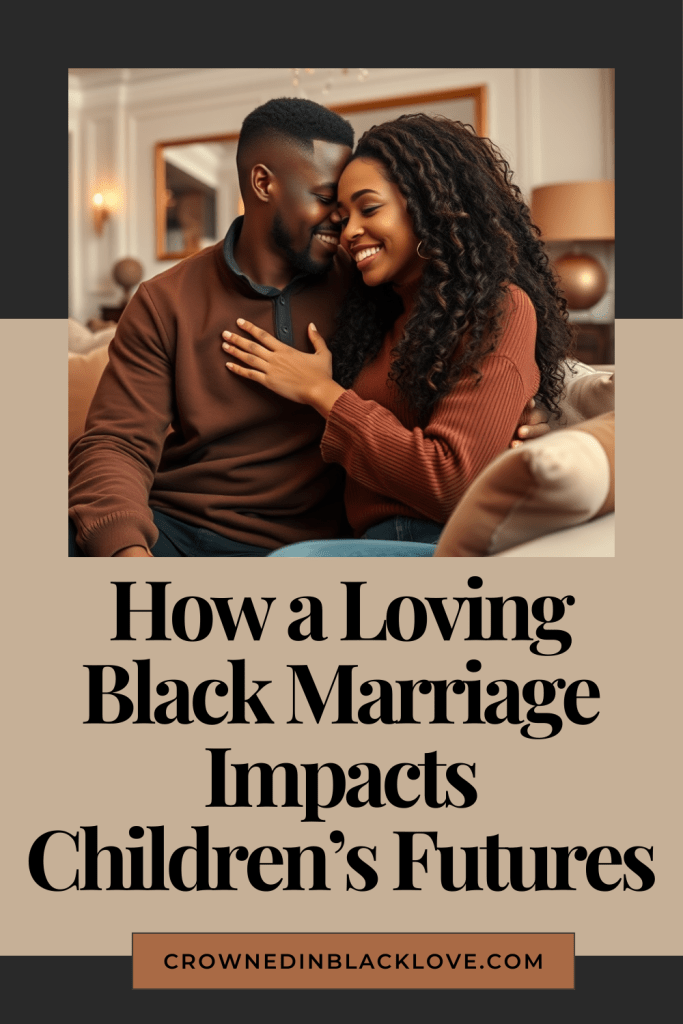
How a Loving Black Marriage Impacts Children’s Futures

When we think about what makes a child feel safe, loved, and secure, a strong, loving home environment comes to mind. But what truly builds that environment? While the love of both parents is important, the dynamic between them—especially in a loving Black marriage—has a profound impact on the emotional growth and development of their children. In Black families, where there can be extra challenges due to systemic issues, the strength of the parents’ relationship becomes even more essential in shaping children’s future success and self-esteem.

In this post, we will explore why a loving Black marriage isn’t just important for the couple, but for their children too. It’s about setting an example, teaching respect, and offering an emotional foundation that will stay with children for the rest of their lives.

The Impact on Children’s Emotional Well-Being:

Children are highly influenced by their home environment, and a loving marriage between their parents provides them with an emotional safe space. In households where parents have a strong bond, children feel loved and supported, which helps them develop emotional stability. Research shows that children raised in homes with involved parents who have a strong relationship tend to be more confident and emotionally resilient (American Psychological Association, 2020).

In a loving Black marriage, children grow up knowing that love, respect, and communication are the cornerstones of any relationship. For Black children, seeing their parents navigate life with a sense of partnership and support is a vital lesson in creating their own positive relationships as they grow older.

This emotional security is especially critical in Black communities, where external pressures like racism can affect children’s confidence. A healthy, loving marriage can act as a strong buffer against these pressures, providing children with a sense of belonging and pride in their identity.

The Role of Modeling Healthy Relationships:

Parents serve as the first role models in a child’s life, and their relationship with each other can have a profound influence on how children perceive love and relationships. In a loving Black marriage, children witness firsthand how to communicate effectively, resolve conflicts with respect, and show affection. These are lessons that go far beyond what children learn in school.

For Black boys, a loving marriage demonstrates how to treat women with respect and equality. For Black girls, it shows them what a healthy, loving relationship looks like, and what they should expect in their own partnerships as they grow older. When parents model these behaviors, they set the stage for children to develop their own positive relationships throughout their lives.

In a world where many children experience unhealthy or broken relationships, having the example of a loving marriage offers hope and teaches them what is possible. The beauty of a loving Black marriage is that it shows children how strong and empowering love can be, even when facing challenges outside the home.

Building Confidence and Self-Esteem:

One of the most powerful ways that a loving Black marriage impacts children is by boosting their self-esteem. Children who grow up in households where both parents are actively involved and share a loving bond are more likely to feel secure in their identities. They learn that they are worthy of love, respect, and care, which translates into higher levels of self-worth.

For Black children, this is especially important. In a society where Black children may face negative stereotypes or discrimination, having two parents who love each other and are involved in their lives can create a solid foundation for pride in their Black identity. The strength of the parents’ relationship provides children with a model of how to love themselves, how to take pride in their culture, and how to stand up against negative influences.

This boost in self-esteem leads to better outcomes in other areas of life, including school performance, friendships, and personal growth. When children feel supported and loved, they are more likely to pursue their goals, take risks, and believe in their ability to succeed.

The Long-Term Impact on Future Relationships and Success:

The lessons learned from a loving Black marriage go beyond childhood. As children grow into adults, they carry these lessons with them into their own relationships and careers. Children who witness love, respect, and communication in their parents’ marriage are more likely to have healthy romantic relationships themselves.

Research shows that children of strong marriages are more likely to have better social skills, fewer behavioral problems, and higher academic achievement (National Fatherhood Initiative, 2020). The positive influence of a loving Black marriage ripples out into the community as children grow into compassionate, responsible, and confident adults.

Moreover, children who grow up in stable homes with loving relationships are also more likely to contribute positively to society. They understand the value of collaboration, mutual support, and respect—key qualities that help create strong communities.

In Conclusion:

The impact of a loving Black marriage on children is immeasurable. By offering a foundation of emotional security, teaching respect, and fostering self-esteem, a strong partnership between Black parents helps raise confident, resilient children who are prepared to face life’s challenges. A loving Black marriage provides not only a model for how to love, communicate, and respect but also a sense of pride and identity that stays with children throughout their lives.

In a world that often tries to undermine the Black family, it’s important to remember that love is the glue that holds it all together. Strong, loving Black marriages give children the tools they need to grow into successful, happy, and empowered adults, continuing the cycle of love and strength for generations to come.

A loving Black marriage shapes the future of children, building confidence, respect, and a sense of identity. Learn how strong partnerships in the home create empowered kids ready to succeed. #BlackMarriage #FamilyStrength #Parenting