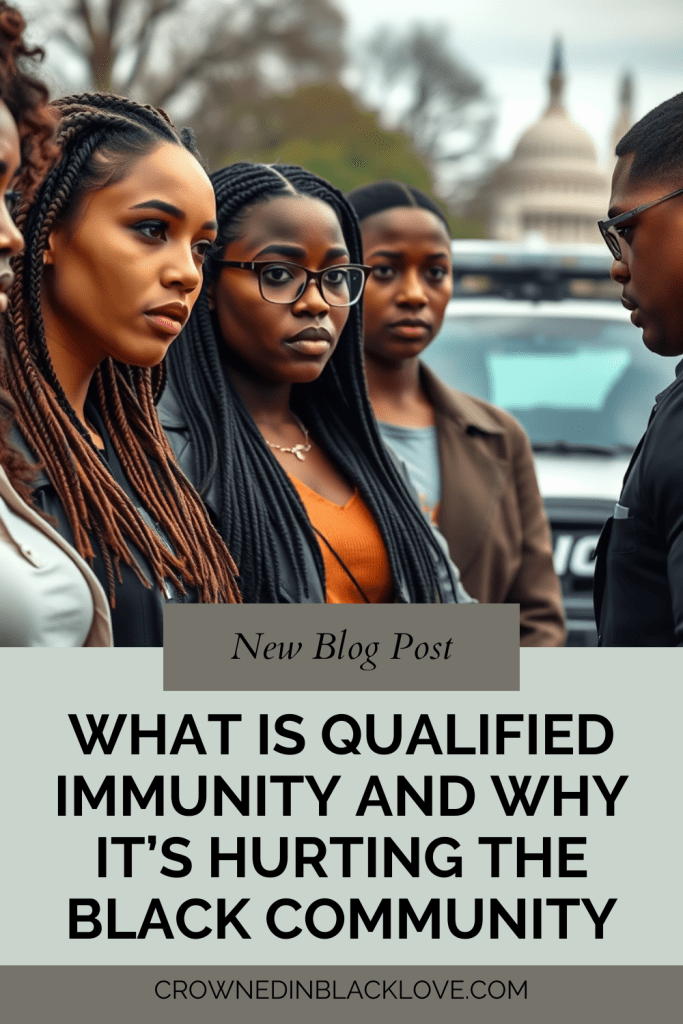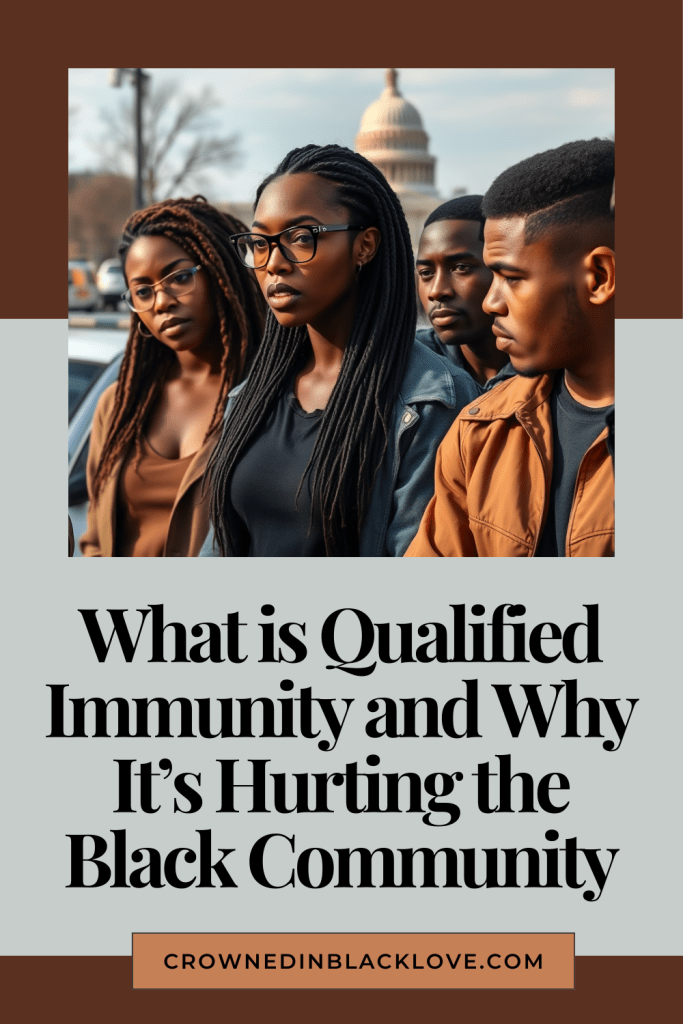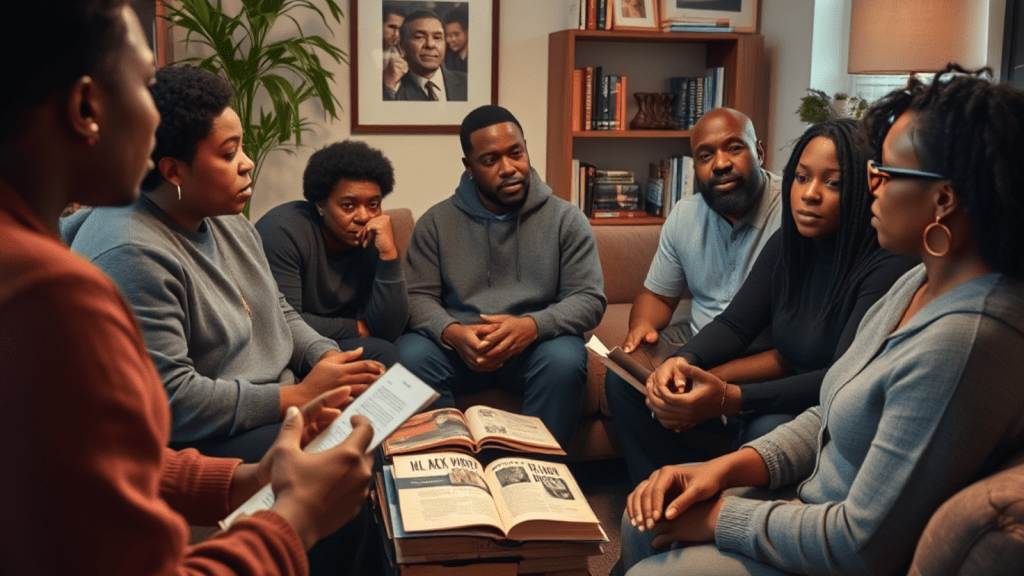

What is Qualified Immunity and Why It’s Hurting the Black Community

For years, the legal doctrine known as qualified immunity has shielded law enforcement officers from personal liability, even when they violate citizens’ rights. While this doctrine was initially intended to protect officers from frivolous lawsuits, it has instead become a barrier to justice, especially for Black communities. When police officers engage in misconduct, such as excessive force, racial profiling, or wrongful arrest, qualified immunity often makes it nearly impossible for victims to hold them accountable.

In this blog post, we’ll break down what qualified immunity is, how it operates, and why it has a disproportionately negative effect on Black communities, perpetuating cycles of injustice.

1. What Is Qualified Immunity?

Qualified immunity is a legal doctrine that protects government officials, including law enforcement officers, from personal liability for actions taken while performing their official duties—unless the officer violated “clearly established” law. In simpler terms, if a police officer’s actions don’t directly violate a specific, widely known law or constitutional right, they are often immune from lawsuits, even if their behavior is harmful or unjust.

The doctrine emerged from the courts in the 1960s to prevent frivolous lawsuits against public officials and allow officers to perform their duties without fear of constant legal challenges. However, over time, qualified immunity has evolved in a way that makes it nearly impossible for victims of police misconduct, particularly in Black communities, to seek justice.

2. How Does Qualified Immunity Impact the Black Community?

Black Americans, in particular, face disproportionate levels of police misconduct, including racial profiling, police brutality, and wrongful arrests. These issues are often exacerbated by qualified immunity, which prevents officers from being held personally accountable for their actions.

  • Lack of Accountability for Police Misconduct: When law enforcement officers are accused of misconduct, qualified immunity acts as a powerful shield. Even when it’s clear that a violation has occurred—such as in instances of excessive force or racial profiling—qualified immunity prevents victims from suing officers directly. This lack of accountability sends the message that police officers can act with impunity, particularly when Black individuals are involved.
  • Erosion of Trust in Law Enforcement: Qualified immunity undermines the trust that Black communities have in law enforcement. When police officers are not held accountable for harmful actions, the relationship between law enforcement and Black communities deteriorates. This erosion of trust creates a vicious cycle where law enforcement and the communities they serve are increasingly alienated from one another.
  • Perpetuation of Racial Injustice: Since Black individuals are disproportionately impacted by police violence and misconduct, the protections afforded by qualified immunity disproportionately hurt Black communities. The inability to hold officers accountable for violations—such as the killing of unarmed Black men and women—creates a system where racial injustice continues unchecked.

3. Real-Life Examples: How Qualified Immunity Fails Black Communities

To understand the true harm of qualified immunity, let’s look at a few real-life examples of how it has affected the Black community.

  • The Killing of George Floyd: The tragic death of George Floyd at the hands of Minneapolis police officers is a stark example of how qualified immunity hinders accountability. Despite the widespread condemnation of Officer Derek Chauvin’s actions—captured on video for the world to see—qualified immunity can protect officers from legal consequences, even in cases as blatant as this. Without significant reforms, victims like George Floyd have no recourse for justice outside of public protests and civil rights movements.
  • The Shooting of Breonna Taylor: Breonna Taylor’s death in her own home sparked protests across the nation, with calls for justice ringing out for the 26-year-old Black woman killed by police officers during a botched raid. While officers involved in the shooting were not held accountable for her death, qualified immunity acts as a roadblock to suing officers involved in excessive force, even when such incidents result in the loss of life.
  • The Arrest of Sandra Bland: Sandra Bland was arrested in Texas after a routine traffic stop, which escalated into her tragic death in police custody. Her case highlights how qualified immunity prevents accountability when it comes to wrongful arrests or unjust treatment by law enforcement. Despite significant questions surrounding her arrest and death, qualified immunity protects those responsible for her mistreatment.
Qualified immunity and the Black community

4. Why Reforming Qualified Immunity Is Critical for the Black Community

To achieve justice for Black communities and move toward a more equitable legal system, reforming qualified immunity is essential. Here’s why:

  • Restoring Accountability: Eliminating qualified immunity would allow victims of police misconduct to directly sue officers and hold them accountable for violations of rights. This is crucial for rebuilding trust in law enforcement and ensuring that officers are held responsible for their actions.
  • Reducing Police Violence: Without the shield of qualified immunity, officers may be more cautious in their use of force, knowing that they will be held accountable for their actions. This could lead to fewer instances of police brutality and a more thoughtful, responsible approach to law enforcement.
  • Strengthening Community Relations: Reforms that address qualified immunity would allow Black communities to feel that they have legal recourse when they face injustice. This would be an important step toward mending the fractured relationship between law enforcement and Black Americans, creating an environment of mutual respect and cooperation.
  • Challenging Systemic Racism: Qualified immunity is just one of many tools that perpetuate systemic racism within law enforcement. Reforming this doctrine would be a critical step in addressing broader issues of racial inequality and injustice within police departments. It would also send a message that Black lives are valued and deserving of protection under the law.

5. What Can Be Done to Address Qualified Immunity?

As public awareness grows around the harms of qualified immunity, many activists and policymakers are pushing for reform. Here are some steps that can be taken to address the issue:

  • Legislative Action: Advocacy for national or local reforms that limit or eliminate qualified immunity is essential. Several bills have been introduced to address the issue, including the George Floyd Justice in Policing Act, which seeks to hold officers accountable for misconduct and restrict the use of qualified immunity as a defense.
  • Community Pressure: Communities, especially those affected by police violence, can continue to advocate for reforms through protests, petitions, and organizing. By pressuring lawmakers to take action, we can help push for policies that remove qualified immunity and promote greater accountability.
  • Support for Civil Rights Organizations: Organizations like the ACLU and NAACP are fighting for changes to qualified immunity and working to protect the civil rights of Black communities. Supporting these organizations—whether through donations, participation, or spreading awareness—can help drive the fight for justice.

The Need for Change

Qualified immunity has long been a barrier to justice for Black Americans, shielding police officers from accountability even when they commit serious violations. By understanding the harmful effects of this doctrine, we can begin to push for reform and advocate for a more just and equitable legal system. Reforming or eliminating qualified immunity is essential to protect Black lives, rebuild trust in law enforcement, and ensure that those responsible for misconduct are held accountable.

The fight for justice continues, but through awareness, advocacy, and action, we can make meaningful change for Black communities and ensure that accountability is not just an ideal—but a reality.

Qualified immunity and the Black community

Qualified immunity shields officers from accountability for misconduct, disproportionately hurting Black communities. Learn why reforming it is essential to achieving justice and equality. #BlackLivesMatter #QualifiedImmunity

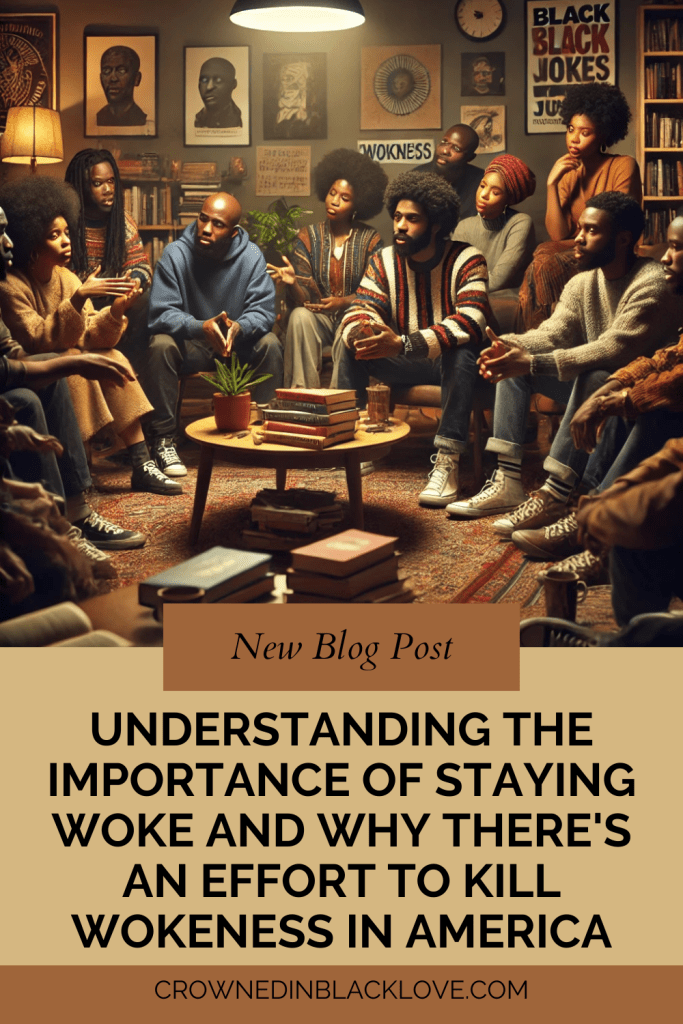
Understanding the Importance of Staying Woke and Why There’s an Effort to Kill Wokeness in America

In recent years, the term “woke” has become a popular part of public discourse, especially within the context of race and social justice. Initially, it referred to a heightened awareness of social issues, particularly those affecting marginalized communities. For Black people, being woke has been about recognizing and confronting systemic racism, discrimination, and inequality that permeates all aspects of society.

But lately, staying woke has come under attack. Political figures, media outlets, and even some educators have used the term as a weapon to dismiss or criticize those advocating for social change. There’s an ongoing campaign to kill “wokeness” in America, and it’s important to understand why it’s happening and why staying woke is more critical than ever, especially in the Black community.

In this post, we will explore the significance of staying woke, the history behind it, and why there is a deliberate effort to undermine this awareness.

1. What Does It Mean to Be Woke?

To “stay woke” means to remain conscious of and actively engage with the social and political issues that impact marginalized groups, especially the Black community. The term originated from African American Vernacular English (AAVE) and has roots in the Civil Rights Movement.

  • Awareness of Social Injustice: Staying woke involves being aware of ongoing inequalities in education, healthcare, housing, and employment, and recognizing how systems of oppression, like racism, sexism, and classism, create barriers to opportunity.
  • Raising Awareness: Being woke also means raising awareness among others about these issues, advocating for marginalized groups, and taking action to address these inequities. It’s about challenging the status quo and demanding that institutions, both public and private, uphold justice and equality.

2. The Importance of Staying Woke in the Black Community

For Black communities, staying woke is essential for survival and empowerment. Here’s why:

  • Fighting Systemic Racism: Black people in America have long been subjected to systemic racism—racism that is embedded in social, economic, and political institutions. By staying woke, Black communities can expose these systems of oppression, demand accountability, and work toward creating a more just society.
  • Creating Change: Staying woke allows Black people to engage in social justice movements that push for tangible change. Wokeness is not about simply being aware—it’s about taking action. Whether through activism, voting, or organizing, staying woke helps fuel movements that fight for Black rights, equality, and justice.
  • Empowering Future Generations: Teaching the next generation about wokeness means equipping them with the knowledge and tools to confront social issues and demand better for themselves and their communities. By staying woke, Black communities ensure that the fight for equality continues across generations.

3. The Effort to Kill Wokeness in America

Despite the importance of staying woke, there has been a growing backlash against it in recent years. Political figures, media outlets, and other powerful entities are waging an active campaign to discredit the very idea of wokeness.

  • Criticism and Demonization of Wokeness: Critics of wokeness argue that it promotes division, cancel culture, and an over-sensitivity to issues that don’t matter. Right-wing pundits and politicians, for example, have weaponized the term “woke” to frame it as a threat to traditional values, claiming it undermines freedom of speech and promotes “political correctness.”
  • Censorship and Bans on Teaching Critical Race Theory: In several states across the U.S., lawmakers are pushing for laws that ban the teaching of Critical Race Theory (CRT) and other discussions about race, inequality, and systemic oppression in schools. This move to censor education is part of a broader effort to prevent people from understanding the true history of race in America, which many see as an attempt to kill the movement toward social justice.
  • Undermining Social Justice Movements: Many of the policies and actions intended to kill wokeness focus on discrediting social justice movements like Black Lives Matter, women’s rights movements, and LGBTQ+ advocacy. By labeling these movements as “divisive” or “extreme,” opponents of wokeness try to undermine the credibility and importance of activism for marginalized communities.

4. Why the Attack on Wokeness Matters for Black Communities

The effort to kill wokeness is not just an attack on a buzzword—it’s an attack on the progress that has been made toward racial equality and justice. For Black communities, this backlash represents a return to an era of ignorance and inequality.

  • Erasing the Legacy of the Civil Rights Movement: The Civil Rights Movement was born out of a “woke” consciousness—a consciousness that recognized the deep-rooted injustice of segregation, disenfranchisement, and unequal rights. To undermine wokeness is to erase the legacy of those who fought for racial equality and justice. It is an attempt to rewrite history in a way that makes it easier for oppressive systems to continue unchecked.
  • Depriving Marginalized Groups of Their Voice: By attacking wokeness, those in power are silencing the voices of marginalized communities who have fought for years to have their stories heard. It is an effort to deny Black people the right to speak out about their experiences, struggles, and needs.
  • Slowing the Progress of Social Change: The push to discredit wokeness aims to slow the progress of racial and social change. When wokeness is delegitimized, policies that benefit marginalized communities, such as affirmative action, fair housing laws, and equal employment opportunities, are more likely to be rolled back. This makes it harder for Black Americans to achieve true equality.

5. How to Stay Woke and Continue the Fight

Even with the growing backlash against wokeness, it’s important for Black communities to continue to stay woke and fight for progress. Here’s how we can keep the momentum going:

  • Educate and Advocate: Continue to educate yourself and others about the history of racial inequality and injustice. Support and advocate for policies that promote racial equity, like reparations, prison reform, and affordable healthcare.
  • Engage in Activism: Whether through voting, participating in protests, or advocating for changes in local schools and institutions, activism remains a powerful tool for progress. Staying woke means staying engaged with the ongoing fight for racial justice.
  • Create and Share Awareness: Use social media platforms, blogs, and other forms of media to share important stories, articles, and resources that promote social justice. Continue to create spaces where Black voices are heard and valued.
  • Support Black Businesses and Institutions: Support Black-owned businesses, organizations, and initiatives that promote social justice and equality. By investing in our communities, we can build economic power and create lasting change.

Staying Woke is a Necessity, Not a Trend

Staying woke is about more than being aware of social injustices—it’s about fighting to change the systems that have historically oppressed Black people. While there is an active effort to kill wokeness in America, it is more important than ever for Black communities to remain vigilant and vocal in our pursuit of justice. Wokeness is not a trend or a buzzword; it is a vital movement for racial equality and the empowerment of marginalized people.

As long as injustice exists, staying woke will continue to be a powerful tool for change. Together, we must rise above the resistance and keep pushing for a society that acknowledges and addresses the reality of racial oppression.

Staying woke” is more than just a trend—it’s a vital movement for Black communities fighting for racial justice and equality. Learn why staying woke is critical and why there’s an active effort to silence it. #SocialJustice #BlackCommunity #Woke