History has a way of repeating its patterns, but it also has a way of meeting a people who refuse to be broken. To understand where we are in 2026, we have to look back at the “price of the tickets” our ancestors paid to get us here. Today, we journey through a timeline of resilience—not just to remember the pain, but to reclaim our power.
1619 to 1865: The Iron and the Soil The foundation of this nation was laid with a heavy dock and the trading of souls as common stock. They wanted the labor, but they feared the brilliance of the Black mind. Yet, as the soil remembers the blood, our lineage remembers the flight.
“But you can’t break a spirit that was born to fly, even when the auctioneer raises the price high.”
1865 to 1877: The Brief Breath of Reconstruction There was a moment when the air felt different. We built schools, we sat in the halls of power, and we started breaking down walls. But history shows that whenever the Black stride gets “a little too proud,” the backlash follows. The shadows plotted to bend the backs that refused to bow.
1877 to 1965: The Long Dark of Jim Crow The chains didn’t disappear; they just changed form. They became “legal ink.” Through grandfather clauses and poll taxes, the cage was built with pens and paper.
“They called it the law, but it was just a cage, writing out our silence on every single page.”
1954 to 1968: The Streets on Fire We met the fire hoses and the dogs with a stubborn, ancient root of courage. In 1965, we forced the hand of the nation and put our ink in the book—the Voting Rights Act (VRA). We reclaimed the ground that was always ours.
Today: The Highest Court and the New Wall Now, in 2026, we find ourselves facing a “high-court sneer.” With the ruling in Louisiana v. Callais, the law is being stripped bare. By gutting Section 2 of the VRA, they are attempting to erase our presence from the voting space and call it “politics.”
The Unbroken Stride But look at the score. We have been through the fire before. Laws can be rewritten and decrees can be changed, but a people who are already free in their spirit cannot be contained. Let them rig the maps; the unbowed heart remains the same.
We keep walking. We keep standing tall. Because the spirit of the truth outlasts it all.
“They traded the iron chain for the legal ink.” ✍🏾 From 1619 to the halls of the Supreme Court, our stride remains unbroken. Check out this powerful journey through our history and our future. #BlackLegacy #VRA #Unbowed
Love is the foundation of everything—especially when it comes to building strong families and leaving a lasting legacy. At Crowned in Black Love, we celebrate the beauty, resilience, and power of Black love and the families it nurtures. Together, we’re building a legacy that honors our history, our culture, and our collective strength.
Why We Take a Stand
As Black families, our love is both a source of strength and a means of resilience in a world that often undermines our worth. That’s why we’re calling on all of our community members to join us in the boycott against Target, Amazon, and other major corporations who are rolling back their Diversity, Equity, and Inclusion (DEI)initiatives. These actions impact us, our children, and our future. As we stand together in unity, we send a message: We will not be erased.
We want to protect and nurture our legacies, and to do that, we must remind these companies that Black love and Black families are the backbone of the economy, and they cannot ignore us.
A Call to Action: Stand with Us on February 28th
We’re calling for an economic blackout on February 28, 2025. On that day, we ask all of our community members to refrain from spending money at major retailers like Target, Amazon, and Walmart. This action is not just about boycotting—it’s about honoring our power and reminding these corporations that we matter.
When we unite and take action, we send a clear message: Black love and unity are forces to be reckoned with. Our choices and our voices will drive the change we want to see in the world.
Why We Boycott
The People’s Union is leading the call to boycott corporations that have chosen to roll back DEI initiatives under the leadership of individuals like former President Donald Trump. These decisions impact our communities by undermining the principles of equity and inclusion. On February 28, we are asking for one day of action.
This 24-hour boycott will help to remind corporate giants that Black love is powerful, and we are the ones who drive their success. We’re telling them that we will not continue to support businesses that do not support us.
Support Small, Support Local: Choose Love
If you need essential items or have an emergency, we encourage you to support Black-owned businesses or local community stores instead. On February 28, let’s invest in the businesses that support us, that uplift our families, and that invest in the future of Black love and prosperity.
Join Us: Building Legacies Through Love
Let’s celebrate love, unity, and power as Black families. When we stand together, we not only create change in the marketplace—we build a future filled with hope and opportunity. Together, we’ll create a legacy of Black love that lasts for generations. Join us on February 28th to take action, to raise our voices, and to show the world that Black love is here to stay.
🖤 On February 28, join the #EconomicBlackout and stand against the rollback of DEI initiatives by Target, Amazon, & Walmart. It’s time to honor #BlackLove, #BlackFamilies, and our collective power. Let’s build legacies of love. #BoycottDEI #BlackUnity
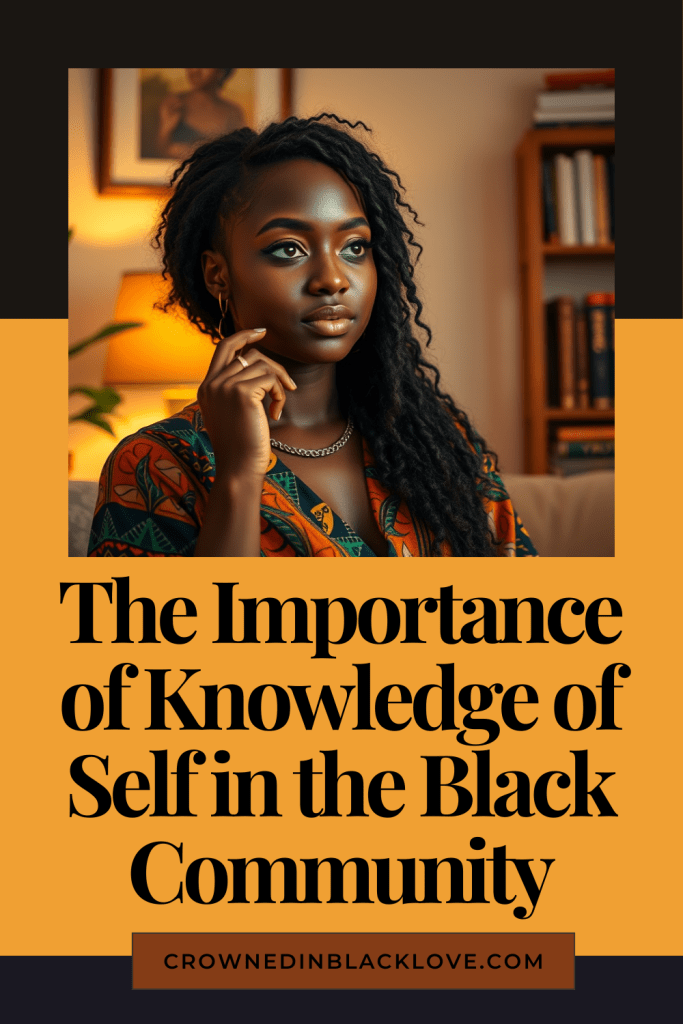
Have you ever stopped to think about how important it is to really know yourself? To understand your history, your identity, and your worth? Knowledge of self isn’t just about learning facts—it’s about connecting to who you truly are, where you come from, and what you can contribute to the world. For the Black community, this understanding is crucial. It strengthens our communities, empowers our families, and helps us break barriers.
In this blog, we’ll explore why knowledge of self is so important for the Black community and how embracing it can lead to lasting change.
1. Connecting to Our Roots:
One of the most powerful aspects of knowledge of self is understanding your history. For many Black people, our history was hidden or erased for a long time, but learning about our ancestors and their contributions to the world gives us a sense of pride and belonging. Knowing our roots allows us to honor the struggles and triumphs of those who came before us, giving us the strength to continue their legacies.
When you know where you come from, it helps you build a sense of pride in who you are and where you’re going. Whether it’s learning about the civil rights movement, the Harlem Renaissance, or the countless Black leaders, artists, and innovators throughout history, that knowledge helps us understand our value and the importance of our presence in society.
2. Building Stronger Communities:
Knowledge of self isn’t just a personal journey—it’s a communal one. When we, as individuals, understand our own worth and identity, we can work together more effectively to uplift our communities. For the Black community, this means creating environments where we support each other, encourage personal growth, and fight for equality and justice.
By teaching younger generations about their heritage, we pass down wisdom and values that create a stronger sense of unity and pride. Families, schools, and community groups play an essential role in this process. Encouraging open dialogue about Black history, culture, and identity helps everyone in the community feel seen, heard, and understood.
3. Empowering the Next Generation:
One of the most important reasons for embracing knowledge of self is its impact on future generations. When children and young adults are taught to value themselves and their culture, they grow up with a deeper sense of self-worth. They’re better equipped to face challenges, pursue their dreams, and advocate for what’s right.
Empowered individuals can break the cycles of discrimination and systemic inequality. Children who grow up knowing the stories of their ancestors—who fought for freedom, equality, and opportunity—will be inspired to keep pushing forward. This empowerment isn’t just about academic success, it’s about mental and emotional resilience, and it’s about fostering a sense of pride and belonging that is foundational to success in all areas of life.
4. Overcoming Stereotypes and Challenges:
Black people often face stereotypes and discrimination that can make it difficult to succeed. However, when you have knowledge of self, you can challenge these negative images and rise above the obstacles that society may place in your path. Knowing your worth allows you to reject stereotypes and be unapologetically yourself, even when the world may try to make you feel otherwise.
Understanding that you are more than the labels others place on you helps you embrace your unique identity. This mental shift allows you to stay focused on your goals and pursue your passions with confidence, knowing that your success is not limited by other people’s expectations.
5. Mental Health and Self-Care:
A strong sense of self also plays an important role in mental health. When we understand who we are and what we stand for, we develop a deeper sense of peace and self-acceptance. In the Black community, mental health is often a topic that has been ignored or misunderstood, but having knowledge of self can help shift this narrative.
Taking time to connect with your roots, acknowledging your worth, and practicing self-care can improve mental health, foster emotional stability, and create resilience. By prioritizing knowledge of self, we’re laying the foundation for healthier, stronger individuals and families.
6. Reclaiming Our Power:
At the core of knowledge of self is the idea of empowerment. When you know who you are and understand your history, you’re in a better position to claim your power. For Black communities, this means not only recognizing the hardships faced in the past but also understanding the immense strength and potential we possess.
From the resilience shown during slavery to the brilliance of Black innovators today, the history of Black people is full of strength, intelligence, and hope. Embracing this knowledge allows us to step into our power, as individuals and as a collective force for change. We no longer wait for others to define us—we create our own narrative.
Conclusion:
Knowledge of self is a tool for empowerment, unity, and personal growth. For the Black community, understanding who we are and where we come from creates a foundation for success, strength, and resilience. When we embrace our history, our identity, and our worth, we become a stronger, more connected community capable of overcoming challenges and making lasting change.
The more we learn about ourselves, the more we empower the next generation to do the same. And together, we can continue to build a future where our culture, history, and voices are celebrated and valued. Knowledge of self is not just a personal journey—it’s a journey that impacts all of us.
Knowledge of self is key to building a stronger Black community. Understanding our roots, culture, and identity empowers us all to create positive change. Let’s pass this wisdom on! #BlackCommunity #Empowerment #KnowledgeOfSelf
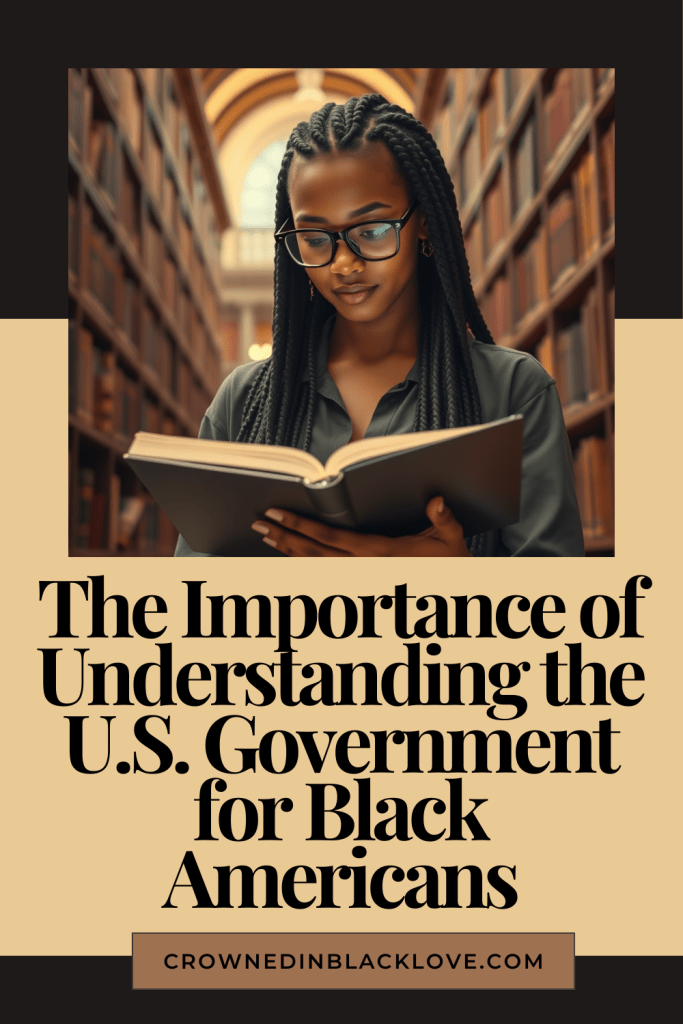
Understanding how the U.S. government operates is one of the most powerful tools for creating lasting change, especially for the Black community. For generations, systemic barriers have limited the opportunities, rights, and freedoms available to Black Americans. To break down these barriers and create a more just society, it’s essential to understand how government decisions are made, how laws are passed, and how to use the system to advocate for change.
While many may feel disconnected from politics or overwhelmed by the complexities of government, knowledge is power. When Black Americans understand the structure and functions of the U.S. government, they are better equipped to advocate for their communities, influence policy, and ensure their voices are heard in the political process. In this blog, we’ll explore why understanding the U.S. government is critical for Black Americans and how it empowers individuals and communities to fight for equality and justice.
The Power of Civic Engagement
One of the primary reasons for understanding the U.S. government is the power it gives to individuals to engage in the political process. The government has a direct impact on the quality of life for Black Americans, from education and healthcare to housing and criminal justice. By understanding how government works, Black Americans can better engage with elected officials, advocate for policies that benefit their communities, and hold leaders accountable.
Voting is one of the most fundamental ways to participate in the democratic process. But voting is just the beginning. To be truly effective, Black Americans must also understand how to engage with lawmakers, participate in public hearings, and organize community action. A deep understanding of the government’s structure and processes allows individuals to move beyond simply voting—they can become advocates, activists, and informed citizens who push for real change.
Navigating the Branches of Government
The U.S. government is made up of three branches: the Executive Branch, the Legislative Branch, and the Judicial Branch. Each branch plays a vital role in shaping the laws and policies that impact Black Americans, and understanding their functions is essential for advocacy.
The Executive Branch – Led by the President, this branch is responsible for enforcing the laws passed by Congress. Understanding the power of the Executive Branch allows Black Americans to recognize how executive orders, policies, and appointments affect their lives. For instance, a President’s choices for Supreme Court nominations or the enforcement of civil rights laws can have lasting effects on racial equality in America.
The Legislative Branch – The Congress, which consists of the Senate and the House of Representatives, is responsible for creating and passing laws. Many of the issues that directly affect Black Americans, such as criminal justice reform, education funding, and voting rights, are determined by the laws passed in Congress. By understanding how to work with lawmakers, Black Americans can influence the creation of policies that support their community’s needs.
The Judicial Branch – This branch interprets the laws and ensures they are applied fairly. Understanding how the judiciary works is vital because the court system plays a critical role in upholding or striking down laws that affect Black Americans. For example, the outcomes of landmark Supreme Court cases on segregation, voting rights, and affirmative action have had profound effects on Black civil rights. Knowing how the judicial system works allows individuals to advocate for fair treatment and challenge unjust policies.
Advocating for Black Rights Through Policy
To make meaningful progress in the fight for racial equality, it is essential to understand how policies are created and enacted. Government policies directly impact issues such as access to quality education, healthcare, affordable housing, criminal justice reform, and employment opportunities. When Black Americans are well-informed about how policies are shaped, they are in a better position to demand equitable policies and advocate for laws that dismantle institutional racism.
For example, learning about the legislative process and how to approach lawmakers with proposals for change empowers individuals to propose laws that directly address the needs of the Black community. By working together as a collective force, communities can influence the political landscape and push for policies that create lasting, positive change.
Holding Government Accountability
Understanding how the U.S. government works is also crucial for holding government officials accountable. Throughout history, Black Americans have been marginalized by policies and laws that have perpetuated systemic inequality. By learning about the structures of power, Black Americans can ensure that those in power are held accountable for their actions.
This includes understanding how to challenge unfair laws through litigation, how to organize grassroots campaigns that demand policy changes, and how to track government spending and program effectiveness. Holding elected officials accountable is not just about voting—it’s about staying informed and actively participating in processes that ensure the government is serving the people, particularly marginalized communities.
Creating a Legacy of Empowerment
For future generations of Black Americans, understanding the government is critical to continuing the fight for equality and justice. By passing down knowledge of the political system, Black families can empower their children to be active participants in their own futures. From teaching children about their voting rights to encouraging them to pursue careers in law, politics, or social justice, creating a legacy of civic engagement ensures that the fight for civil rights continues for generations to come.
In addition, as more Black Americans pursue positions of power in politics, law, and leadership, it is essential to have a community that understands the workings of government to support and amplify these efforts. By collectively engaging in the political process, Black Americans can build a strong, unified voice that brings about lasting change.
Conclusion:
The importance of understanding the U.S. government for Black Americans cannot be overstated. It is the key to unlocking the power to advocate for justice, hold leaders accountable, and fight for policies that benefit our communities. By gaining knowledge about the structure of government and how laws are created, Black Americans can better influence the political process and work towards creating a more just and equitable society.
When we understand our government, we can demand the change we deserve. From voting and advocacy to policy creation and accountability, the more we know, the more we can shape our futures and build a legacy of empowerment. Knowledge of government is not just a tool—it’s a transformative force that strengthens the Black community and pushes us closer to the equality we’ve been striving for.
Understanding the U.S. government is vital for Black Americans! It empowers us to fight for justice, advocate for policies, and hold leaders accountable. Let’s learn how to use our voices to create change! #BlackCommunity #CivicEngagement #PoliticalPower
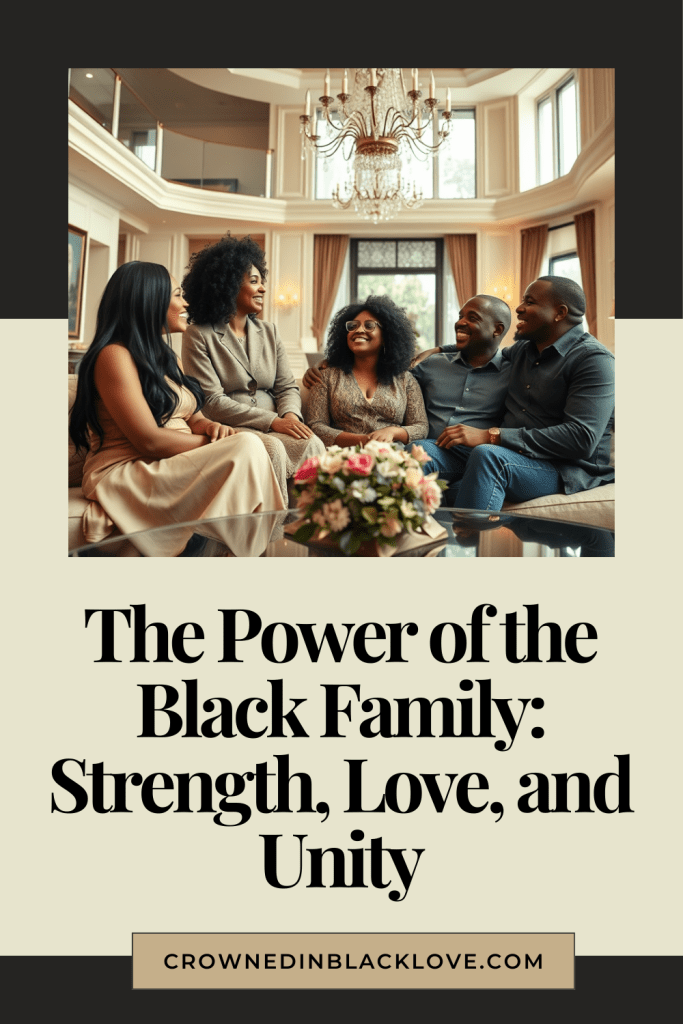
Have you ever wondered what makes a community truly strong? It’s not just the buildings, the schools, or the streets. It’s the people—especially the family. The Black family has always been at the heart of the community, providing strength, love, and a sense of belonging. It’s more than just a group of people living together—it’s a powerful force that shapes history and builds a brighter future.
The Backbone of the Community:
When we talk about the Black family, we’re not just talking about mom, dad, and kids. We’re talking about a deep sense of unity and support. The Black family is often a close-knit group that helps each other through thick and thin. Whether it’s grandparents, cousins, or close family friends, everyone plays a role in raising the next generation.
In times of hardship, the Black family sticks together. Parents work hard to provide for their children, not only by making sure they have food and shelter but by teaching them important values like respect, love, and pride in their heritage. The strength of the Black family has helped many overcome struggles and push forward, no matter what challenges come their way.
Cultural Pride and Heritage:
The Black family also carries an important responsibility: to pass on the culture and history of their ancestors. This includes teaching the next generation about their roots, their achievements, and their role in shaping the world. From storytelling to celebrating Black History Month, the family helps children understand how far they’ve come and how much more they can achieve.
By celebrating their culture, the Black family teaches children to be proud of who they are. They show that being connected to one’s roots isn’t just about the past—it’s about empowering future generations.
Building a Strong Future Together:
While families provide love and strength, they also play a major role in building strong communities. In the Black community, family members support each other in many ways: helping with schoolwork, starting businesses, volunteering, and standing up for what’s right. When one family member succeeds, the whole family and community feel uplifted.
Today’s Black families continue to break barriers, whether in the fields of education, politics, art, or social justice. The love and support in Black families inspire the next generation to dream big and reach for the stars. Together, they make the world a better place—one family at a time.
In Conclusion:
At the end of the day, the Black family is about much more than just living together. It’s about love, strength, resilience, and the power of unity. Black families continue to make an incredible impact on their communities and the world. Let’s celebrate the role of the Black family today and every day. Because when families are strong, communities are strong. And when communities are strong, the world becomes a brighter, better place for all of us.
The Black family is the backbone of the community, passing down love, strength, and culture for generations. Learn more about the incredible impact they make every day! #BlackFamily #CommunityStrength #Heritage #Unity #BlackHistory
















 Crowned in Black Love