The Architecture of Peace: Why Mental Wellness is the Foundation of the Black Man’s Legacy

In the journey of Crowned in Black Love, we often speak of building kingdoms. But no kingdom can stand if the king is weary, unheard, and carrying the weight of the world in silence. For the Black man, mental health is not a secondary concern—it is the primary architecture of his peace and the foundation upon which every other success is built.

The Weight of the Unspoken For centuries, Black men have been tasked with being the “unbreakable” shield. Society has often demanded their labor and their strength while ignoring their humanity. This has created a culture of “functional depression”—where a man can provide, protect, and produce while silently drowning underneath the surface. To ensure our legacy lasts for generations, we must redefine strength. Real strength is the courage to be whole; real power is the ability to seek peace.

Why Mental Wellness is the Ultimate Legacy When a Black man prioritizes his mental health, he is doing more than just “feeling better.” He is engaging in a profound act of stewardship. A mentally healthy man is more present as a partner, more patient as a father, and more visionary as a leader. He breaks the cycle of generational silence and replaces it with a legacy of emotional intelligence. By tending to his mind, he ensures that the “Crown” he passes down isn’t heavy with trauma, but light with the freedom of self-knowledge.

How to Support the Men in Your Life

Supporting the mental health of Black men requires intentionality, patience, and the creation of a “psychologically safe” environment.

  • Normalize the Conversation: Don’t wait for a crisis to talk about feelings. Incorporate mental wellness into daily life. Ask, “How is your spirit today?” rather than just “How was work?”
  • Celebrate Vulnerability: When the men in your life do open up, meet them with grace rather than solutions. Validate their experience by saying, “I hear you, and it’s okay to feel that way.”
  • Protect His Rest: Encourage the man in your life to take up space that is purely for his joy and relaxation. Remind him that his worth is not tied to his productivity.
  • Remove the Stigma of Help: If he expresses interest in therapy or a support group, offer to help research culturally competent providers who understand the unique nuances of the Black male experience.

Resources for the Journey

If you or a man you love is ready to prioritize his mental wellness, these organizations offer specialized support:

  1. Therapy for Black Men: A digital directory specifically for Black men seeking therapists and coaches who understand their cultural context.
  2. The Confess Project of America: A grassroots movement that trains barbers to be mental health advocates, meeting men where they already feel comfortable.
  3. Black Men Heal: Provides limited free therapy sessions to Black men to eliminate the financial barrier to mental health care.
  4. BEAM (Black Emotional and Alphabet Wellness Collective): Offers toolkits and resources focused on healing and wellness specifically for the Black community.

Ultimately, the “Crown” we speak of is not merely a symbol of status, but a testament to our mental and spiritual fortitude. When we prioritize the mental wellness of the Black man, we are not just addressing an individual need; we are fortifying the very architect of our future. It is through this intentional healing and the creation of sanctuaries of support within our homes that we ensure our legacy is built on a foundation of peace rather than the exhaustion of survival. By reclaiming the right to be whole, we ensure that the lineage following in our footsteps inherits a blueprint of resilience that is rooted in love, clarity, and an unshakable sense of self. Let us hold this space for one another, knowing that a healed man is a powerful legacy in motion.

What are your thoughts about The Architecture of Peace: Why Mental Wellness is the Foundation of the Black Man’s Legacy

A legacy is only as strong as the mind that builds it. 👑 Our latest blog explores the vital importance of Black men’s mental health and how we can all foster a sanctuary of support. #BlackMensHealth #Healing #Legacy


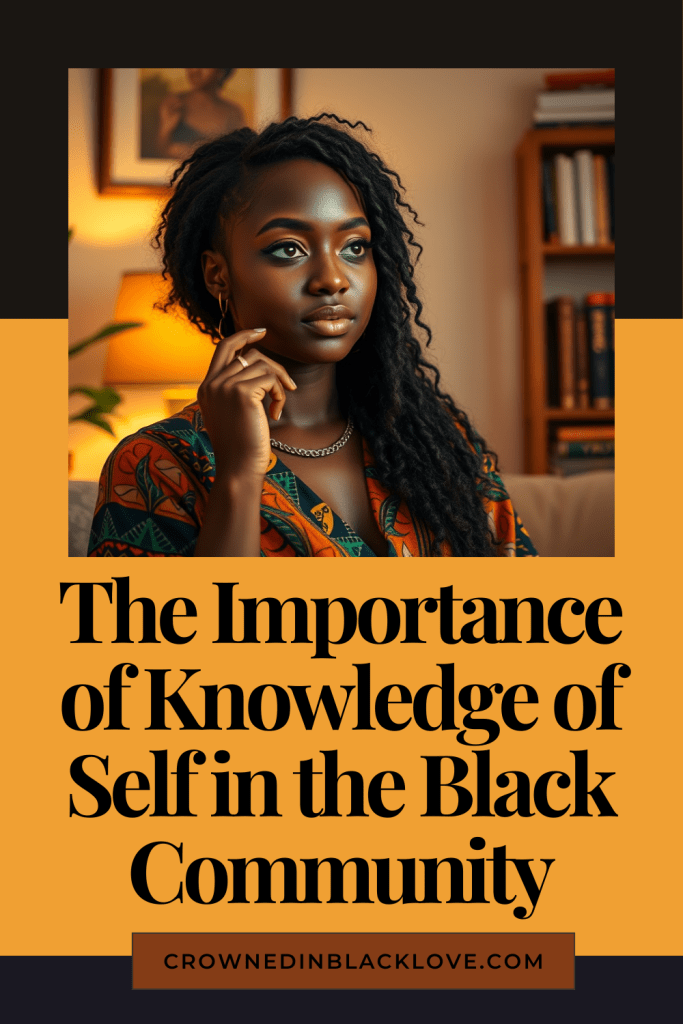
The Importance of Knowledge of Self in the Black Community

Have you ever stopped to think about how important it is to really know yourself? To understand your history, your identity, and your worth? Knowledge of self isn’t just about learning facts—it’s about connecting to who you truly are, where you come from, and what you can contribute to the world. For the Black community, this understanding is crucial. It strengthens our communities, empowers our families, and helps us break barriers.

In this blog, we’ll explore why knowledge of self is so important for the Black community and how embracing it can lead to lasting change.

1. Connecting to Our Roots:

One of the most powerful aspects of knowledge of self is understanding your history. For many Black people, our history was hidden or erased for a long time, but learning about our ancestors and their contributions to the world gives us a sense of pride and belonging. Knowing our roots allows us to honor the struggles and triumphs of those who came before us, giving us the strength to continue their legacies.

When you know where you come from, it helps you build a sense of pride in who you are and where you’re going. Whether it’s learning about the civil rights movement, the Harlem Renaissance, or the countless Black leaders, artists, and innovators throughout history, that knowledge helps us understand our value and the importance of our presence in society.

2. Building Stronger Communities:

Knowledge of self isn’t just a personal journey—it’s a communal one. When we, as individuals, understand our own worth and identity, we can work together more effectively to uplift our communities. For the Black community, this means creating environments where we support each other, encourage personal growth, and fight for equality and justice.

By teaching younger generations about their heritage, we pass down wisdom and values that create a stronger sense of unity and pride. Families, schools, and community groups play an essential role in this process. Encouraging open dialogue about Black history, culture, and identity helps everyone in the community feel seen, heard, and understood.

3. Empowering the Next Generation:

One of the most important reasons for embracing knowledge of self is its impact on future generations. When children and young adults are taught to value themselves and their culture, they grow up with a deeper sense of self-worth. They’re better equipped to face challenges, pursue their dreams, and advocate for what’s right.

Empowered individuals can break the cycles of discrimination and systemic inequality. Children who grow up knowing the stories of their ancestors—who fought for freedom, equality, and opportunity—will be inspired to keep pushing forward. This empowerment isn’t just about academic success, it’s about mental and emotional resilience, and it’s about fostering a sense of pride and belonging that is foundational to success in all areas of life.

4. Overcoming Stereotypes and Challenges:

Black people often face stereotypes and discrimination that can make it difficult to succeed. However, when you have knowledge of self, you can challenge these negative images and rise above the obstacles that society may place in your path. Knowing your worth allows you to reject stereotypes and be unapologetically yourself, even when the world may try to make you feel otherwise.

Understanding that you are more than the labels others place on you helps you embrace your unique identity. This mental shift allows you to stay focused on your goals and pursue your passions with confidence, knowing that your success is not limited by other people’s expectations.

5. Mental Health and Self-Care:

A strong sense of self also plays an important role in mental health. When we understand who we are and what we stand for, we develop a deeper sense of peace and self-acceptance. In the Black community, mental health is often a topic that has been ignored or misunderstood, but having knowledge of self can help shift this narrative.

Taking time to connect with your roots, acknowledging your worth, and practicing self-care can improve mental health, foster emotional stability, and create resilience. By prioritizing knowledge of self, we’re laying the foundation for healthier, stronger individuals and families.

6. Reclaiming Our Power:

At the core of knowledge of self is the idea of empowerment. When you know who you are and understand your history, you’re in a better position to claim your power. For Black communities, this means not only recognizing the hardships faced in the past but also understanding the immense strength and potential we possess.

From the resilience shown during slavery to the brilliance of Black innovators today, the history of Black people is full of strength, intelligence, and hope. Embracing this knowledge allows us to step into our power, as individuals and as a collective force for change. We no longer wait for others to define us—we create our own narrative.

Conclusion:

Knowledge of self is a tool for empowerment, unity, and personal growth. For the Black community, understanding who we are and where we come from creates a foundation for success, strength, and resilience. When we embrace our history, our identity, and our worth, we become a stronger, more connected community capable of overcoming challenges and making lasting change.

The more we learn about ourselves, the more we empower the next generation to do the same. And together, we can continue to build a future where our culture, history, and voices are celebrated and valued. Knowledge of self is not just a personal journey—it’s a journey that impacts all of us.

Knowledge of self is key to building a stronger Black community. Understanding our roots, culture, and identity empowers us all to create positive change. Let’s pass this wisdom on! #BlackCommunity #Empowerment #KnowledgeOfSelf