The Power of the Sunday Circle: Why ‘Win With Black Women’ is Our North Star in 2025

As we navigate the opening months of 2025, the air feels different. The challenges are real, but so is the brilliance of our response. At Crowned in Black Love, we believe that our legacy isn’t just built in boardrooms or classrooms—it’s built in the sacred spaces where Black women gather to lead, protect, and lift one another.

Today, that space has a name: Win With Black Women (WWBW).

If you haven’t yet pulled up a chair to this virtual Sunday night table, you are missing the heartbeat of modern Black progression. Founded by the visionary Jotaka Eaddy in 2020, WWBW has evolved from a rapid-response network into a global powerhouse that proves one thing: When Black women win, the entire community rises.

More Than a Meeting: A “Human Hug” In a world that often scrutinizes and silences Black women, WWBW offers what Eaddy calls a “human hug.” It is an intergenerational sanctuary where 4,000+ leaders—from corporate executives and faith leaders to grassroots activists—gather to recharge. It’s a space where the weight of leadership is shared, and the brilliance of the collective is celebrated.

Why WWBW is the Blueprint for 2025 You should be paying attention to this movement for three critical reasons:

  • Financial and Political Might: We all remember the historic 2024 Zoom call that raised $1.6 million in just 100 minutes. That wasn’t a fluke; it was a demonstration of economic agency. WWBW has mastered the art of mobilizing “the collective dollar” to support Black women running for office at every level.
  • The Shield Against Attacks: WWBW serves as a rapid-response unit against the racist and sexist attacks that target Black women in the public eye. Whether it was the confirmation of Justice Ketanji Brown Jackson or protecting candidates in the current cycle, they fact-check the lies and amplify the truth.
  • Systemic Advocacy: From monthly advocacy chats to empowerment workshops, the network is focused on policy. They aren’t just talking about the problems; they are coordinating national strategies to address social injustice, healthcare disparities, and economic equity.

Building the Legacy Together WWBW reminds us that our “Crown” is not just a personal accessory—it is a collective responsibility. By elevating the image, power, and policy agenda of Black women, this network is ensuring that the foundation we lay in 2025 is strong enough for our grandchildren to stand on.

How to Connect with the Movement

The Sunday night calls are more than just a meeting—they are a masterclass in leadership.

  • Join the Network: Visit the official Win With Black Women website to sign their advocacy letters and join the mailing list for Sunday night invites.
  • Participate in Advocacy: Sign up for their “Empowerment Workshop Series” to learn how to combat systemic bias in your own professional and local community.
  • Spread the Word: Follow the #WinWithBlackWomen hashtag to stay updated on real-time advocacy needs and celebration of Black excellence.

The Power of the Collective

Win With Black Women is more than a network; it is the ultimate realization of what happens when we refuse to wait for a seat at the table and instead build our own. In an era where the legal and social landscape is shifting beneath our feet, this collective provides the steady ground we need to stand firm. By centering the joy, protection, and ambition of Black women, WWBW ensures that our progress is not just a moment in time, but a sustainable movement. As we move through 2025 and beyond, let us remember that our greatest strength lies in our unity. When we lean into the “human hug” of our community, we don’t just survive the challenges of the day—we command the future of our legacy.

What are your thoughts about The Power of the Sunday Circle: Why ‘Win With Black Women’ is Our North Star in 2025

It’s not just a network; it’s a revolution. 👑 We’re diving into the power of “Win With Black Women” and why their Sunday night circle is the blueprint for our 2025 legacy. #WWBW #BlackWomenLead #Legacy #Advocacy

Architects of the Win: The Grassroots Fight for the FUTURE Act

In the halls of power, money is often used as a talking point, but for the leaders of our Historically Black Colleges and Universities, it is the lifeblood of our excellence. For decades, our schools were forced to endure a cycle of “yearly begging,” never knowing if the essential $255 million in annual STEM funding would be renewed.

In 2019, that cycle was broken forever. The passage of the FUTURE Act (Fostering Undergraduate Talent by Unlocking Resources for Education) was not just a legislative event; it was a testament to the power of the Black community’s collective voice.

The “Fight” in the Vacuum

While political leaders often claim credit for these wins, the groundwork was laid by advocacy titans:

  • The UNCF (United Negro College Fund): Launched the “Protecting Our FUTURE” digital campaign, which mobilized an “activated army” of over 20,000 supporters.
  • Thurgood Marshall College Fund (TMCF): Made the FUTURE Act its #1 legislative priority for 2019, emphasizing that the $85 million specifically earmarked for HBCUs was non-negotiable for institutional survival.
  • The Power of Numbers: Together, these groups generated over 65,000 individual actions, including 62,000 letters and 3,000 phone calls to Congress. This grassroots pressure was the “frontline” that eventually forced a bipartisan compromise.

How the Bill Was Passed: The Bipartisan Logjam

The journey to the President’s desk was complicated. At one point, the funding had actually expired in September 2019, leaving our schools in a state of high-court uncertainty.

  • The Deadlock: Initial versions of the bill were stalled in the Senate.
  • The Compromise: To move the bill forward, lawmakers attached the FAFSA Act to the funding. This added a layer of bipartisan appeal by streamlining the financial aid process for 20 million American families, making it a “must-pass” piece of legislation.
  • The Unanimous Win: Once the compromise was reached, the bill passed the House 319-96 and was approved by the Senate through unanimous consent—a rare occurrence for a standalone bill focused on minority populations.

The Signature and the “Saved” Narrative

When President Trump signed the bill on December 19, 2019, he frequently characterized it as having “saved” HBCUs after years of neglect. While his signature was the final required step, the permanence of the funding was a victory “negotiated” by the community. By making the $255 million annual funding mandatory and permanent, the Act ensured that HBCUs would never again have to wait for a “once-in-a-generation” favor to keep their doors open.

Lessons for Our Legacy

  • Advocacy is Essential: Permanent funding didn’t happen until the community demanded it. Our legacy depends on our continued engagement with federal policy.
  • Bipartisan Power: HBCU efforts have the unique ability to bring both sides of the aisle together. We must leverage this “underappreciated political power” to protect our schools in any administration.
  • Institutional Stability: Because of this fight, our institutions now have a “bedrock” of funding that allows them to plan for the future, rather than just surviving the present.

The passage of the FUTURE Act serves as a permanent blueprint for how our community can command change through strategic pressure and unified action. By transforming a precarious annual request into a guaranteed foundation, we have secured more than just funding; we have secured the right to dream without the threat of a deadline. This victory reminds us that while political signatures are necessary, the true power resides in the tireless advocacy of our institutions and the collective roar of our supporters. As we move forward, let this “bedrock” be the starting point for even greater heights of excellence, ensuring our HBCUs remain the unshakable pillars of our generational legacy for centuries to come.

What are your thoughts about Architects of the Win: The Grassroots Fight for the FUTURE Act

It wasn’t just a signature; it was a fight. 👑 From 65k phone calls to a unanimous Senate vote, discover how UNCF & TMCF secured permanent funding for our HBCUs in 2019. #HBCU #Legacy #Advocacy #FUTUREAct

Protecting the Crown: Understanding Project 2025 and Our Future

In our mission to build a Generational Legacy, we must stay vigilant. While we focus on our internal “Emotional Wealth,” we cannot ignore the external forces shaping our external reality. Lately, a document called Project 2025 has been making headlines. For many in our community, this is seen as a “Trump 2.0” agenda—a plan designed to dismantle the progress our ancestors fought so hard to secure.

What is Project 2025?

At its core, Project 2025 is a 900-page “Mandate for Leadership” created by the Heritage Foundation. It is a massive overhaul of the federal government intended to be implemented by a future conservative administration. While it covers everything from taxes to technology, its impact on the Black community is particularly profound.

The Pillars at Risk

To protect our legacy, we must understand where the challenges lie:

  • Dismantling Civil Rights: The project proposes shrinking the Department of Justice’s ability to enforce civil rights laws, eliminating “disparate impact” as a tool to fight discrimination, and shutting down federal offices focused on Diversity, Equity, and Inclusion (DEI).
  • Education & The Wealth Gap: By proposing the elimination of the Department of Education, the plan threatens the civil rights protections that keep our students safe and fair. It also advocates for privatizing student loans and ending loan forgiveness programs—making higher education even harder to reach for Black students.
  • Threats to Homeownership: Project 2025 suggests transferring control of critical housing programs, like Section 8, to states—including those with histories of racial discrimination. This could jeopardize the housing stability millions of Black families rely on to start their wealth-building journey.
  • Silencing Our Voice: The plan calls for overhauling the U.S. Census Bureau and criminalizing certain election-related offenses. Many advocates fear this will lead to an undercount of Black communities and a suppression of our collective political power.

A Legacy of Awareness

Being “Crowned” means leading with a clear head and an open heart. Knowledge is our first line of defense. When we understand the policies being proposed, we can organize, we can advocate, and most importantly, we can protect our families from being sidelined in the future.

The Call to Action

Our legacy isn’t just about what we leave behind; it’s about what we stand for right now. Stay informed, stay involved, and keep your “Crown” held high. We have survived much, and together, we will continue to build.

What are your thoughts about, Protecting the Crown: Understanding Project 2025 and Our Future?

Knowledge is the shield for our legacy. 👑 Today on the blog, we’re diving into Project 2025 and what its proposed shifts mean for Black families, education, and the future of our “Crown.” #Project2025 #CrownedInBlackLove

Book Review: We Were Eight Years in Power: An American Tragedy by Ta-Nehisi Coates

A Deep Dive into Race, Politics, and the Obama Legacy

In We Were Eight Years in Power: An American Tragedy, Ta-Nehisi Coates delivers a thought-provoking and piercing examination of America’s political landscape during and after Barack Obama’s presidency. Through a collection of essays, Coates dissects the complexities of race, power, and politics, providing a critical look at the rise of Donald Trump, the legacies of slavery and racism, and the ideological divides that continue to shape American society. Coates doesn’t just reflect on Obama’s time in office; he explores the deep divisions that define the country and the heavy weight of history that still looms over Black Americans today.

Why We Were Eight Years in Power is Essential for the Black Community:

This book is an essential read for the Black community because it forces us to confront the realities of American politics and the ways in which race and power intersect at every level of society. Coates doesn’t shy away from difficult truths about the limitations of the Obama presidency, the rise of a racially divisive political climate, and the challenges of Black political engagement. This book helps us understand how our history, identity, and struggles for justice continue to be deeply interwoven with the political battles we face today.

Key Lessons from We Were Eight Years in Power for the Black Community:

  1. The Fragility of Progress: Coates reflects on the eight years of Barack Obama’s presidency and highlights how progress, even when achieved, is always fragile. For the Black community, this serves as a sobering reminder that victories for racial justice are often met with resistance and backlash. Coates argues that the illusion of a post-racial America, perpetuated by Obama’s presidency, blinded many to the deep-seated racism still ingrained in American society. Understanding this fragility allows us to be more strategic and resilient in our fight for justice.
  2. The Importance of Understanding Power: One of the key themes in We Were Eight Years in Power is the importance of understanding power in its many forms. Coates challenges readers to think critically about who holds power in society and how it is used. For the Black community, this book highlights the significance of political engagement and the need to build and maintain power, both through voting and activism, to ensure that our voices are heard and that the gains we’ve made aren’t undone by those who seek to maintain the status quo.
  3. The Persistence of White Supremacy: Coates doesn’t shy away from the harsh realities of white supremacy in America. He argues that even after the election of the first Black president, racism and inequality did not disappear. Instead, they transformed into more covert forms, continuing to shape political discourse and policies in America. For Black Americans, this reinforces the importance of continuing the fight for equality, even when it feels like progress has been made. Understanding that racism is deeply embedded in American institutions empowers us to keep pushing for true systemic change.
  4. The Power of Black Intellectual Thought: Throughout the book, Coates gives voice to the thinkers, writers, and activists who have shaped Black intellectual thought. He encourages the Black community to engage in deep reflection, using our unique perspectives and experiences to contribute to broader societal conversations. This is crucial for creating an informed, powerful, and resilient Black political identity. Coates’ work is an invitation for Black Americans to continue to be leaders in shaping the political landscape and advocating for our community’s interests.
  5. The Ongoing Struggle for Racial Justice: At the heart of We Were Eight Years in Power is a call for continued activism. Coates highlights the deepening divides and the resistance to change that persist even in the face of the Black Lives Matter movement and other efforts to address racial injustice. He argues that the fight for racial justice is far from over, and it’s essential for the Black community to remain steadfast in demanding equal treatment, representation, and opportunities in all areas of society.

How We Were Eight Years in Power Helps the Black Community Today:

  • The book helps the Black community navigate and understand the current political climate, particularly in the aftermath of Obama’s presidency and the rise of Trump. It offers a critical lens through which to view the struggles we continue to face in terms of race, power, and politics.
  • Coates’ reflections on race and politics encourage Black readers to remain politically engaged and informed, understanding that power dynamics are ever-shifting and must be actively navigated to ensure our rights are protected.
  • By connecting the struggles of the past with the present, We Were Eight Years in Power offers a roadmap for how we can continue to fight for justice and equality, understanding that it’s not just about one moment in history but about sustaining long-term efforts for racial equity.

Closing Thoughts:

We Were Eight Years in Power by Ta-Nehisi Coates is a powerful collection of essays that challenges the Black community to think deeply about the intersection of race, politics, and power. Coates’ sharp, incisive analysis of America’s political climate, from Obama’s presidency to the rise of Trump, forces us to confront the reality of how race continues to shape our lives. This book is a vital resource for understanding the complexities of our political landscape and encourages us to remain vigilant in our activism and pursuit of justice. It’s a call for continued reflection, action, and empowerment—an invitation to keep pushing forward in the fight for true equality.

Ta-Nehisi Coates’ We Were Eight Years in Power dives deep into race, politics, and the legacy of Obama’s presidency. It’s a must-read for understanding America’s political divides and the ongoing struggle for justice. #Race #Politics #Activism #BlackHistory

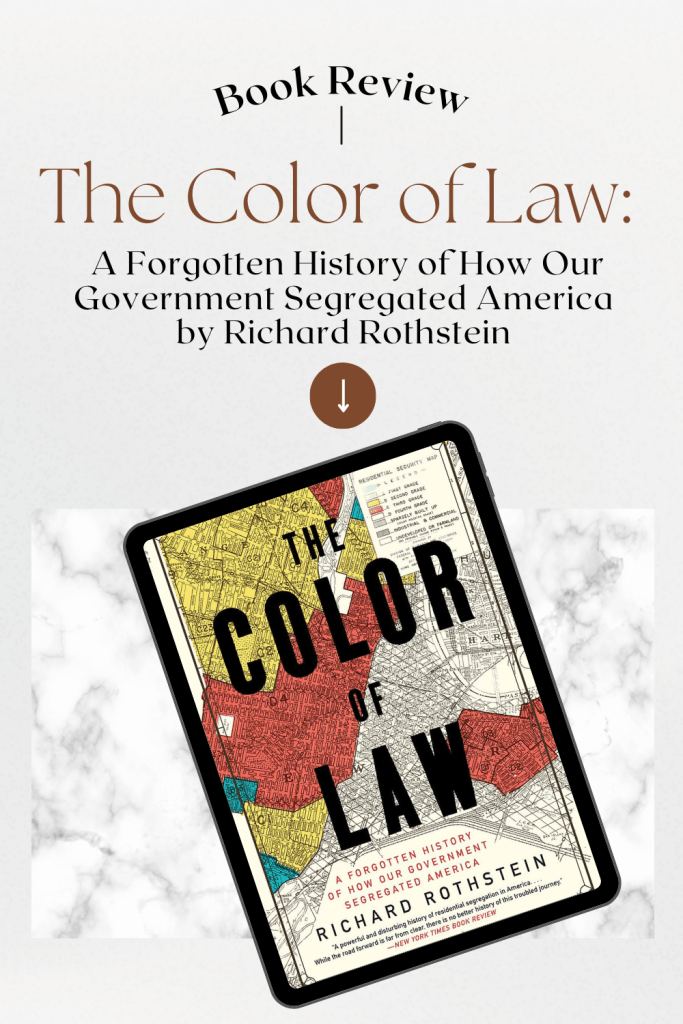
Book Review: The Color of Law: A Forgotten History of How Our Government Segregated America by Richard Rothstein

 A Vital Look at Segregation and Its Lasting Effects

When we talk about segregation in America, we often think of the Civil Rights Movement or the brave individuals who fought against oppressive systems. But what if I told you that segregation wasn’t just a product of individual prejudice or private actions? Richard Rothstein’s book, The Color of Law, takes a deep dive into the forgotten history of how government policies actively created and reinforced racial segregation in this country. For Black communities today, this book is a crucial read that not only informs but also challenges our understanding of the systemic forces shaping inequality.

Why This Book Is Essential for the Black Community:

Rothstein’s The Color of Law uncovers the dark history of how government policies—from federal housing laws to local zoning ordinances—purposefully segregated Black Americans from white communities. This history isn’t just academic; it has real-world implications that continue to impact Black families and communities today. For us, understanding this history is the first step toward dismantling the structures that continue to perpetuate racial inequality.

Through this book, Rothstein makes it clear that segregation wasn’t just the result of private choices or random incidents; it was deliberately enforced by law and government action. From redlining practices in the 1930s to discriminatory housing policies in the mid-20th century, these government actions set in motion patterns of poverty, limited opportunity, and inequality that continue to harm Black communities. Rothstein argues that we cannot fully understand the inequality in our society without recognizing that segregation was, and still is, a government-sponsored system.

Key Lessons from The Color of Law for the Black Community:

  1. The Role of Government in Creating Segregation: One of the most striking revelations in The Color of Law is how deeply involved the government was in fostering segregation. From the New Deal to post-World War II programs, policies were put in place that made it incredibly difficult for Black families to access housing in neighborhoods that would have allowed them to build wealth. By understanding the historical role of the government in creating these systems, we can more effectively advocate for the change that’s needed.
  2. The Impact of Redlining and Housing Discrimination: Rothstein discusses redlining, where banks and government agencies systematically denied Black Americans access to loans or housing in certain neighborhoods. This policy kept many Black families from building the kind of generational wealth that white families were able to accumulate through homeownership. The long-term effects of this practice are still visible today in the wealth gap between Black and white Americans. By addressing these historical injustices, we can begin to close that gap and create more opportunities for future generations.
  3. The Persistence of Segregation in Modern Times: Many people think that segregation ended with the Civil Rights Movement, but Rothstein shows that its effects are still deeply ingrained in our cities and communities. Even after the Fair Housing Act of 1968, discriminatory practices continued to make it difficult for Black Americans to move into previously white neighborhoods, reinforcing patterns of inequality. This ongoing segregation limits educational and economic opportunities for Black families, further entrenching racial disparities.
  4. Why We Need Policy Changes to Undo the Damage: Rothstein doesn’t just provide a history lesson; he also offers solutions. He calls for comprehensive policy changes, including reparations for those who were directly harmed by discriminatory policies, and for policies that promote integrated communities. The Color of Law urges us to understand that true justice requires not just acknowledgment but also reparative actions to fix the systems that continue to oppress Black Americans.

How This Book Helps the Black Community Today:

In today’s society, understanding the historical roots of racial inequality is crucial for advocating for systemic change. The Color of Law helps illuminate the origins of many modern-day issues—such as the wealth gap, segregated schools, and police violence—by connecting them to policies that intentionally isolated and disenfranchised Black communities. By recognizing the role of government in perpetuating these problems, we can better organize and push for legislation that addresses the needs of Black families today.

This book also serves as an educational tool for young Black people who may not fully grasp how deeply racism is embedded in our country’s laws and policies. For those looking to advocate for fair housing or more inclusive communities, Rothstein’s work provides a foundation for understanding why these fights are so important and how historical policies have created the inequality we see today.

Closing Thoughts:

The Color of Law is an essential read for anyone who wants to understand how segregation wasn’t just a social issue—it was a governmental practice that still affects Black communities today. It is not only a history book but a call to action, urging readers to recognize the systemic racism that still exists in America and to take steps to dismantle it. For the Black community, this book is a tool for education, advocacy, and empowerment. By understanding our history and the lasting impacts of government-imposed segregation, we can better fight for the equitable future we deserve.

The Color of Law reveals how government policies created and reinforced racial segregation in America. A must-read for understanding how these practices still affect Black communities today. #SystemicRacism #BlackHistory #TheColorOfLaw #HousingDiscrimination