Reparations Explained: How History Still Impacts Black Families Today

Why This Conversation Matters

I want to take a little more time with this conversation, because reparations is often misunderstood.

This is not just about the past. It is about understanding how specific decisions, policies, and systems shaped the reality many Black families are still navigating today.

If we are serious about building strong families and lasting legacies, then we also have to understand what disrupted those legacies in the first place.

A Timeline of What Happened

To really understand reparations, we have to look at the full picture.

1619 to 1865: Slavery
Black people were treated as property, and their labor built enormous wealth for the country. That wealth was never compensated.

1865 to early 1900s: Reconstruction and Its Collapse
There was a brief period where Black families began building land ownership and political power. That progress was quickly reversed through violence, Black Codes, and policies that stripped those gains away.

Early 1900s to 1960s: Jim Crow and Economic Exclusion
Segregation laws limited access to education, jobs, and wealth building opportunities. Black families were systematically pushed into lower paying work and under-resourced communities.

1930s to 1960s: Redlining and Housing Discrimination
The federal government, through agencies like the FHA, refused to insure loans in Black neighborhoods. At the same time, white families were given access to low-cost mortgages in growing suburbs.

1940s to 1970s: Contract Selling and Predatory Housing
In cities like Chicago, Black families were denied fair mortgages and forced into exploitative contracts. Missing one payment could mean eviction and loss of everything invested.

What This Looked Like in Real Life

Imagine two families in the 1950s.

One family is able to buy a home with a government-backed loan. Over time, that home increases in value. They pass it down to their children.

Another family is denied that same opportunity because of where they live or the color of their skin. Instead, they pay more for less security and risk losing everything.

Fast forward to today, and the difference is not just income. It is generational wealth, access to better schools, safer neighborhoods, and more opportunities.

This is not accidental. It is the result of policy.

How It Still Affects Us Today

Many of the challenges Black families face today are directly connected to these past decisions.

  • The racial wealth gap remains significant, with Black families holding a fraction of the wealth of white families.
  • Homeownership rates among Black families are still lower due to historical exclusion and ongoing disparities in lending.
  • Schools and neighborhoods are often still shaped by those same patterns created decades ago.

This is why this conversation matters right now, not just historically.

What Reparations Really Means

When I think about reparations, I do not think about a simple payment.

I think about acknowledgment and responsibility.

I think about this country being honest about how wealth was created and who was excluded from that process.

H.R. 40, a bill that has been introduced in Congress, does not even propose payments. It simply calls for a commission to study reparations and develop proposals.

That alone shows how early we still are in this conversation.

Why This Matters for Black Love and Family

Everything we talk about here comes back to family and legacy.

We talk about building strong relationships. Raising confident children. Creating something that lasts.

But we also have to understand that many Black families have been building while carrying the weight of systems designed to limit that growth.

And still, we build.

Still, we love.

Still, we create.

That is not weakness. That is resilience.

But imagine what is possible when that resilience is matched with fairness and truth.

Moving Forward

This is not about blame. It is about understanding.

It is about recognizing that the playing field was not level and asking what it means to address that honestly.

Because if we want stronger families, stronger communities, and a stronger future, then we have to be willing to face the full story.

At Crowned in Black Love, we celebrate what we are building every day.

And we also make space to understand what we have had to overcome to build it.

Both matter.

And both are part of creating a lasting legacy.

What are your thoughts about Reparations Explained: How History Still Impacts Black Families Today

Reparations is more than history. It is about policy, lost wealth, and how those decisions still shape Black families today. Learn the timeline, the impact, and why it still matters. #CrownedInBlackLove #BlackFamilies #Legacy

The Legal Weaponization of “Black”: From Dred Scott to Modern Media Stereotypes

When individuals recoil from the label “Black,” proclaiming “I’m not Black” or hurling slurs like “dirty Black Americans,” they confront not just a word, but a meticulously crafted legal fiction. This construct emerged from American courts, statutes, and policies that defined Blackness as inherently inferior to justify slavery, segregation, and exclusion. Far from neutral, “Black” became a tool to obscure atrocities like chattel slavery and lynchings, shifting blame onto victims while shielding architects of inequality. The Supreme Court didn’t merely interpret law; it authored racial destiny.

Dred Scott v. Sandford: Denying Citizenship and Human Rights

The legal blueprint for Black inferiority crystallized in Dred Scott v. Sandford (1857), a landmark Supreme Court decision that declared Black people—whether enslaved or free—”had no rights which the white man was bound to respect.” Dred Scott, an enslaved man who sued for freedom after residing in free territories like Illinois and Wisconsin, challenged the Missouri Compromise of 1820, which banned slavery north of a certain latitude. Chief Justice Roger Taney, writing for the 7-2 majority, not only rejected Scott’s claim but invalidated the Compromise entirely, asserting Congress lacked authority to regulate slavery in territories.

Taney’s opinion dripped with dehumanization: Black people were “regarded as beings of an inferior order... altogether unfit to associate with the white race, either in social or political relations; and so far inferior that they had no rights which the white man was bound to respect.” This pseudolegal reasoning drew from colonial slave codes and the Three-Fifths Compromise, framing Blackness as constitutionally incompatible with citizenship. The fallout was immediate: it emboldened the Fugitive Slave Act of 1850, leading to abductions of free Northern Blacks, as in Solomon Northup’s ordeal detailed in Twelve Years a Slave. Dred Scott’s shadow loomed over the Civil War, and its logic echoed in later barriers to Black enfranchisement.

Plessy v. Ferguson: Institutionalizing “Separate but Equal” as Black Subjugation

Reconstruction’s fragile gains unraveled with Plessy v. Ferguson (1896), which enshrined “separate but equal” segregation. Homer Plessy, a light-skinned octoroon (one-eighth African ancestry), tested Louisiana’s Separate Car Act by sitting in a whites-only train car. Arrested despite his appearance, Plessy’s case reached the Supreme Court, which upheld the law 7-1. Justice Henry Billings Brown’s majority opinion claimed segregation stamped “the colored race with a badge of inferiority” only if Blacks perceived it so—conveniently ignoring the stark disparities in funding and quality for Black facilities.

This ruling greenlit Jim Crow laws across the South, mandating separation in schools, restaurants, theaters, and transport. Justice John Marshall Harlan’s lone dissent warned it would prove “as pernicious as the Dred Scott decision,” predicting endless racial strife. Plessy’s legacy endured until Brown v. Board of Education (1954) overturned it, yet its principle—that Blackness warranted isolation—permeated culture, justifying inferior public services and vigilante violence.

Jim Crow Laws: From Black Codes to Penal Re-Enslavement

Post-emancipation Black Codes swiftly curtailed freedom, morphing into comprehensive Jim Crow regimes from 1877 to the 1960s. These state laws criminalized “vagrancy” to force Black labor, imposed poll taxes and literacy tests to suppress voting, and banned interracial marriage. Convict leasing turned prisons into profit machines: after dubious arrests for petty offenses, Black men were leased to private companies for brutal mine or farm work, with death rates exceeding 40% in some Southern states—effectively re-enslaving generations.

The federal government acquiesced; President Woodrow Wilson’s administration segregated civil service in 1913. These laws weren’t ad hoc; they built on Plessy‘s foundation, legally scripting Blackness as a threat requiring containment. Only the Civil Rights Act of 1964 and Voting Rights Act of 1965 began dismantling them, but vestiges persist in felony disenfranchisement clauses echoing Reconstruction-era exclusions.

Federal Housing Policy: Redlining and the Theft of Black Wealth

Economic subjugation advanced through New Deal-era redlining. The Home Owners’ Loan Corporation (HOLC) and Federal Housing Administration (FHA), starting in 1933, graded neighborhoods on “risk”: Black or integrated areas got red D ratings, denying FHA-backed mortgages that fueled white suburban booms. Racial covenants, upheld until Shelley v. Kraemer (1948), contractually barred non-white buyers. By 1960, white families received 98% of FHA loans, while Black veterans were routinely rejected.

This created a racial wealth gap: median white household wealth hit $171,000 by 2019 versus $17,600 for Black families, per Federal Reserve data. Redlining’s maps predetermined urban decay in Black neighborhoods, framing poverty as cultural failure rather than policy sabotage.

Media Amplification: Stereotypes as Legal and Social Enforcement

Media has weaponized these precedents, prioritizing crime-ridden tropes over Black achievement. Studies reveal news outlets cover Black suspects disproportionately (e.g., 24% of Boston robbery stories featured Black perpetrators despite 60% white arrests), priming juries for bias. Hollywood’s Birth of a Nation (1915) glorified the Ku Klux Klan while demonizing Black legislators, influencing Wilson’s screenings at the White House.

Barack Obama’s 2008 election showcased Black excellence—first Black president, Nobel laureatedisrupting narratives. Backlash ensued: “Birtherism” questioned his legitimacy, police killings surged (e.g., Trayvon Martin, Michael Brown), and media fixated on “thug” framings. Pew data shows 58% of Black Americans distrust news media due to this skew, perpetuating Dred Scott-style othering.

Reclaiming Narrative: From Legal Fiction to Collective Power

The word “Black” hides slavery’s 246 years, 4 million lynchings, and ongoing disparities—yet it also evokes resilience: inventors like Madam C.J. Walker, jurists like Thurgood Marshall. Legal reckoning requires abolishing qualified immunity (rooted in post-Reconstruction bias) and reparations audits. Refusing the label sustains the oppressor’s script; embracing it demands truth-telling to forge equity.

What are your thoughts about The Legal Weaponization of “Black”: From Dred Scott to Modern Media Stereotypes

How courts invented “Black” inferiority: Dred Scott denied rights, Plessy segregated, redlining stole wealth. Media hides excellence. Time to dismantle the legal lie. New essay: [link] #LegalConstructionOfBlackness #RacialJustice (187 chars)

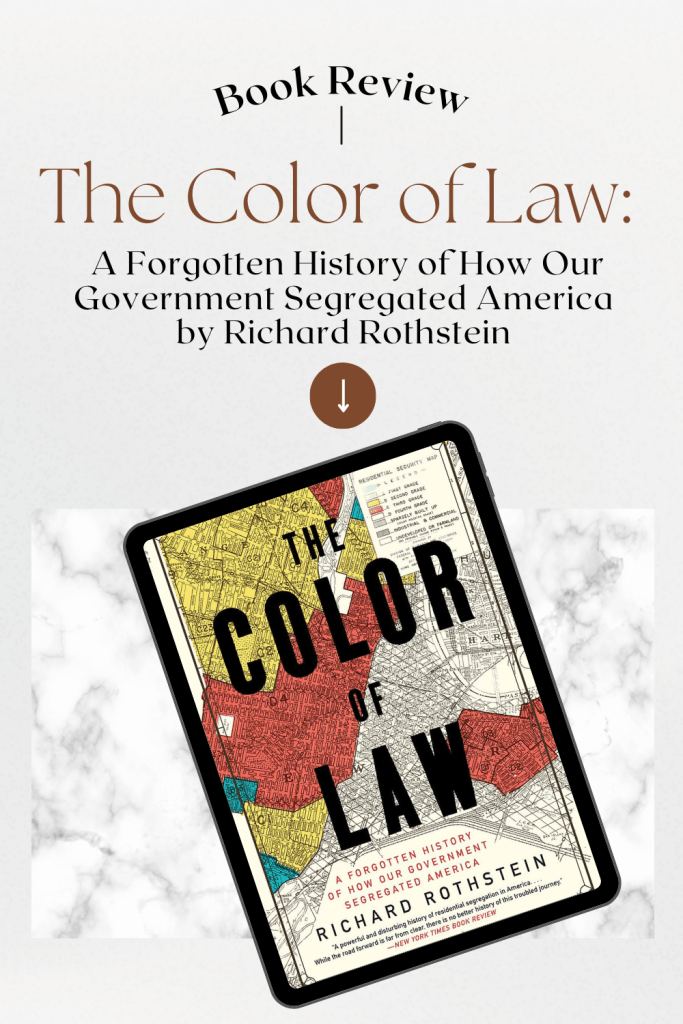
Book Review: The Color of Law: A Forgotten History of How Our Government Segregated America by Richard Rothstein

 A Vital Look at Segregation and Its Lasting Effects

When we talk about segregation in America, we often think of the Civil Rights Movement or the brave individuals who fought against oppressive systems. But what if I told you that segregation wasn’t just a product of individual prejudice or private actions? Richard Rothstein’s book, The Color of Law, takes a deep dive into the forgotten history of how government policies actively created and reinforced racial segregation in this country. For Black communities today, this book is a crucial read that not only informs but also challenges our understanding of the systemic forces shaping inequality.

Why This Book Is Essential for the Black Community:

Rothstein’s The Color of Law uncovers the dark history of how government policies—from federal housing laws to local zoning ordinances—purposefully segregated Black Americans from white communities. This history isn’t just academic; it has real-world implications that continue to impact Black families and communities today. For us, understanding this history is the first step toward dismantling the structures that continue to perpetuate racial inequality.

Through this book, Rothstein makes it clear that segregation wasn’t just the result of private choices or random incidents; it was deliberately enforced by law and government action. From redlining practices in the 1930s to discriminatory housing policies in the mid-20th century, these government actions set in motion patterns of poverty, limited opportunity, and inequality that continue to harm Black communities. Rothstein argues that we cannot fully understand the inequality in our society without recognizing that segregation was, and still is, a government-sponsored system.

Key Lessons from The Color of Law for the Black Community:

  1. The Role of Government in Creating Segregation: One of the most striking revelations in The Color of Law is how deeply involved the government was in fostering segregation. From the New Deal to post-World War II programs, policies were put in place that made it incredibly difficult for Black families to access housing in neighborhoods that would have allowed them to build wealth. By understanding the historical role of the government in creating these systems, we can more effectively advocate for the change that’s needed.
  2. The Impact of Redlining and Housing Discrimination: Rothstein discusses redlining, where banks and government agencies systematically denied Black Americans access to loans or housing in certain neighborhoods. This policy kept many Black families from building the kind of generational wealth that white families were able to accumulate through homeownership. The long-term effects of this practice are still visible today in the wealth gap between Black and white Americans. By addressing these historical injustices, we can begin to close that gap and create more opportunities for future generations.
  3. The Persistence of Segregation in Modern Times: Many people think that segregation ended with the Civil Rights Movement, but Rothstein shows that its effects are still deeply ingrained in our cities and communities. Even after the Fair Housing Act of 1968, discriminatory practices continued to make it difficult for Black Americans to move into previously white neighborhoods, reinforcing patterns of inequality. This ongoing segregation limits educational and economic opportunities for Black families, further entrenching racial disparities.
  4. Why We Need Policy Changes to Undo the Damage: Rothstein doesn’t just provide a history lesson; he also offers solutions. He calls for comprehensive policy changes, including reparations for those who were directly harmed by discriminatory policies, and for policies that promote integrated communities. The Color of Law urges us to understand that true justice requires not just acknowledgment but also reparative actions to fix the systems that continue to oppress Black Americans.

How This Book Helps the Black Community Today:

In today’s society, understanding the historical roots of racial inequality is crucial for advocating for systemic change. The Color of Law helps illuminate the origins of many modern-day issues—such as the wealth gap, segregated schools, and police violence—by connecting them to policies that intentionally isolated and disenfranchised Black communities. By recognizing the role of government in perpetuating these problems, we can better organize and push for legislation that addresses the needs of Black families today.

This book also serves as an educational tool for young Black people who may not fully grasp how deeply racism is embedded in our country’s laws and policies. For those looking to advocate for fair housing or more inclusive communities, Rothstein’s work provides a foundation for understanding why these fights are so important and how historical policies have created the inequality we see today.

Closing Thoughts:

The Color of Law is an essential read for anyone who wants to understand how segregation wasn’t just a social issue—it was a governmental practice that still affects Black communities today. It is not only a history book but a call to action, urging readers to recognize the systemic racism that still exists in America and to take steps to dismantle it. For the Black community, this book is a tool for education, advocacy, and empowerment. By understanding our history and the lasting impacts of government-imposed segregation, we can better fight for the equitable future we deserve.

The Color of Law reveals how government policies created and reinforced racial segregation in America. A must-read for understanding how these practices still affect Black communities today. #SystemicRacism #BlackHistory #TheColorOfLaw #HousingDiscrimination

How Redlining Affected and Continues to Impact Black Communities

In the early 20th century, a practice known as redlining became a systematic tool of racial segregation and inequality in the United States. Though it’s been outlawed for decades, the effects of redlining are still felt by Black communities today. Redlining was a government-backed policy that denied Black families access to mortgages and homeownership in certain neighborhoods, based on their race. This practice not only trapped Black people in poverty but also created barriers to wealth-building, education, and community development that continue to impact Black families across generations.

In this blog post, we’ll dive into the history of redlining, how it shaped the landscape of racial inequality in housing, and why its legacy continues to affect Black communities in significant ways.

1. What Was Redlining?

Redlining refers to a discriminatory practice that started in the 1930s, where the federal government and private banks systematically denied mortgages to Black families and other communities of color. This was done by marking certain neighborhoods on maps with red ink, which indicated that these areas were “too risky” for investment. The reasoning behind this “risk” was often tied to the racial makeup of the neighborhood rather than actual economic factors.

The Home Owners’ Loan Corporation (HOLC), a federal agency, was responsible for creating these redlined maps, which were then used by banks to decide whether to approve home loans. Neighborhoods predominantly inhabited by Black families or other people of color were often marked as “hazardous,” making it nearly impossible for residents to purchase homes or secure loans for home improvements.

In short, redlining kept Black families from owning homes in areas with higher property values, greater access to quality schools, and better employment opportunities.

2. The Effects of Redlining on Black Communities

The long-term effects of redlining have been profound and continue to affect Black communities today. Here’s how this practice shaped the experiences of Black families:

  • Denial of Homeownership: Homeownership has long been a key way for Americans to build wealth. For Black families, however, redlining blocked access to homeownership in desirable neighborhoods, locking them out of the chance to build equity. As a result, Black families were often forced to rent in areas with lower property values, which limited their ability to accumulate generational wealth.
  • Disinvestment in Neighborhoods: Because redlined areas were deemed “unfit” for investment, many of these neighborhoods were systematically neglected by both government and private institutions. This led to a lack of infrastructure, poor schools, and underfunded community services. Without access to resources or investment, neighborhoods that were predominantly Black faced economic stagnation.
  • Education and Employment Barriers: Redlining not only kept Black families from owning homes in better neighborhoods but also contributed to a cycle of poverty. Schools in redlined neighborhoods were often underfunded, which resulted in a lower quality of education. This lack of access to quality education made it more difficult for Black children to access higher education and better job opportunities, further entrenching the cycle of inequality.
  • Health and Safety Impacts: Redlined neighborhoods often lacked investment in health services, public parks, and other amenities that contribute to overall well-being. These areas were also more likely to be located near industrial zones, exposing residents to pollution and health hazards. As a result, Black communities living in these areas faced higher rates of chronic illnesses, mental health challenges, and lower life expectancy.

3. How Redlining Continues to Affect Black Communities Today

The effects of redlining did not disappear with the official end of the practice in the 1960s. In fact, its legacy still shapes housing patterns and wealth distribution today.

  • Wealth Inequality: Homeownership remains one of the primary ways that American families build wealth. Because redlining denied Black families the opportunity to purchase homes in areas that appreciated in value, many Black families were never able to build the wealth that could have been passed down through generations. Today, Black Americans have less wealth on average than white Americans, with a significant portion of that wealth gap stemming from the lack of homeownership opportunities.
  • Segregation of Communities: Though redlining ended decades ago, the legacy of segregated housing patterns remains. Many predominantly Black neighborhoods continue to face high levels of poverty and limited access to quality education and healthcare. Redlined areas are often still underfunded, and neighborhoods remain segregated by race and income. As a result, Black communities still face barriers to upward mobility.
  • Access to Loans and Mortgages: Discriminatory practices similar to redlining still exist today. Black families often face greater challenges when applying for loans or mortgages, even in areas where redlining maps no longer exist. Studies show that Black applicants are more likely to be denied home loans and are often charged higher interest rates than white applicants, even when they have similar credit scores.
  • Neighborhood Disinvestment: The lack of investment in historically redlined neighborhoods has left many Black communities struggling to catch up. Even in cities where gentrification is happening in other parts of town, many redlined neighborhoods remain economically depressed. The disinvestment that started with redlining has created long-lasting effects on local businesses, public services, and housing stock, making it difficult for these communities to thrive.

4. What Can Be Done to Address the Legacy of Redlining?

While the practice of redlining is illegal today, the impact it has had on Black communities is still felt. To truly combat the legacy of redlining, several actions must be taken:

  • Affordable Housing Policies: Policies that promote affordable housing, such as increasing funding for housing subsidies or incentivizing the construction of affordable homes in underfunded areas, can help provide access to homeownership for Black families.
  • Investment in Redlined Neighborhoods: Revitalizing historically redlined neighborhoods through targeted investment in infrastructure, schools, healthcare, and businesses is critical. By reinvesting in these communities, we can help break the cycle of disinvestment and provide opportunities for growth and development.
  • Addressing Discriminatory Lending Practices: To combat the lingering effects of discriminatory lending, we must enforce anti-discrimination laws that ensure Black families have equal access to mortgages and loans. Support for policies like the Fair Housing Act and Community Reinvestment Act can help reduce modern-day discrimination in the housing market.
  • Education and Workforce Development: Investing in education and workforce development programs in historically marginalized communities can help create economic opportunities for Black families. By providing access to quality education and job training, we can help lift entire communities out of poverty.
  • Legal and Policy Advocacy: Continued advocacy from civil rights organizations and lawmakers is essential to hold institutions accountable for discriminatory practices and push for policies that address the legacy of redlining.

Conclusion: The Fight for Housing Equality Continues

Redlining was a deliberate attempt to deny Black families access to homeownership and the opportunities that come with it. Though the practice is no longer legal, its legacy continues to affect Black communities, contributing to wealth inequality, segregation, and lack of opportunity. Understanding the impact of redlining is essential in addressing the persistent racial disparities that still exist today.

To make meaningful progress, we must advocate for policies that promote housing equality, investment in disenfranchised communities, and an end to discriminatory lending practices. Only by confronting the history and legacy of redlining can we begin to build a more equitable future for Black families and communities.

Redlining may have ended decades ago, but its legacy continues to impact Black communities today—limiting wealth, opportunities, and equality. Learn why addressing redlining’s impact is crucial for justice. #HousingEquality #BlackCommunities