
Reparations Explained: How History Still Impacts Black Families Today

Why This Conversation Matters

I want to take a little more time with this conversation, because reparations is often misunderstood.

This is not just about the past. It is about understanding how specific decisions, policies, and systems shaped the reality many Black families are still navigating today.

If we are serious about building strong families and lasting legacies, then we also have to understand what disrupted those legacies in the first place.

A Timeline of What Happened

To really understand reparations, we have to look at the full picture.

1619 to 1865: Slavery
Black people were treated as property, and their labor built enormous wealth for the country. That wealth was never compensated.

1865 to early 1900s: Reconstruction and Its Collapse
There was a brief period where Black families began building land ownership and political power. That progress was quickly reversed through violence, Black Codes, and policies that stripped those gains away.

Early 1900s to 1960s: Jim Crow and Economic Exclusion
Segregation laws limited access to education, jobs, and wealth building opportunities. Black families were systematically pushed into lower paying work and under-resourced communities.

1930s to 1960s: Redlining and Housing Discrimination
The federal government, through agencies like the FHA, refused to insure loans in Black neighborhoods. At the same time, white families were given access to low-cost mortgages in growing suburbs.

1940s to 1970s: Contract Selling and Predatory Housing
In cities like Chicago, Black families were denied fair mortgages and forced into exploitative contracts. Missing one payment could mean eviction and loss of everything invested.

What This Looked Like in Real Life

Imagine two families in the 1950s.

One family is able to buy a home with a government-backed loan. Over time, that home increases in value. They pass it down to their children.

Another family is denied that same opportunity because of where they live or the color of their skin. Instead, they pay more for less security and risk losing everything.

Fast forward to today, and the difference is not just income. It is generational wealth, access to better schools, safer neighborhoods, and more opportunities.

This is not accidental. It is the result of policy.

How It Still Affects Us Today

Many of the challenges Black families face today are directly connected to these past decisions.

  • The racial wealth gap remains significant, with Black families holding a fraction of the wealth of white families.
  • Homeownership rates among Black families are still lower due to historical exclusion and ongoing disparities in lending.
  • Schools and neighborhoods are often still shaped by those same patterns created decades ago.

This is why this conversation matters right now, not just historically.

What Reparations Really Means

When I think about reparations, I do not think about a simple payment.

I think about acknowledgment and responsibility.

I think about this country being honest about how wealth was created and who was excluded from that process.

H.R. 40, a bill that has been introduced in Congress, does not even propose payments. It simply calls for a commission to study reparations and develop proposals.

That alone shows how early we still are in this conversation.

Why This Matters for Black Love and Family

Everything we talk about here comes back to family and legacy.

We talk about building strong relationships. Raising confident children. Creating something that lasts.

But we also have to understand that many Black families have been building while carrying the weight of systems designed to limit that growth.

And still, we build.

Still, we love.

Still, we create.

That is not weakness. That is resilience.

But imagine what is possible when that resilience is matched with fairness and truth.

Moving Forward

This is not about blame. It is about understanding.

It is about recognizing that the playing field was not level and asking what it means to address that honestly.

Because if we want stronger families, stronger communities, and a stronger future, then we have to be willing to face the full story.

At Crowned in Black Love, we celebrate what we are building every day.

And we also make space to understand what we have had to overcome to build it.

Both matter.

And both are part of creating a lasting legacy.

What are your thoughts about Reparations Explained: How History Still Impacts Black Families Today

Reparations is more than history. It is about policy, lost wealth, and how those decisions still shape Black families today. Learn the timeline, the impact, and why it still matters. #CrownedInBlackLove #BlackFamilies #Legacy
The Cost of Division: Why Fragmenting Black Political Power Threatens Real Justice

In a moment when political power is both fragile and fiercely contested, the rise of lineage-based movements like ADOS and FBA presents a critical question: are we sharpening the fight for justice—or unintentionally weakening it?

Let’s be clear—this conversation did not emerge out of nowhere. For decades, the specific harms experienced by the descendants of American slavery have been flattened into a broad, catch-all idea of “Blackness.” That flattening has had real consequences. It has allowed institutions to celebrate diversity while sidestepping reparative justice. It has masked economic disparities within Black communities. And it has delayed an honest reckoning with the enduring legacy of slavery and Jim Crow.

On that point, the activists are right. Precision matters. Justice that is not specific is often justice denied.

But here’s the hard truth: justice also requires power—and power requires unity.

In the United States, no marginalized group wins major policy victories alone. Not civil rights. Not voting rights. Not economic reform. Every meaningful gain has come from coalitions that were broad, sometimes messy, but ultimately unified enough to demand action.

Black political influence has followed that same pattern. A diverse but cohesive voting bloc—African Americans, Caribbean communities, African immigrants—has consistently punched above its weight electorally. According to Pew Research (2021), over 90% of Black voters supported the same presidential candidate in 2020. That level of alignment is not symbolic—it is leverage.

It is what forces politicians to listen.

Now imagine that cohesion breaking apart.

When the political conversation shifts from “what do Black communities need?” to “which Black people qualify?”, something fundamental changes. The focus turns inward. Energy that once targeted systems of inequality is redirected into defining boundaries. And in that shift, political clarity is lost.

This is not just theoretical. Political science research has shown that elected officials are less responsive to groups they perceive as divided or inconsistent (American Political Science Review, 2018). Division doesn’t just weaken messaging—it reduces urgency. It signals to power that demands can be delayed, negotiated down, or ignored altogether.

And that is the real danger.

Because reparations—the central demand of many lineage-based movements—is not a small policy ask. It is one of the most ambitious and politically difficult proposals in modern American history. It will not pass through moral argument alone. It will require overwhelming political pressure, sustained over time, backed by a coalition too large and too unified to dismiss.

Fragmentation works directly against that goal.

If the movement for reparative justice becomes exclusionary in practice—framing potential allies as competitors rather than partners—it risks shrinking its own base of support at the exact moment it needs to expand it. That is not strategy. That is self-sabotage.

None of this means abandoning specificity. It means deploying it wisely.

There is a difference between targeted policy and narrow politics. One strengthens movements. The other isolates them.

The path forward is not to erase lineage—it is to integrate it into a broader political vision that builds, rather than fractures, collective power. That means advocating for reparations with clarity and force, while still maintaining the alliances necessary to win. It means recognizing that while our histories may differ, the systems we are up against often do not make those distinctions.

And most importantly, it means refusing to confuse internal differentiation with external strength.

Because history has shown us something over and over again: divided groups do not get more justice—they get less.

If the goal is real, material change, then the strategy must match the scale of that ambition. And that starts with a simple, difficult truth:

Power is not just about being right. It’s about being united enough to win.

What are your thoughts about, The Cost of Division: Why Fragmenting Black Political Power Threatens Real Justice

Are movements like ADOS and FBA strengthening the fight for justice—or fracturing the power needed to win it? A hard look at unity, reparations, and political strategy in Black America. #Politics #Reparations #BlackPower

Reparations and the Legacy We’re Still Building

A Real Conversation

There’s something I’ve been sitting with lately, and I want to talk about it with you. Not as a lecture, but as a real conversation.

When we hear the word Reparations and the Legacy We’re Still Building, most people immediately think about slavery. And yes, that’s part of the story. But if we stop there, we miss the bigger truth.

The harm did not end when slavery ended. It did not fade away over time. It evolved into new systems, new policies, and new barriers that continued to impact Black families for generations.

More Than History

For me, this is not just history. It connects directly to everything we talk about here at Crowned in Black Love. Family. Legacy. Building something that lasts.

There was a time when Black families were locked out of homeownership, not by chance, but by policy. While other families were able to buy homes, build equity, and pass that down, many of our families were denied loans or pushed into predatory contracts.

That matters.

Because a home is more than a place to live. It represents stability, opportunity, and something you can pass on.

When that is taken away or made harder to reach, it does not just affect one generation. It shapes the future of families for decades.

How I See Reparations

So when I think about reparations, I do not see a handout. I do not see charity.

I see acknowledgment.

I see a country being honest about the systems that helped create the gaps we still see today. Not just in wealth, but in access, opportunity, and stability.

And more than anything, I see it through the lens of legacy.

The Legacy Conversation

We talk a lot about building strong families. About loving each other well. About raising confident, grounded children. About creating something that lasts beyond us.

But we also have to recognize that for many Black families, the starting line was moved. Not because of a lack of effort, but because of intentional barriers.

That does not take away from our strength. It highlights it.

Because despite all of that, we have still built. We have still loved. We have still created stability and community in ways that continue to inspire.

That is Black love.

Moving Forward With Truth

Now imagine what is possible when truth meets action.

Reparations, at its core, is about restoring what was disrupted. It is about creating a path where legacy is not constantly being rebuilt from the ground up, but strengthened across generations.

This is not about division. It is about clarity.

If we are serious about strong families and lasting legacies, we also have to be honest about the systems that made those things harder to achieve.

Why This Matters Here

At Crowned in Black Love, we celebrate what we are building every single day.

But we can also tell the truth about what we have had to overcome to build it.

Both things matter.

And both things deserve to be part of the conversation.

What are your thoughts about Reparations and the Legacy We’re Still Building

Reparations is not just about the past. It is about legacy, truth, and what was taken from Black families. A real conversation about love, wealth, and building stronger futures. #CrownedInBlackLove #BlackLove #Legacy

The Broken Promise of 40 Acres and a Mule: A Legacy of Injustice

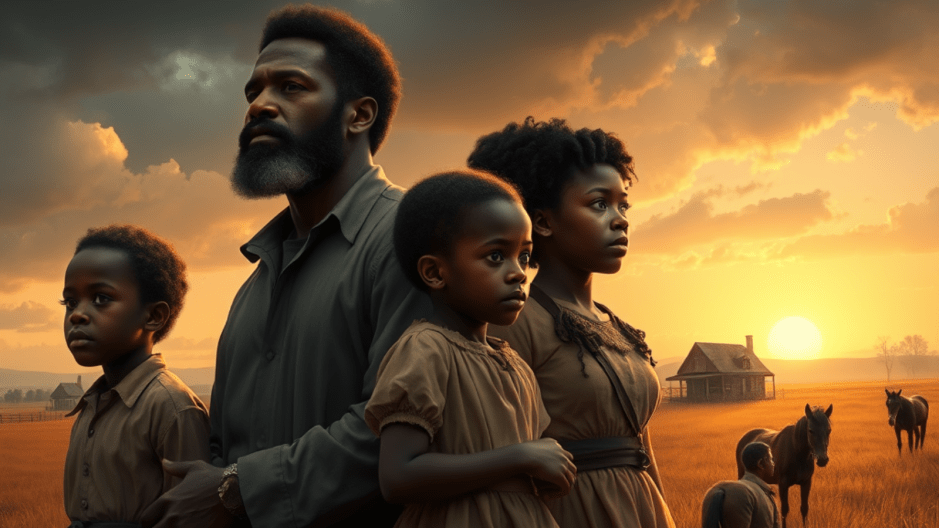
The concept of 40 acres and a mule is one of the most significant yet unfulfilled promises in American history. Originating from Special Field Order No. 15, issued by Union General William T. Sherman in 1865, this radical policy aimed to redistribute land from Confederate landowners to newly freed Black families. It was a groundbreaking moment, as for the first time, the U.S. government directly engaged with Black leaders to determine what was needed to secure their future after slavery. Their answer was clear: land—40 acres of tillable land and a mule to work it.

A Vision for Economic Independence

After centuries of forced labor, oppression, and systemic disenfranchisement, this policy represented a glimmer of hope. Land ownership meant more than just a place to live; it was a direct pathway to economic independence, stability, and self-sufficiency. With land, formerly enslaved people could grow their own food, build communities, and establish generational wealth—something that had been systematically denied to them.

The Betrayal of a Nation

Unfortunately, this promise was never fulfilled. After President Abraham Lincoln’s assassination, his successor, Andrew Johnson, quickly overturned Sherman’s order. The land that had been designated for freed Black families was taken back and returned to its original Confederate owners. The government not only reneged on its commitment but actively stripped Black Americans of the opportunity to build a future on land they had rightfully earned through centuries of unpaid labor.

The Long Shadow of Broken Promises

The failure to deliver 40 acres and a mule was not just a denial of land—it was a denial of justice, equity, and progress. This betrayal marked the beginning of a long history of systemic exclusion from economic opportunities for Black Americans. From Jim Crow laws to redlining, from discriminatory lending practices to mass incarceration, the ripple effects of this broken promise have been felt for generations.

Reparations and the Ongoing Fight for Justice

Today, the conversation around reparations is gaining momentum, as many recognize that economic disparities between Black and white Americans are rooted in policies like the failure to provide 40 acres and a mule. While land itself may not be the singular solution, acknowledgment, policy changes, and direct economic investments are necessary steps toward rectifying historical injustices.

Conclusion

The story of 40 acres and a mule is not just a historical anecdote—it is a symbol of the unfulfilled promises and systemic barriers that continue to impact Black communities today. Understanding this history is essential to shaping a future where justice is not just promised but delivered. The fight for economic equity and reparations continues, and recognizing the legacy of broken promises is the first step toward meaningful change.

Twitter Post: The promise of 40 acres and a mule was a chance for Black economic independence—one that was never fulfilled. Learn about its impact & the ongoing fight for reparations. #BlackHistory #Reparations #EconomicJustice [Insert Link]