

A Vital Look at Segregation and Its Lasting Effects
When we talk about segregation in America, we often think of the Civil Rights Movement or the brave individuals who fought against oppressive systems. But what if I told you that segregation wasn’t just a product of individual prejudice or private actions? Richard Rothstein’s book, The Color of Law, takes a deep dive into the forgotten history of how government policies actively created and reinforced racial segregation in this country. For Black communities today, this book is a crucial read that not only informs but also challenges our understanding of the systemic forces shaping inequality.
Why This Book Is Essential for the Black Community:
Rothstein’s The Color of Law uncovers the dark history of how government policies—from federal housing laws to local zoning ordinances—purposefully segregated Black Americans from white communities. This history isn’t just academic; it has real-world implications that continue to impact Black families and communities today. For us, understanding this history is the first step toward dismantling the structures that continue to perpetuate racial inequality.
Through this book, Rothstein makes it clear that segregation wasn’t just the result of private choices or random incidents; it was deliberately enforced by law and government action. From redlining practices in the 1930s to discriminatory housing policies in the mid-20th century, these government actions set in motion patterns of poverty, limited opportunity, and inequality that continue to harm Black communities. Rothstein argues that we cannot fully understand the inequality in our society without recognizing that segregation was, and still is, a government-sponsored system.

Key Lessons from The Color of Law for the Black Community:
- The Role of Government in Creating Segregation: One of the most striking revelations in The Color of Law is how deeply involved the government was in fostering segregation. From the New Deal to post-World War II programs, policies were put in place that made it incredibly difficult for Black families to access housing in neighborhoods that would have allowed them to build wealth. By understanding the historical role of the government in creating these systems, we can more effectively advocate for the change that’s needed.
- The Impact of Redlining and Housing Discrimination: Rothstein discusses redlining, where banks and government agencies systematically denied Black Americans access to loans or housing in certain neighborhoods. This policy kept many Black families from building the kind of generational wealth that white families were able to accumulate through homeownership. The long-term effects of this practice are still visible today in the wealth gap between Black and white Americans. By addressing these historical injustices, we can begin to close that gap and create more opportunities for future generations.
- The Persistence of Segregation in Modern Times: Many people think that segregation ended with the Civil Rights Movement, but Rothstein shows that its effects are still deeply ingrained in our cities and communities. Even after the Fair Housing Act of 1968, discriminatory practices continued to make it difficult for Black Americans to move into previously white neighborhoods, reinforcing patterns of inequality. This ongoing segregation limits educational and economic opportunities for Black families, further entrenching racial disparities.
- Why We Need Policy Changes to Undo the Damage: Rothstein doesn’t just provide a history lesson; he also offers solutions. He calls for comprehensive policy changes, including reparations for those who were directly harmed by discriminatory policies, and for policies that promote integrated communities. The Color of Law urges us to understand that true justice requires not just acknowledgment but also reparative actions to fix the systems that continue to oppress Black Americans.
How This Book Helps the Black Community Today:
In today’s society, understanding the historical roots of racial inequality is crucial for advocating for systemic change. The Color of Law helps illuminate the origins of many modern-day issues—such as the wealth gap, segregated schools, and police violence—by connecting them to policies that intentionally isolated and disenfranchised Black communities. By recognizing the role of government in perpetuating these problems, we can better organize and push for legislation that addresses the needs of Black families today.
This book also serves as an educational tool for young Black people who may not fully grasp how deeply racism is embedded in our country’s laws and policies. For those looking to advocate for fair housing or more inclusive communities, Rothstein’s work provides a foundation for understanding why these fights are so important and how historical policies have created the inequality we see today.
Closing Thoughts:
The Color of Law is an essential read for anyone who wants to understand how segregation wasn’t just a social issue—it was a governmental practice that still affects Black communities today. It is not only a history book but a call to action, urging readers to recognize the systemic racism that still exists in America and to take steps to dismantle it. For the Black community, this book is a tool for education, advocacy, and empowerment. By understanding our history and the lasting impacts of government-imposed segregation, we can better fight for the equitable future we deserve.
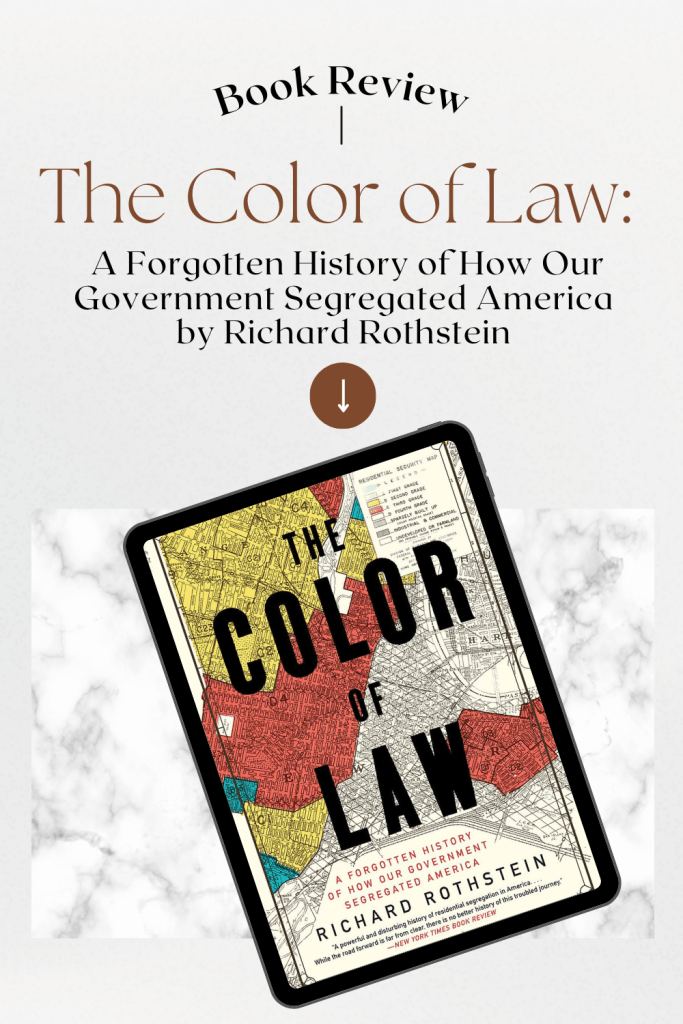

The Color of Law reveals how government policies created and reinforced racial segregation in America. A must-read for understanding how these practices still affect Black communities today. #SystemicRacism #BlackHistory #TheColorOfLaw #HousingDiscrimination
 Crowned in Black Love