The Disappearance Crisis: Why Black Women and Girls Are Disproportionately Missing

The tragic and systemic issue of missing Black women and girls is a crisis that demands more attention. Due to a combination of systemic racism, violence, and human trafficking, Black women and girls are disproportionately impacted by abductions and disappearances in the United States. Unfortunately, these cases are often underreported and underrecognized, which perpetuates an environment of neglect.


Statistics: The Harsh Reality of Missing Black Women and Girls

In 2022, Black women and girls represented a staggering 36% of the missing women and girls reported to the National Crime Information Center. This figure starkly contrasts with the proportion of Black women and girls in the overall population, highlighting a deep and concerning issue of racial inequality in how missing persons are reported and investigated.

Black women are also six times more likely to be murdered than their white counterparts. This statistic reflects the extreme violence many Black women face in society—violence that is often overlooked or not taken seriously by law enforcement.

Furthermore, Black women and girls are disproportionately affected by human trafficking, where they face higher rates of exploitation, both within the United States and internationally. These young women are often preyed upon because of their vulnerability, which is compounded by a lack of resources and support when they go missing.


Advocacy: Organizations Making a Difference

Several organizations are working tirelessly to raise awareness and support the families of missing Black women and girls. These organizations offer resources, education, and platforms for advocacy.

  • The Black and Missing Foundation works to highlight cases of missing Black individuals, offering media training for families of missing persons and creating essential survival guides. The Foundation helps families navigate the often overwhelming process of dealing with law enforcement and the media when a loved one goes missing.
  • From the Bottom Up Foundation is a non-profit organization dedicated to supporting Black women and girls, providing crucial programs and services that focus on empowerment and safety. Their work is vital in addressing the root causes of disappearances, including systemic neglect and abuse.

Resources: Raising Awareness and Providing Support

In response to the growing crisis, governmental and non-governmental organizations are offering resources for those affected.

  • The Office of Justice Programs has hosted national convenings to raise awareness about the systemic issues behind the disproportionate number of missing Black individuals. These initiatives aim to bring together community leaders, law enforcement, and activists to create solutions and push for systemic change.
  • The Department of Justice provides a family survival guide for when a child or family member goes missing. This guide offers step-by-step instructions for parents and guardians, helping them navigate the immediate steps to take when faced with a missing loved one. It also provides resources for law enforcement, supporting them in addressing these cases more effectively.

The Impact: Addressing the Root Causes

The disproportionate number of missing Black women and girls speaks to broader systemic issues in society. Racial bias within law enforcement often results in Black individuals, especially women and girls, not receiving the same level of attention and urgency in missing persons cases as their white counterparts. Additionally, economic inequality and social neglect leave many Black women and girls vulnerable to trafficking, violence, and exploitation.

The lack of adequate resources for Black families, particularly those in low-income communities, contributes to the crisis. These families are often left without the support needed to ensure that their missing loved ones are given the attention they deserve. This inequality creates a culture where Black lives are treated as less valuable, and the urgency of their cases is often minimized.


Why This Crisis Must Be Recognized

The issue of missing Black women and girls is a profound injustice that highlights the failure of society to protect and value marginalized communities. Raising awareness, increasing media coverage, and providing resources are essential to addressing this crisis. We must work together to ensure that every person, regardless of race or background, is given the resources and support needed when they are in danger or go missing.

It’s essential that Black families are given the tools to protect their loved ones. Knowledge is power, and advocacy organizations like the Black and Missing Foundation and From the Bottom Up Foundation are fighting for the recognition and action that Black women and girls need.

We must continue to advocate for the safety of our communities, support those working to bring change, and demand that the lives of Black women and girls matter—both in life and when they go missing.


Conclusion: A Call for Change

The crisis of missing Black women and girls is a matter of life and death. As a community, we must fight against the systemic issues that perpetuate this tragedy. By raising awareness, providing support, and working together, we can protect our loved ones and bring about the systemic change needed to ensure Black women and girls are safe. Knowledge, advocacy, and unity are key to bringing about justice and ending this crisis.


#BlackWomenMatter #BlackGirlsMatter #MissingPersonsAwareness #JusticeForBlackWomen #EndSystemicRacism

Black women and girls are disproportionately missing in the U.S. due to systemic racism, violence, and trafficking. Learn why this crisis is often ignored and how advocacy groups are fighting for justice. #BlackWomenMatter #MissingBlackWomen #JusticeForBlackGirls

Book Review: Black Marxism: The Making of the Black Radical Tradition by Cedric J. Robinson

A Deep Dive into Black Radical Thought and Resistance

In Black Marxism: The Making of the Black Radical Tradition, Cedric J. Robinson challenges us to rethink how we understand Black resistance movements and their relationship to Marxist theory. This seminal work dives deep into the historical and ideological development of Black radicalism, showing how it has always been both a response to class struggle and, more fundamentally, a rejection of the oppressive structures of white supremacy. Robinson’s book provides a powerful critique of traditional Marxist thought while shedding light on the specific experiences and contributions of Black radical activists throughout history. For the Black community, this book offers both a history lesson and a critical framework for understanding modern struggles for justice.

Why Black Marxism is Essential for the Black Community:

In his analysis, Robinson argues that Black radicalism cannot be fully understood through the lens of traditional Marxism alone. While Marxist theory is often used to explain class struggle, Robinson asserts that it fails to address the unique ways in which Black people have resisted white supremacy, colonialism, and racial oppression. This is crucial for the Black community, as it pushes us to recognize that the fight for justice is not solely about class—it’s about dismantling racial hierarchies that have existed for centuries. By understanding how Black radicalism intersects with Marxist theory, we can better strategize our activism and push for structural change in a way that truly addresses the root causes of racial and economic inequality.

Key Lessons from Black Marxism for the Black Community:

  1. Black Radicalism is a Response to White Supremacy: Robinson makes a compelling argument that Black radical thought cannot be understood in isolation from the realities of white supremacy. Unlike traditional Marxism, which focuses primarily on class struggle, Black radicalism is also about resisting a racialized social order that has systematically marginalized Black people. For the Black community, this insight is essential because it highlights that the fight for equality is both a racial and class issue. This intersection of race and class must inform how we approach activism today.
  2. Challenging Traditional Marxist Thought: One of the most important contributions of Robinson’s work is his critique of classical Marxism. He argues that traditional Marxist thought, with its focus on class struggle, cannot fully explain the ways in which Black people have fought for justice. By focusing on the intersection of race and class, Robinson invites the Black community to rethink how we engage with mainstream political ideologies and encourages us to develop a more nuanced understanding of our struggle for liberation.
  3. Historical Roots of Black Radical Thought: Robinson delves into the history of Black resistance, highlighting key figures and movements that have shaped the Black radical tradition. From the Haitian Revolution to the work of figures like Marcus Garvey and the Black Panther Party, this book emphasizes the importance of recognizing and celebrating the long history of Black activism. For the Black community, this historical context provides both inspiration and guidance for contemporary efforts to combat racial injustice.
  4. The Importance of Black Intellectual Thought: Robinson’s exploration of Black Marxism shows how intellectuals like Du Bois, C.L.R. James, and Frantz Fanon contributed to the development of Black radical thought. This history of intellectual resistance reminds the Black community that activism is not just about protests in the streets—it’s also about the power of ideas. By embracing Black intellectual traditions and contributing our own voices to the conversation, we can continue to shape the future of resistance movements.
  5. The Relationship Between Capitalism and Racism: Robinson argues that capitalism and white supremacy are inextricably linked. The exploitation of Black people in the U.S. and throughout the world cannot be understood without recognizing how racial oppression has been embedded within capitalist systems. For the Black community, this connection offers a critical lens through which to view economic inequality and systemic injustice. It underscores the importance of building a movement that addresses both economic and racial oppression simultaneously.

How Black Marxism Helps the Black Community Today:

  • Black Marxism encourages the Black community to think critically about the structures of power that perpetuate inequality. By understanding the historical relationship between race and class, we can develop more effective strategies to challenge the status quo.
  • Robinson’s work provides a powerful foundation for activists who want to connect the dots between economic exploitation and racial oppression. It offers both a theoretical framework and practical examples of how to resist systems of injustice.
  • By recognizing that Black radicalism is rooted in a long history of resistance, the Black community can draw strength from past struggles and continue to push forward for justice in the present.

Closing Thoughts:

Black Marxism by Cedric J. Robinson is a profound and thought-provoking exploration of the ideological roots of Black radicalism. By examining the intersection of race and class, Robinson challenges us to rethink how we approach activism and resistance. For the Black community, this book is not just a history lesson—it’s a call to action to continue fighting against the systems that have long oppressed us. With a clear-eyed understanding of the relationship between capitalism and white supremacy, we can better understand how to build a more just and equitable future. This book is a vital resource for anyone looking to deepen their understanding of the roots of Black activism and the ways in which we can continue to fight for liberation today.

Cedric J. Robinson’s Black Marxism explores the intersection of race and class in Black radical thought. A must-read for understanding how Black activism challenges both capitalism & white supremacy! #BlackHistory #SocialJustice #Activism

How Redlining Affected and Continues to Impact Black Communities

In the early 20th century, a practice known as redlining became a systematic tool of racial segregation and inequality in the United States. Though it’s been outlawed for decades, the effects of redlining are still felt by Black communities today. Redlining was a government-backed policy that denied Black families access to mortgages and homeownership in certain neighborhoods, based on their race. This practice not only trapped Black people in poverty but also created barriers to wealth-building, education, and community development that continue to impact Black families across generations.

In this blog post, we’ll dive into the history of redlining, how it shaped the landscape of racial inequality in housing, and why its legacy continues to affect Black communities in significant ways.

1. What Was Redlining?

Redlining refers to a discriminatory practice that started in the 1930s, where the federal government and private banks systematically denied mortgages to Black families and other communities of color. This was done by marking certain neighborhoods on maps with red ink, which indicated that these areas were “too risky” for investment. The reasoning behind this “risk” was often tied to the racial makeup of the neighborhood rather than actual economic factors.

The Home Owners’ Loan Corporation (HOLC), a federal agency, was responsible for creating these redlined maps, which were then used by banks to decide whether to approve home loans. Neighborhoods predominantly inhabited by Black families or other people of color were often marked as “hazardous,” making it nearly impossible for residents to purchase homes or secure loans for home improvements.

In short, redlining kept Black families from owning homes in areas with higher property values, greater access to quality schools, and better employment opportunities.

2. The Effects of Redlining on Black Communities

The long-term effects of redlining have been profound and continue to affect Black communities today. Here’s how this practice shaped the experiences of Black families:

  • Denial of Homeownership: Homeownership has long been a key way for Americans to build wealth. For Black families, however, redlining blocked access to homeownership in desirable neighborhoods, locking them out of the chance to build equity. As a result, Black families were often forced to rent in areas with lower property values, which limited their ability to accumulate generational wealth.
  • Disinvestment in Neighborhoods: Because redlined areas were deemed “unfit” for investment, many of these neighborhoods were systematically neglected by both government and private institutions. This led to a lack of infrastructure, poor schools, and underfunded community services. Without access to resources or investment, neighborhoods that were predominantly Black faced economic stagnation.
  • Education and Employment Barriers: Redlining not only kept Black families from owning homes in better neighborhoods but also contributed to a cycle of poverty. Schools in redlined neighborhoods were often underfunded, which resulted in a lower quality of education. This lack of access to quality education made it more difficult for Black children to access higher education and better job opportunities, further entrenching the cycle of inequality.
  • Health and Safety Impacts: Redlined neighborhoods often lacked investment in health services, public parks, and other amenities that contribute to overall well-being. These areas were also more likely to be located near industrial zones, exposing residents to pollution and health hazards. As a result, Black communities living in these areas faced higher rates of chronic illnesses, mental health challenges, and lower life expectancy.

3. How Redlining Continues to Affect Black Communities Today

The effects of redlining did not disappear with the official end of the practice in the 1960s. In fact, its legacy still shapes housing patterns and wealth distribution today.

  • Wealth Inequality: Homeownership remains one of the primary ways that American families build wealth. Because redlining denied Black families the opportunity to purchase homes in areas that appreciated in value, many Black families were never able to build the wealth that could have been passed down through generations. Today, Black Americans have less wealth on average than white Americans, with a significant portion of that wealth gap stemming from the lack of homeownership opportunities.
  • Segregation of Communities: Though redlining ended decades ago, the legacy of segregated housing patterns remains. Many predominantly Black neighborhoods continue to face high levels of poverty and limited access to quality education and healthcare. Redlined areas are often still underfunded, and neighborhoods remain segregated by race and income. As a result, Black communities still face barriers to upward mobility.
  • Access to Loans and Mortgages: Discriminatory practices similar to redlining still exist today. Black families often face greater challenges when applying for loans or mortgages, even in areas where redlining maps no longer exist. Studies show that Black applicants are more likely to be denied home loans and are often charged higher interest rates than white applicants, even when they have similar credit scores.
  • Neighborhood Disinvestment: The lack of investment in historically redlined neighborhoods has left many Black communities struggling to catch up. Even in cities where gentrification is happening in other parts of town, many redlined neighborhoods remain economically depressed. The disinvestment that started with redlining has created long-lasting effects on local businesses, public services, and housing stock, making it difficult for these communities to thrive.

4. What Can Be Done to Address the Legacy of Redlining?

While the practice of redlining is illegal today, the impact it has had on Black communities is still felt. To truly combat the legacy of redlining, several actions must be taken:

  • Affordable Housing Policies: Policies that promote affordable housing, such as increasing funding for housing subsidies or incentivizing the construction of affordable homes in underfunded areas, can help provide access to homeownership for Black families.
  • Investment in Redlined Neighborhoods: Revitalizing historically redlined neighborhoods through targeted investment in infrastructure, schools, healthcare, and businesses is critical. By reinvesting in these communities, we can help break the cycle of disinvestment and provide opportunities for growth and development.
  • Addressing Discriminatory Lending Practices: To combat the lingering effects of discriminatory lending, we must enforce anti-discrimination laws that ensure Black families have equal access to mortgages and loans. Support for policies like the Fair Housing Act and Community Reinvestment Act can help reduce modern-day discrimination in the housing market.
  • Education and Workforce Development: Investing in education and workforce development programs in historically marginalized communities can help create economic opportunities for Black families. By providing access to quality education and job training, we can help lift entire communities out of poverty.
  • Legal and Policy Advocacy: Continued advocacy from civil rights organizations and lawmakers is essential to hold institutions accountable for discriminatory practices and push for policies that address the legacy of redlining.

Conclusion: The Fight for Housing Equality Continues

Redlining was a deliberate attempt to deny Black families access to homeownership and the opportunities that come with it. Though the practice is no longer legal, its legacy continues to affect Black communities, contributing to wealth inequality, segregation, and lack of opportunity. Understanding the impact of redlining is essential in addressing the persistent racial disparities that still exist today.

To make meaningful progress, we must advocate for policies that promote housing equality, investment in disenfranchised communities, and an end to discriminatory lending practices. Only by confronting the history and legacy of redlining can we begin to build a more equitable future for Black families and communities.

Redlining may have ended decades ago, but its legacy continues to impact Black communities today—limiting wealth, opportunities, and equality. Learn why addressing redlining’s impact is crucial for justice. #HousingEquality #BlackCommunities

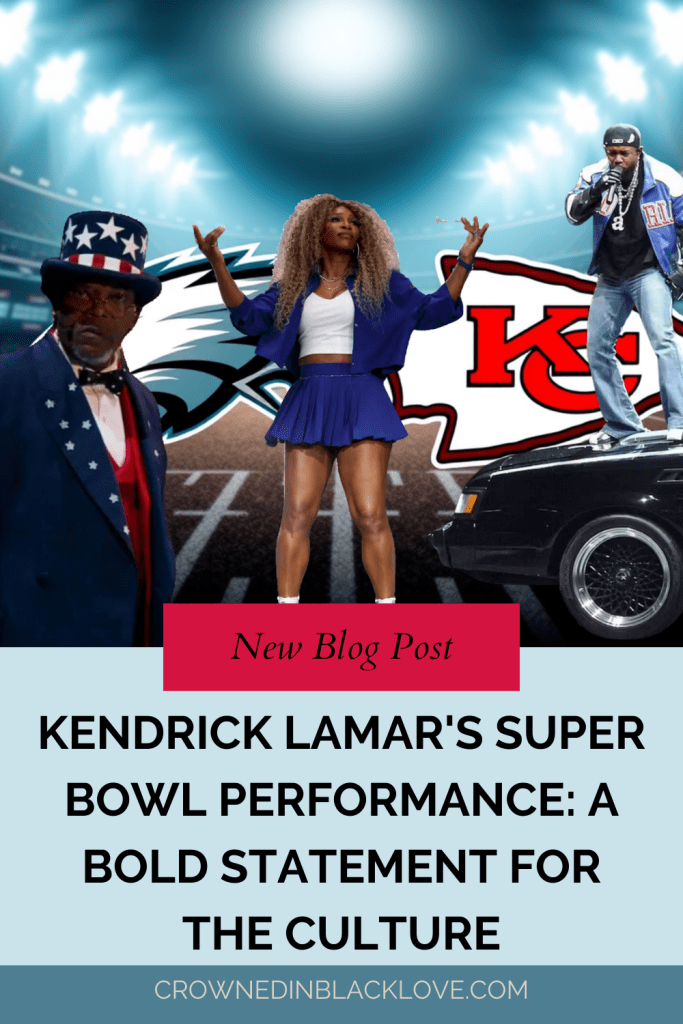
Kendrick Lamar’s Super Bowl Performance: A Bold Statement for the Culture

When Kendrick Lamar hit the stage for the 2025 Super Bowl halftime show, it wasn’t just about music. It was a powerful moment of defiance, resistance, and a call for change. Kendrick took over the biggest stage in the world to remind us all that the culture isn’t just something to be watched—it’s something to be felt, understood, and fought for.

This wasn’t your average halftime performance. Kendrick Lamar flipped the script on what it means to use your platform. Every lyric, every visual, and every moment spoke directly to the Black community’s ongoing fight for justice, recognition, and respect. Let’s break it down.

Uncle Sam Ain’t Who He Claims to Be

The opening moment of the show hit hard. Samuel L. Jackson as Uncle Sam isn’t the patriotic figure we all think of. Nah, this Uncle Sam represents the system that’s been holding us back for centuries. When Jackson said, “Welcome to the Great American Game,” he wasn’t just talking about football—he was talking about the game America’s been playing with our lives, our freedom, and our futures.

We’ve always been told we’re “too loud, too ghetto, too angry.” But Kendrick came out to flip that narrative and show that we’re not the problem—America is. Uncle Sam might represent “freedom,” but for us, that freedom’s always been denied. Kendrick stepped up to say, “We’re done with that,” and it was clear the world was about to hear what he had to say.

The Revolution Will Be Televised—And It’s Loud

Kendrick threw down the gauntlet when he said, “The revolution will be televised.” Now, anyone who knows their history knows this was a twist on Gil Scott-Heron’s famous line. Back in the day, the revolution was kept hidden from mainstream media. But in 2025? The revolution isn’t just happening—it’s front and center, during the Super Bowl halftime show.

Kendrick wasn’t just performing; he was making sure that the fight for Black liberation and justice wasn’t being ignored. By choosing the biggest stage in the world, Kendrick took control of the narrative. The revolution isn’t just a movement in the streets; it’s right here, on our screens, loud and clear.

Reversing Time: A Call to Undo the Past

One of the most powerful parts of Kendrick’s performance was how he and his dancers moved in reverse. That wasn’t just choreography—it was a statement: we need to undo the wrongs of the past. We can’t keep ignoring the history of Black oppression in this country. Time doesn’t need to be linear—it needs to go backward, to the moments we were robbed of justice, opportunity, and freedom.

When the dancers formed the American flag, it wasn’t just a tribute to the nation; it was a reminder of all the promises this country made but never kept. The flag has always represented liberty—but for us, it’s been anything but. Kendrick’s performance pushed the question: If the flag really stands for freedom and justice, why hasn’t it been granted to us?

40 Acres and a Mule: The Promise Never Kept

This line hit deep. When Kendrick brought up “40 acres and a mule,” he wasn’t just making a historical reference. He was talking about the government’s broken promises to Black Americans. After the Civil War, newly freed slaves were promised 40 acres of land and a mule to rebuild their lives. But we all know what happened—those promises were never fulfilled.

The idea behind 40 acres and a mule was meant to give us the tools for economic independence. But the government didn’t keep its word. Kendrick brought this up to remind us that this betrayal didn’t end in the 1800s—it continues today, through policies and practices that still limit our ability to thrive economically. It was a call to recognize that reparations are long overdue.

The “A Minor” Necklace: A Different Kind of Alpha

Now, let’s talk about that necklace Kendrick wore. The “A Minor” pendant had people talking, and for good reason. At first, many thought it was a jab at his ongoing tension with Drake, but it’s deeper than that. The lowercase “a” isn’t about playing a game of rap beef—it’s a symbol of Kendrick’s unique approach to power.

In a world where power is often loud and in your face, Kendrick’s subtle “A” says, “I’m the Alpha—but I don’t need to shout about it.” It’s a quiet confidence. He doesn’t need to dominate every conversation to prove he’s at the top. Kendrick’s power comes from his authenticity, his influence, and his refusal to be anyone other than himself. This is leadership that doesn’t need to flex—it just exists.

Kendrick Lamar: The Alpha, The GOAT, The One Who Leads

In the world of hip-hop, the term “Alpha” gets thrown around a lot. But Kendrick Lamar is the real deal. He doesn’t need to yell or boast. He shows up, and the world listens. He redefines what it means to be the greatest of all time—the GOAT. And it’s not just about bars or beats—it’s about shaping culture, speaking truth, and leading by example.

Kendrick’s impact goes far beyond music. He’s changing the way we look at power in hip-hop, in society, and in our communities. Being the “Alpha” isn’t about being loud or brash. It’s about having the vision to lead from the front, whether people realize it or not. Kendrick Lamar’s performance at the Super Bowl showed us that the real leaders in hip-hop aren’t the ones who shout the loudest—they’re the ones who speak truth, even when it’s uncomfortable.

America, It’s Time to Stand Up

Kendrick’s performance wasn’t just about calling out the music industry—it was about calling out America, too. Through songs like “Not Like Us,” Kendrick confronted the fact that the system’s been rigged for so long that it’s hard to even imagine real change. But with his performance, he showed us that we don’t have to accept the status quo.

The inclusion of Serena Williams, who performed the Crip walk alongside Kendrick, was a powerful visual of unity and resistance. It showed that no matter how much they try to suppress us, we’re gonna rise up. And we’re gonna do it together.

“GAME OVER”

Kendrick closed his performance with a simple but profound message: “GAME OVER.” He wasn’t just ending his set—he was making a statement. The old ways are done. It’s time for a new era, one where justice, equality, and respect are at the forefront. Kendrick Lamar isn’t just playing the game—he’s rewriting the rules.

Kendrick Lamar’s Legacy of Resistance

Kendrick’s Super Bowl halftime performance was more than just a show. It was a revolutionary moment for the culture, for the community, and for the world. From flipping the script on American symbols to calling out the government’s broken promises, Kendrick used this moment to say everything we’ve been waiting to hear: we’re here, we’re not backing down, and we won’t be ignored anymore.

Kendrick Lamar isn’t just a rapper—he’s a leader, a revolutionary, and a symbol of the power we hold when we come together and demand change. The revolution isn’t coming—it’s here, and Kendrick Lamar is leading the way.

Kendrick Lamar’s Super Bowl halftime show wasn’t just a performance—it was a statement. 🎤 Watch how Kendrick used the world’s biggest stage to flip the script on power & injustice. #KendrickLamar #SuperBowl2025 #Culture #Resistance

The Broken Promise of 40 Acres and a Mule: A Legacy of Injustice

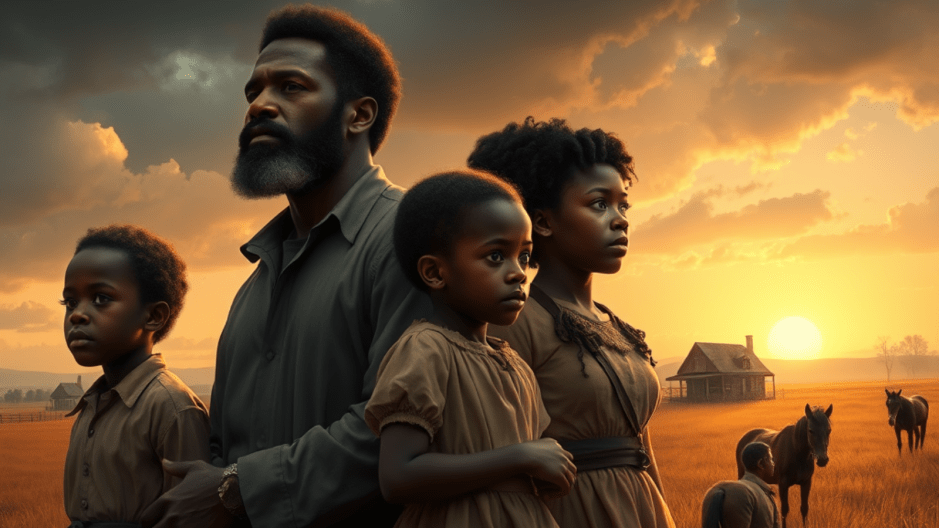
The concept of 40 acres and a mule is one of the most significant yet unfulfilled promises in American history. Originating from Special Field Order No. 15, issued by Union General William T. Sherman in 1865, this radical policy aimed to redistribute land from Confederate landowners to newly freed Black families. It was a groundbreaking moment, as for the first time, the U.S. government directly engaged with Black leaders to determine what was needed to secure their future after slavery. Their answer was clear: land—40 acres of tillable land and a mule to work it.

A Vision for Economic Independence

After centuries of forced labor, oppression, and systemic disenfranchisement, this policy represented a glimmer of hope. Land ownership meant more than just a place to live; it was a direct pathway to economic independence, stability, and self-sufficiency. With land, formerly enslaved people could grow their own food, build communities, and establish generational wealth—something that had been systematically denied to them.

The Betrayal of a Nation

Unfortunately, this promise was never fulfilled. After President Abraham Lincoln’s assassination, his successor, Andrew Johnson, quickly overturned Sherman’s order. The land that had been designated for freed Black families was taken back and returned to its original Confederate owners. The government not only reneged on its commitment but actively stripped Black Americans of the opportunity to build a future on land they had rightfully earned through centuries of unpaid labor.

The Long Shadow of Broken Promises

The failure to deliver 40 acres and a mule was not just a denial of land—it was a denial of justice, equity, and progress. This betrayal marked the beginning of a long history of systemic exclusion from economic opportunities for Black Americans. From Jim Crow laws to redlining, from discriminatory lending practices to mass incarceration, the ripple effects of this broken promise have been felt for generations.

Reparations and the Ongoing Fight for Justice

Today, the conversation around reparations is gaining momentum, as many recognize that economic disparities between Black and white Americans are rooted in policies like the failure to provide 40 acres and a mule. While land itself may not be the singular solution, acknowledgment, policy changes, and direct economic investments are necessary steps toward rectifying historical injustices.

Conclusion

The story of 40 acres and a mule is not just a historical anecdote—it is a symbol of the unfulfilled promises and systemic barriers that continue to impact Black communities today. Understanding this history is essential to shaping a future where justice is not just promised but delivered. The fight for economic equity and reparations continues, and recognizing the legacy of broken promises is the first step toward meaningful change.

Twitter Post: The promise of 40 acres and a mule was a chance for Black economic independence—one that was never fulfilled. Learn about its impact & the ongoing fight for reparations. #BlackHistory #Reparations #EconomicJustice [Insert Link]