Book Review: We Were Eight Years in Power: An American Tragedy by Ta-Nehisi Coates

A Deep Dive into Race, Politics, and the Obama Legacy

In We Were Eight Years in Power: An American Tragedy, Ta-Nehisi Coates delivers a thought-provoking and piercing examination of America’s political landscape during and after Barack Obama’s presidency. Through a collection of essays, Coates dissects the complexities of race, power, and politics, providing a critical look at the rise of Donald Trump, the legacies of slavery and racism, and the ideological divides that continue to shape American society. Coates doesn’t just reflect on Obama’s time in office; he explores the deep divisions that define the country and the heavy weight of history that still looms over Black Americans today.

Why We Were Eight Years in Power is Essential for the Black Community:

This book is an essential read for the Black community because it forces us to confront the realities of American politics and the ways in which race and power intersect at every level of society. Coates doesn’t shy away from difficult truths about the limitations of the Obama presidency, the rise of a racially divisive political climate, and the challenges of Black political engagement. This book helps us understand how our history, identity, and struggles for justice continue to be deeply interwoven with the political battles we face today.

Key Lessons from We Were Eight Years in Power for the Black Community:

  1. The Fragility of Progress: Coates reflects on the eight years of Barack Obama’s presidency and highlights how progress, even when achieved, is always fragile. For the Black community, this serves as a sobering reminder that victories for racial justice are often met with resistance and backlash. Coates argues that the illusion of a post-racial America, perpetuated by Obama’s presidency, blinded many to the deep-seated racism still ingrained in American society. Understanding this fragility allows us to be more strategic and resilient in our fight for justice.
  2. The Importance of Understanding Power: One of the key themes in We Were Eight Years in Power is the importance of understanding power in its many forms. Coates challenges readers to think critically about who holds power in society and how it is used. For the Black community, this book highlights the significance of political engagement and the need to build and maintain power, both through voting and activism, to ensure that our voices are heard and that the gains we’ve made aren’t undone by those who seek to maintain the status quo.
  3. The Persistence of White Supremacy: Coates doesn’t shy away from the harsh realities of white supremacy in America. He argues that even after the election of the first Black president, racism and inequality did not disappear. Instead, they transformed into more covert forms, continuing to shape political discourse and policies in America. For Black Americans, this reinforces the importance of continuing the fight for equality, even when it feels like progress has been made. Understanding that racism is deeply embedded in American institutions empowers us to keep pushing for true systemic change.
  4. The Power of Black Intellectual Thought: Throughout the book, Coates gives voice to the thinkers, writers, and activists who have shaped Black intellectual thought. He encourages the Black community to engage in deep reflection, using our unique perspectives and experiences to contribute to broader societal conversations. This is crucial for creating an informed, powerful, and resilient Black political identity. Coates’ work is an invitation for Black Americans to continue to be leaders in shaping the political landscape and advocating for our community’s interests.
  5. The Ongoing Struggle for Racial Justice: At the heart of We Were Eight Years in Power is a call for continued activism. Coates highlights the deepening divides and the resistance to change that persist even in the face of the Black Lives Matter movement and other efforts to address racial injustice. He argues that the fight for racial justice is far from over, and it’s essential for the Black community to remain steadfast in demanding equal treatment, representation, and opportunities in all areas of society.

How We Were Eight Years in Power Helps the Black Community Today:

  • The book helps the Black community navigate and understand the current political climate, particularly in the aftermath of Obama’s presidency and the rise of Trump. It offers a critical lens through which to view the struggles we continue to face in terms of race, power, and politics.
  • Coates’ reflections on race and politics encourage Black readers to remain politically engaged and informed, understanding that power dynamics are ever-shifting and must be actively navigated to ensure our rights are protected.
  • By connecting the struggles of the past with the present, We Were Eight Years in Power offers a roadmap for how we can continue to fight for justice and equality, understanding that it’s not just about one moment in history but about sustaining long-term efforts for racial equity.

Closing Thoughts:

We Were Eight Years in Power by Ta-Nehisi Coates is a powerful collection of essays that challenges the Black community to think deeply about the intersection of race, politics, and power. Coates’ sharp, incisive analysis of America’s political climate, from Obama’s presidency to the rise of Trump, forces us to confront the reality of how race continues to shape our lives. This book is a vital resource for understanding the complexities of our political landscape and encourages us to remain vigilant in our activism and pursuit of justice. It’s a call for continued reflection, action, and empowerment—an invitation to keep pushing forward in the fight for true equality.

Ta-Nehisi Coates’ We Were Eight Years in Power dives deep into race, politics, and the legacy of Obama’s presidency. It’s a must-read for understanding America’s political divides and the ongoing struggle for justice. #Race #Politics #Activism #BlackHistory

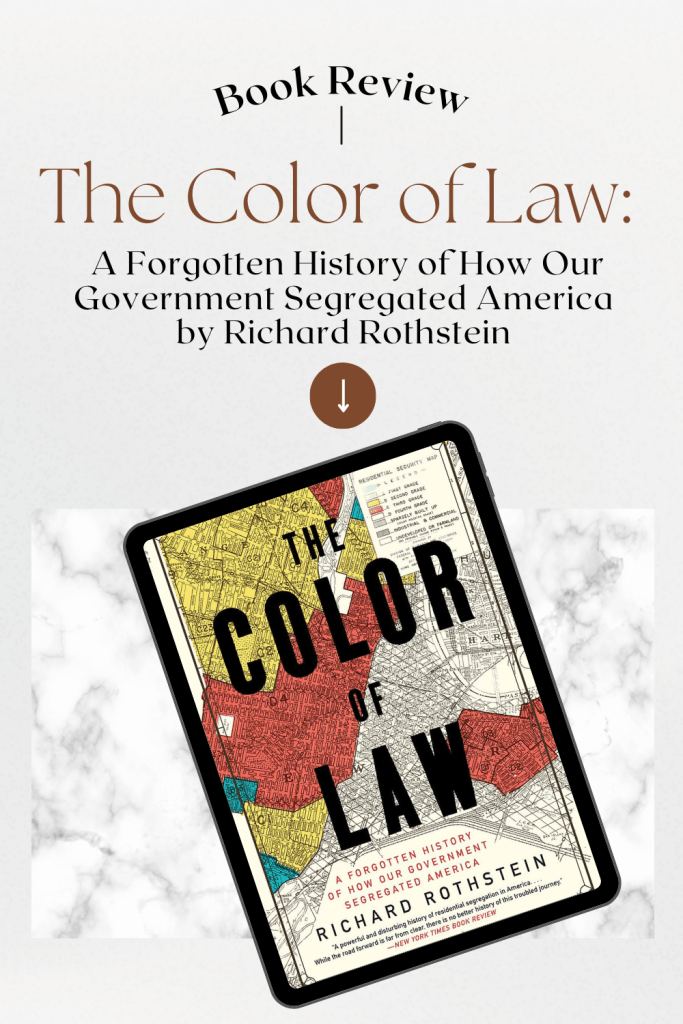
Book Review: The Color of Law: A Forgotten History of How Our Government Segregated America by Richard Rothstein

 A Vital Look at Segregation and Its Lasting Effects

When we talk about segregation in America, we often think of the Civil Rights Movement or the brave individuals who fought against oppressive systems. But what if I told you that segregation wasn’t just a product of individual prejudice or private actions? Richard Rothstein’s book, The Color of Law, takes a deep dive into the forgotten history of how government policies actively created and reinforced racial segregation in this country. For Black communities today, this book is a crucial read that not only informs but also challenges our understanding of the systemic forces shaping inequality.

Why This Book Is Essential for the Black Community:

Rothstein’s The Color of Law uncovers the dark history of how government policies—from federal housing laws to local zoning ordinances—purposefully segregated Black Americans from white communities. This history isn’t just academic; it has real-world implications that continue to impact Black families and communities today. For us, understanding this history is the first step toward dismantling the structures that continue to perpetuate racial inequality.

Through this book, Rothstein makes it clear that segregation wasn’t just the result of private choices or random incidents; it was deliberately enforced by law and government action. From redlining practices in the 1930s to discriminatory housing policies in the mid-20th century, these government actions set in motion patterns of poverty, limited opportunity, and inequality that continue to harm Black communities. Rothstein argues that we cannot fully understand the inequality in our society without recognizing that segregation was, and still is, a government-sponsored system.

Key Lessons from The Color of Law for the Black Community:

  1. The Role of Government in Creating Segregation: One of the most striking revelations in The Color of Law is how deeply involved the government was in fostering segregation. From the New Deal to post-World War II programs, policies were put in place that made it incredibly difficult for Black families to access housing in neighborhoods that would have allowed them to build wealth. By understanding the historical role of the government in creating these systems, we can more effectively advocate for the change that’s needed.
  2. The Impact of Redlining and Housing Discrimination: Rothstein discusses redlining, where banks and government agencies systematically denied Black Americans access to loans or housing in certain neighborhoods. This policy kept many Black families from building the kind of generational wealth that white families were able to accumulate through homeownership. The long-term effects of this practice are still visible today in the wealth gap between Black and white Americans. By addressing these historical injustices, we can begin to close that gap and create more opportunities for future generations.
  3. The Persistence of Segregation in Modern Times: Many people think that segregation ended with the Civil Rights Movement, but Rothstein shows that its effects are still deeply ingrained in our cities and communities. Even after the Fair Housing Act of 1968, discriminatory practices continued to make it difficult for Black Americans to move into previously white neighborhoods, reinforcing patterns of inequality. This ongoing segregation limits educational and economic opportunities for Black families, further entrenching racial disparities.
  4. Why We Need Policy Changes to Undo the Damage: Rothstein doesn’t just provide a history lesson; he also offers solutions. He calls for comprehensive policy changes, including reparations for those who were directly harmed by discriminatory policies, and for policies that promote integrated communities. The Color of Law urges us to understand that true justice requires not just acknowledgment but also reparative actions to fix the systems that continue to oppress Black Americans.

How This Book Helps the Black Community Today:

In today’s society, understanding the historical roots of racial inequality is crucial for advocating for systemic change. The Color of Law helps illuminate the origins of many modern-day issues—such as the wealth gap, segregated schools, and police violence—by connecting them to policies that intentionally isolated and disenfranchised Black communities. By recognizing the role of government in perpetuating these problems, we can better organize and push for legislation that addresses the needs of Black families today.

This book also serves as an educational tool for young Black people who may not fully grasp how deeply racism is embedded in our country’s laws and policies. For those looking to advocate for fair housing or more inclusive communities, Rothstein’s work provides a foundation for understanding why these fights are so important and how historical policies have created the inequality we see today.

Closing Thoughts:

The Color of Law is an essential read for anyone who wants to understand how segregation wasn’t just a social issue—it was a governmental practice that still affects Black communities today. It is not only a history book but a call to action, urging readers to recognize the systemic racism that still exists in America and to take steps to dismantle it. For the Black community, this book is a tool for education, advocacy, and empowerment. By understanding our history and the lasting impacts of government-imposed segregation, we can better fight for the equitable future we deserve.

The Color of Law reveals how government policies created and reinforced racial segregation in America. A must-read for understanding how these practices still affect Black communities today. #SystemicRacism #BlackHistory #TheColorOfLaw #HousingDiscrimination

How Redlining Affected and Continues to Impact Black Communities

In the early 20th century, a practice known as redlining became a systematic tool of racial segregation and inequality in the United States. Though it’s been outlawed for decades, the effects of redlining are still felt by Black communities today. Redlining was a government-backed policy that denied Black families access to mortgages and homeownership in certain neighborhoods, based on their race. This practice not only trapped Black people in poverty but also created barriers to wealth-building, education, and community development that continue to impact Black families across generations.

In this blog post, we’ll dive into the history of redlining, how it shaped the landscape of racial inequality in housing, and why its legacy continues to affect Black communities in significant ways.

1. What Was Redlining?

Redlining refers to a discriminatory practice that started in the 1930s, where the federal government and private banks systematically denied mortgages to Black families and other communities of color. This was done by marking certain neighborhoods on maps with red ink, which indicated that these areas were “too risky” for investment. The reasoning behind this “risk” was often tied to the racial makeup of the neighborhood rather than actual economic factors.

The Home Owners’ Loan Corporation (HOLC), a federal agency, was responsible for creating these redlined maps, which were then used by banks to decide whether to approve home loans. Neighborhoods predominantly inhabited by Black families or other people of color were often marked as “hazardous,” making it nearly impossible for residents to purchase homes or secure loans for home improvements.

In short, redlining kept Black families from owning homes in areas with higher property values, greater access to quality schools, and better employment opportunities.

2. The Effects of Redlining on Black Communities

The long-term effects of redlining have been profound and continue to affect Black communities today. Here’s how this practice shaped the experiences of Black families:

  • Denial of Homeownership: Homeownership has long been a key way for Americans to build wealth. For Black families, however, redlining blocked access to homeownership in desirable neighborhoods, locking them out of the chance to build equity. As a result, Black families were often forced to rent in areas with lower property values, which limited their ability to accumulate generational wealth.
  • Disinvestment in Neighborhoods: Because redlined areas were deemed “unfit” for investment, many of these neighborhoods were systematically neglected by both government and private institutions. This led to a lack of infrastructure, poor schools, and underfunded community services. Without access to resources or investment, neighborhoods that were predominantly Black faced economic stagnation.
  • Education and Employment Barriers: Redlining not only kept Black families from owning homes in better neighborhoods but also contributed to a cycle of poverty. Schools in redlined neighborhoods were often underfunded, which resulted in a lower quality of education. This lack of access to quality education made it more difficult for Black children to access higher education and better job opportunities, further entrenching the cycle of inequality.
  • Health and Safety Impacts: Redlined neighborhoods often lacked investment in health services, public parks, and other amenities that contribute to overall well-being. These areas were also more likely to be located near industrial zones, exposing residents to pollution and health hazards. As a result, Black communities living in these areas faced higher rates of chronic illnesses, mental health challenges, and lower life expectancy.

3. How Redlining Continues to Affect Black Communities Today

The effects of redlining did not disappear with the official end of the practice in the 1960s. In fact, its legacy still shapes housing patterns and wealth distribution today.

  • Wealth Inequality: Homeownership remains one of the primary ways that American families build wealth. Because redlining denied Black families the opportunity to purchase homes in areas that appreciated in value, many Black families were never able to build the wealth that could have been passed down through generations. Today, Black Americans have less wealth on average than white Americans, with a significant portion of that wealth gap stemming from the lack of homeownership opportunities.
  • Segregation of Communities: Though redlining ended decades ago, the legacy of segregated housing patterns remains. Many predominantly Black neighborhoods continue to face high levels of poverty and limited access to quality education and healthcare. Redlined areas are often still underfunded, and neighborhoods remain segregated by race and income. As a result, Black communities still face barriers to upward mobility.
  • Access to Loans and Mortgages: Discriminatory practices similar to redlining still exist today. Black families often face greater challenges when applying for loans or mortgages, even in areas where redlining maps no longer exist. Studies show that Black applicants are more likely to be denied home loans and are often charged higher interest rates than white applicants, even when they have similar credit scores.
  • Neighborhood Disinvestment: The lack of investment in historically redlined neighborhoods has left many Black communities struggling to catch up. Even in cities where gentrification is happening in other parts of town, many redlined neighborhoods remain economically depressed. The disinvestment that started with redlining has created long-lasting effects on local businesses, public services, and housing stock, making it difficult for these communities to thrive.

4. What Can Be Done to Address the Legacy of Redlining?

While the practice of redlining is illegal today, the impact it has had on Black communities is still felt. To truly combat the legacy of redlining, several actions must be taken:

  • Affordable Housing Policies: Policies that promote affordable housing, such as increasing funding for housing subsidies or incentivizing the construction of affordable homes in underfunded areas, can help provide access to homeownership for Black families.
  • Investment in Redlined Neighborhoods: Revitalizing historically redlined neighborhoods through targeted investment in infrastructure, schools, healthcare, and businesses is critical. By reinvesting in these communities, we can help break the cycle of disinvestment and provide opportunities for growth and development.
  • Addressing Discriminatory Lending Practices: To combat the lingering effects of discriminatory lending, we must enforce anti-discrimination laws that ensure Black families have equal access to mortgages and loans. Support for policies like the Fair Housing Act and Community Reinvestment Act can help reduce modern-day discrimination in the housing market.
  • Education and Workforce Development: Investing in education and workforce development programs in historically marginalized communities can help create economic opportunities for Black families. By providing access to quality education and job training, we can help lift entire communities out of poverty.
  • Legal and Policy Advocacy: Continued advocacy from civil rights organizations and lawmakers is essential to hold institutions accountable for discriminatory practices and push for policies that address the legacy of redlining.

Conclusion: The Fight for Housing Equality Continues

Redlining was a deliberate attempt to deny Black families access to homeownership and the opportunities that come with it. Though the practice is no longer legal, its legacy continues to affect Black communities, contributing to wealth inequality, segregation, and lack of opportunity. Understanding the impact of redlining is essential in addressing the persistent racial disparities that still exist today.

To make meaningful progress, we must advocate for policies that promote housing equality, investment in disenfranchised communities, and an end to discriminatory lending practices. Only by confronting the history and legacy of redlining can we begin to build a more equitable future for Black families and communities.

Redlining may have ended decades ago, but its legacy continues to impact Black communities today—limiting wealth, opportunities, and equality. Learn why addressing redlining’s impact is crucial for justice. #HousingEquality #BlackCommunities

How to Reach Your Local Representative and Impact Change in the Black Community

Do you want to make a difference in your community? One of the most effective ways to bring about change is by reaching out to your local representative. Whether it’s advocating for justice, education, healthcare, or civil rights, your representative can play a vital role in addressing issues that matter to you.

For Black communities, advocating for policies and laws that support equity and justice is essential. And the best way to get started is by contacting the person who represents you in government. In this blog, we’ll walk you through how to reach your local representative and use your voice to create meaningful change.

1. Find Your Local Representative:

The first step is identifying who your local representative is. Every neighborhood or district has an elected official who represents the community’s interests in local, state, or federal government. To find your representative, you can use websites like:

  • Congress.gov for federal representatives (Senators and U.S. House members).
  • Common Cause’s Find Your Representative to look up your local representatives based on your zip code or address.

Knowing who represents you is key to making sure your message gets to the right person.

2. Use Multiple Communication Channels:

Once you know who your representative is, you have several ways to reach out and make an impact. Consider using these channels:

  • Phone Calls: Calling is often one of the fastest ways to get your message across. Most representatives have both local and national office numbers. When you call, politely share your concerns and ask your representative to take action on a specific issue.
  • Emails and Letters: Writing an email or physical letter allows you to clearly express your concerns and requests. Make sure to be brief and to the point. Include your name, address, and a clear message about what you would like the representative to do. If you’re advocating for a specific bill or law, provide some background information and a personal story on how it impacts your community.
  • Social Media: Many representatives are active on platforms like Twitter, Facebook, and Instagram. You can tweet, tag them in posts, or comment on their social media pages. This is a great way to raise awareness about important issues in a public way, and it shows that your concerns are being heard by others in the community.
  • Town Halls and Public Meetings: Representatives often host town hall meetings or public forums where you can ask questions directly. Attend these events to speak up about issues you care about. It’s also a chance to hear how they plan to address your concerns.

3. Be Clear and Concise:

When reaching out to your representative, it’s important to be clear about your issue. Whether you’re advocating for policy changes in education, voting rights, criminal justice, or other concerns impacting the Black community, make sure your message is specific and to the point.

Explain why the issue matters to you and how it impacts your community. If you’re asking for a particular action (like supporting or opposing a bill), be sure to include that in your message. The clearer you are about what you want, the easier it is for your representative to understand and act on your concerns.

4. Build Community Support:

One person’s voice is powerful, but a collective voice is even stronger. If you’re passionate about an issue affecting the Black community, gather others who feel the same way. Whether it’s organizing a petition, hosting a community meeting, or planning a rally, working together can make a big difference.

When a group of people speaks out, it shows your representative that there is a strong, united community pushing for change. You can also ask others to contact their representatives and share their opinions too. This shows that your concerns are widespread, not just personal.

5. Follow Up:

After reaching out to your representative, be sure to follow up. Representatives are busy and may not immediately respond to every message, so a polite follow-up call or email can help remind them of your request. Be patient but persistent, especially if your issue is important.

If you attended a town hall or sent a letter, check back to see if there are updates on the issue. And don’t forget to keep your community informed about the status of the issue you’re advocating for.

Conclusion:

Reaching out to your local representative is an important way to bring attention to the issues that matter most to the Black community. Whether you’re advocating for justice, equal rights, or community resources, your voice can make a real difference in shaping policies that affect your everyday life.

By knowing who your representative is, using multiple communication channels, and staying clear and persistent in your message, you can create change that has a lasting impact. And when you build community support, you make your efforts even stronger.

The future of the Black community depends on the actions we take today. Let’s make our voices heard and advocate for a better tomorrow!

Want to create change in your community? Here’s how to reach your local representative and make your voice heard. Advocate for issues that matter to the Black community and help make a difference! #BlackCommunity #Advocacy #PoliticalPower

The Broken Promise of 40 Acres and a Mule: A Legacy of Injustice

The concept of 40 acres and a mule is one of the most significant yet unfulfilled promises in American history. Originating from Special Field Order No. 15, issued by Union General William T. Sherman in 1865, this radical policy aimed to redistribute land from Confederate landowners to newly freed Black families. It was a groundbreaking moment, as for the first time, the U.S. government directly engaged with Black leaders to determine what was needed to secure their future after slavery. Their answer was clear: land—40 acres of tillable land and a mule to work it.

A Vision for Economic Independence

After centuries of forced labor, oppression, and systemic disenfranchisement, this policy represented a glimmer of hope. Land ownership meant more than just a place to live; it was a direct pathway to economic independence, stability, and self-sufficiency. With land, formerly enslaved people could grow their own food, build communities, and establish generational wealth—something that had been systematically denied to them.

The Betrayal of a Nation

Unfortunately, this promise was never fulfilled. After President Abraham Lincoln’s assassination, his successor, Andrew Johnson, quickly overturned Sherman’s order. The land that had been designated for freed Black families was taken back and returned to its original Confederate owners. The government not only reneged on its commitment but actively stripped Black Americans of the opportunity to build a future on land they had rightfully earned through centuries of unpaid labor.

The Long Shadow of Broken Promises

The failure to deliver 40 acres and a mule was not just a denial of land—it was a denial of justice, equity, and progress. This betrayal marked the beginning of a long history of systemic exclusion from economic opportunities for Black Americans. From Jim Crow laws to redlining, from discriminatory lending practices to mass incarceration, the ripple effects of this broken promise have been felt for generations.

Reparations and the Ongoing Fight for Justice

Today, the conversation around reparations is gaining momentum, as many recognize that economic disparities between Black and white Americans are rooted in policies like the failure to provide 40 acres and a mule. While land itself may not be the singular solution, acknowledgment, policy changes, and direct economic investments are necessary steps toward rectifying historical injustices.

Conclusion

The story of 40 acres and a mule is not just a historical anecdote—it is a symbol of the unfulfilled promises and systemic barriers that continue to impact Black communities today. Understanding this history is essential to shaping a future where justice is not just promised but delivered. The fight for economic equity and reparations continues, and recognizing the legacy of broken promises is the first step toward meaningful change.

Twitter Post: The promise of 40 acres and a mule was a chance for Black economic independence—one that was never fulfilled. Learn about its impact & the ongoing fight for reparations. #BlackHistory #Reparations #EconomicJustice [Insert Link]