The Impact of Target’s DEI Rollback: A Call for Black Love, Unity, and Power

Love is the foundation of everything—especially when it comes to building strong families and leaving a lasting legacy. At Crowned in Black Love, we celebrate the beauty, resilience, and power of Black love and the families it nurtures. Together, we’re building a legacy that honors our history, our culture, and our collective strength.

Why We Take a Stand

As Black families, our love is both a source of strength and a means of resilience in a world that often undermines our worth. That’s why we’re calling on all of our community members to join us in the boycott against Target, Amazon, and other major corporations who are rolling back their Diversity, Equity, and Inclusion (DEI) initiatives. These actions impact us, our children, and our future. As we stand together in unity, we send a message: We will not be erased.

We want to protect and nurture our legacies, and to do that, we must remind these companies that Black love and Black families are the backbone of the economy, and they cannot ignore us.

A Call to Action: Stand with Us on February 28th

We’re calling for an economic blackout on February 28, 2025. On that day, we ask all of our community members to refrain from spending money at major retailers like Target, Amazon, and Walmart. This action is not just about boycotting—it’s about honoring our power and reminding these corporations that we matter.

When we unite and take action, we send a clear message: Black love and unity are forces to be reckoned with. Our choices and our voices will drive the change we want to see in the world.

Why We Boycott

The People’s Union is leading the call to boycott corporations that have chosen to roll back DEI initiatives under the leadership of individuals like former President Donald Trump. These decisions impact our communities by undermining the principles of equity and inclusion. On February 28, we are asking for one day of action.

This 24-hour boycott will help to remind corporate giants that Black love is powerful, and we are the ones who drive their success. We’re telling them that we will not continue to support businesses that do not support us.

Support Small, Support Local: Choose Love

If you need essential items or have an emergency, we encourage you to support Black-owned businesses or local community stores instead. On February 28, let’s invest in the businesses that support us, that uplift our families, and that invest in the future of Black love and prosperity.

Join Us: Building Legacies Through Love

Let’s celebrate love, unity, and power as Black families. When we stand together, we not only create change in the marketplace—we build a future filled with hope and opportunity. Together, we’ll create a legacy of Black love that lasts for generations. Join us on February 28th to take action, to raise our voices, and to show the world that Black love is here to stay.

🖤 On February 28, join the #EconomicBlackout and stand against the rollback of DEI initiatives by Target, Amazon, & Walmart. It’s time to honor #BlackLove, #BlackFamilies, and our collective power. Let’s build legacies of love. #BoycottDEI #BlackUnity

How a Loving Black Marriage Impacts Children’s Futures

When we think about what makes a child feel safe, loved, and secure, a strong, loving home environment comes to mind. But what truly builds that environment? While the love of both parents is important, the dynamic between them—especially in a loving Black marriage—has a profound impact on the emotional growth and development of their children. In Black families, where there can be extra challenges due to systemic issues, the strength of the parents’ relationship becomes even more essential in shaping children’s future success and self-esteem.

In this post, we will explore why a loving Black marriage isn’t just important for the couple, but for their children too. It’s about setting an example, teaching respect, and offering an emotional foundation that will stay with children for the rest of their lives.

The Impact on Children’s Emotional Well-Being:

Children are highly influenced by their home environment, and a loving marriage between their parents provides them with an emotional safe space. In households where parents have a strong bond, children feel loved and supported, which helps them develop emotional stability. Research shows that children raised in homes with involved parents who have a strong relationship tend to be more confident and emotionally resilient (American Psychological Association, 2020).

In a loving Black marriage, children grow up knowing that love, respect, and communication are the cornerstones of any relationship. For Black children, seeing their parents navigate life with a sense of partnership and support is a vital lesson in creating their own positive relationships as they grow older.

This emotional security is especially critical in Black communities, where external pressures like racism can affect children’s confidence. A healthy, loving marriage can act as a strong buffer against these pressures, providing children with a sense of belonging and pride in their identity.

The Role of Modeling Healthy Relationships:

Parents serve as the first role models in a child’s life, and their relationship with each other can have a profound influence on how children perceive love and relationships. In a loving Black marriage, children witness firsthand how to communicate effectively, resolve conflicts with respect, and show affection. These are lessons that go far beyond what children learn in school.

For Black boys, a loving marriage demonstrates how to treat women with respect and equality. For Black girls, it shows them what a healthy, loving relationship looks like, and what they should expect in their own partnerships as they grow older. When parents model these behaviors, they set the stage for children to develop their own positive relationships throughout their lives.

In a world where many children experience unhealthy or broken relationships, having the example of a loving marriage offers hope and teaches them what is possible. The beauty of a loving Black marriage is that it shows children how strong and empowering love can be, even when facing challenges outside the home.

Building Confidence and Self-Esteem:

One of the most powerful ways that a loving Black marriage impacts children is by boosting their self-esteem. Children who grow up in households where both parents are actively involved and share a loving bond are more likely to feel secure in their identities. They learn that they are worthy of love, respect, and care, which translates into higher levels of self-worth.

For Black children, this is especially important. In a society where Black children may face negative stereotypes or discrimination, having two parents who love each other and are involved in their lives can create a solid foundation for pride in their Black identity. The strength of the parents’ relationship provides children with a model of how to love themselves, how to take pride in their culture, and how to stand up against negative influences.

This boost in self-esteem leads to better outcomes in other areas of life, including school performance, friendships, and personal growth. When children feel supported and loved, they are more likely to pursue their goals, take risks, and believe in their ability to succeed.

The Long-Term Impact on Future Relationships and Success:

The lessons learned from a loving Black marriage go beyond childhood. As children grow into adults, they carry these lessons with them into their own relationships and careers. Children who witness love, respect, and communication in their parents’ marriage are more likely to have healthy romantic relationships themselves.

Research shows that children of strong marriages are more likely to have better social skills, fewer behavioral problems, and higher academic achievement (National Fatherhood Initiative, 2020). The positive influence of a loving Black marriage ripples out into the community as children grow into compassionate, responsible, and confident adults.

Moreover, children who grow up in stable homes with loving relationships are also more likely to contribute positively to society. They understand the value of collaboration, mutual support, and respect—key qualities that help create strong communities.

In Conclusion:

The impact of a loving Black marriage on children is immeasurable. By offering a foundation of emotional security, teaching respect, and fostering self-esteem, a strong partnership between Black parents helps raise confident, resilient children who are prepared to face life’s challenges. A loving Black marriage provides not only a model for how to love, communicate, and respect but also a sense of pride and identity that stays with children throughout their lives.

In a world that often tries to undermine the Black family, it’s important to remember that love is the glue that holds it all together. Strong, loving Black marriages give children the tools they need to grow into successful, happy, and empowered adults, continuing the cycle of love and strength for generations to come.

A loving Black marriage shapes the future of children, building confidence, respect, and a sense of identity. Learn how strong partnerships in the home create empowered kids ready to succeed. #BlackMarriage #FamilyStrength #Parenting

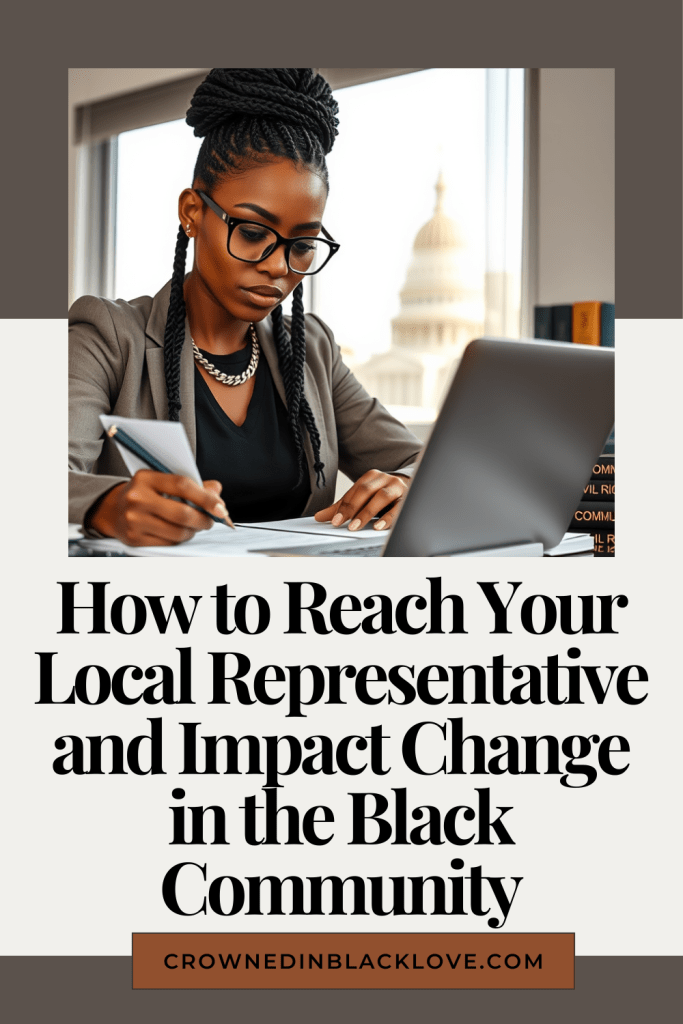
How to Reach Your Local Representative and Impact Change in the Black Community

Do you want to make a difference in your community? One of the most effective ways to bring about change is by reaching out to your local representative. Whether it’s advocating for justice, education, healthcare, or civil rights, your representative can play a vital role in addressing issues that matter to you.

For Black communities, advocating for policies and laws that support equity and justice is essential. And the best way to get started is by contacting the person who represents you in government. In this blog, we’ll walk you through how to reach your local representative and use your voice to create meaningful change.

1. Find Your Local Representative:

The first step is identifying who your local representative is. Every neighborhood or district has an elected official who represents the community’s interests in local, state, or federal government. To find your representative, you can use websites like:

  • Congress.gov for federal representatives (Senators and U.S. House members).
  • Common Cause’s Find Your Representative to look up your local representatives based on your zip code or address.

Knowing who represents you is key to making sure your message gets to the right person.

2. Use Multiple Communication Channels:

Once you know who your representative is, you have several ways to reach out and make an impact. Consider using these channels:

  • Phone Calls: Calling is often one of the fastest ways to get your message across. Most representatives have both local and national office numbers. When you call, politely share your concerns and ask your representative to take action on a specific issue.
  • Emails and Letters: Writing an email or physical letter allows you to clearly express your concerns and requests. Make sure to be brief and to the point. Include your name, address, and a clear message about what you would like the representative to do. If you’re advocating for a specific bill or law, provide some background information and a personal story on how it impacts your community.
  • Social Media: Many representatives are active on platforms like Twitter, Facebook, and Instagram. You can tweet, tag them in posts, or comment on their social media pages. This is a great way to raise awareness about important issues in a public way, and it shows that your concerns are being heard by others in the community.
  • Town Halls and Public Meetings: Representatives often host town hall meetings or public forums where you can ask questions directly. Attend these events to speak up about issues you care about. It’s also a chance to hear how they plan to address your concerns.

3. Be Clear and Concise:

When reaching out to your representative, it’s important to be clear about your issue. Whether you’re advocating for policy changes in education, voting rights, criminal justice, or other concerns impacting the Black community, make sure your message is specific and to the point.

Explain why the issue matters to you and how it impacts your community. If you’re asking for a particular action (like supporting or opposing a bill), be sure to include that in your message. The clearer you are about what you want, the easier it is for your representative to understand and act on your concerns.

4. Build Community Support:

One person’s voice is powerful, but a collective voice is even stronger. If you’re passionate about an issue affecting the Black community, gather others who feel the same way. Whether it’s organizing a petition, hosting a community meeting, or planning a rally, working together can make a big difference.

When a group of people speaks out, it shows your representative that there is a strong, united community pushing for change. You can also ask others to contact their representatives and share their opinions too. This shows that your concerns are widespread, not just personal.

5. Follow Up:

After reaching out to your representative, be sure to follow up. Representatives are busy and may not immediately respond to every message, so a polite follow-up call or email can help remind them of your request. Be patient but persistent, especially if your issue is important.

If you attended a town hall or sent a letter, check back to see if there are updates on the issue. And don’t forget to keep your community informed about the status of the issue you’re advocating for.

Conclusion:

Reaching out to your local representative is an important way to bring attention to the issues that matter most to the Black community. Whether you’re advocating for justice, equal rights, or community resources, your voice can make a real difference in shaping policies that affect your everyday life.

By knowing who your representative is, using multiple communication channels, and staying clear and persistent in your message, you can create change that has a lasting impact. And when you build community support, you make your efforts even stronger.

The future of the Black community depends on the actions we take today. Let’s make our voices heard and advocate for a better tomorrow!

Want to create change in your community? Here’s how to reach your local representative and make your voice heard. Advocate for issues that matter to the Black community and help make a difference! #BlackCommunity #Advocacy #PoliticalPower

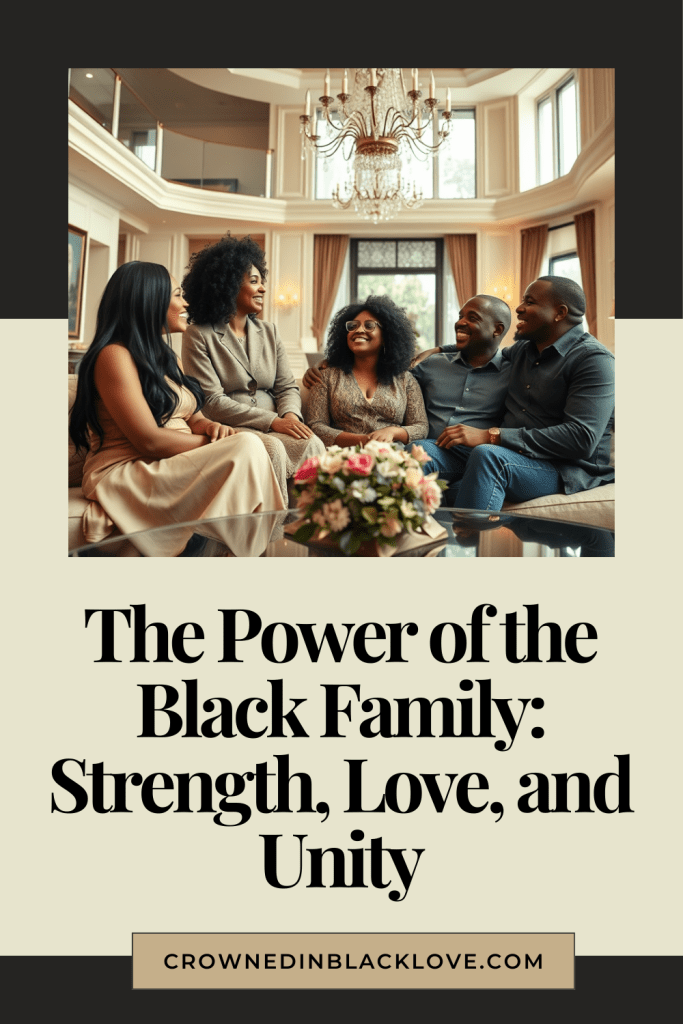
The Power of the Black Family: Strength, Love, and Unity

Have you ever wondered what makes a community truly strong? It’s not just the buildings, the schools, or the streets. It’s the people—especially the family. The Black family has always been at the heart of the community, providing strength, love, and a sense of belonging. It’s more than just a group of people living together—it’s a powerful force that shapes history and builds a brighter future.

The Backbone of the Community:

When we talk about the Black family, we’re not just talking about mom, dad, and kids. We’re talking about a deep sense of unity and support. The Black family is often a close-knit group that helps each other through thick and thin. Whether it’s grandparents, cousins, or close family friends, everyone plays a role in raising the next generation.

In times of hardship, the Black family sticks together. Parents work hard to provide for their children, not only by making sure they have food and shelter but by teaching them important values like respect, love, and pride in their heritage. The strength of the Black family has helped many overcome struggles and push forward, no matter what challenges come their way.

Cultural Pride and Heritage:

The Black family also carries an important responsibility: to pass on the culture and history of their ancestors. This includes teaching the next generation about their roots, their achievements, and their role in shaping the world. From storytelling to celebrating Black History Month, the family helps children understand how far they’ve come and how much more they can achieve.

By celebrating their culture, the Black family teaches children to be proud of who they are. They show that being connected to one’s roots isn’t just about the past—it’s about empowering future generations.

Building a Strong Future Together:

While families provide love and strength, they also play a major role in building strong communities. In the Black community, family members support each other in many ways: helping with schoolwork, starting businesses, volunteering, and standing up for what’s right. When one family member succeeds, the whole family and community feel uplifted.

Today’s Black families continue to break barriers, whether in the fields of education, politics, art, or social justice. The love and support in Black families inspire the next generation to dream big and reach for the stars. Together, they make the world a better place—one family at a time.

In Conclusion:

At the end of the day, the Black family is about much more than just living together. It’s about love, strength, resilience, and the power of unity. Black families continue to make an incredible impact on their communities and the world. Let’s celebrate the role of the Black family today and every day. Because when families are strong, communities are strong. And when communities are strong, the world becomes a brighter, better place for all of us.

The Black family is the backbone of the community, passing down love, strength, and culture for generations. Learn more about the incredible impact they make every day! #BlackFamily #CommunityStrength #Heritage #Unity #BlackHistory

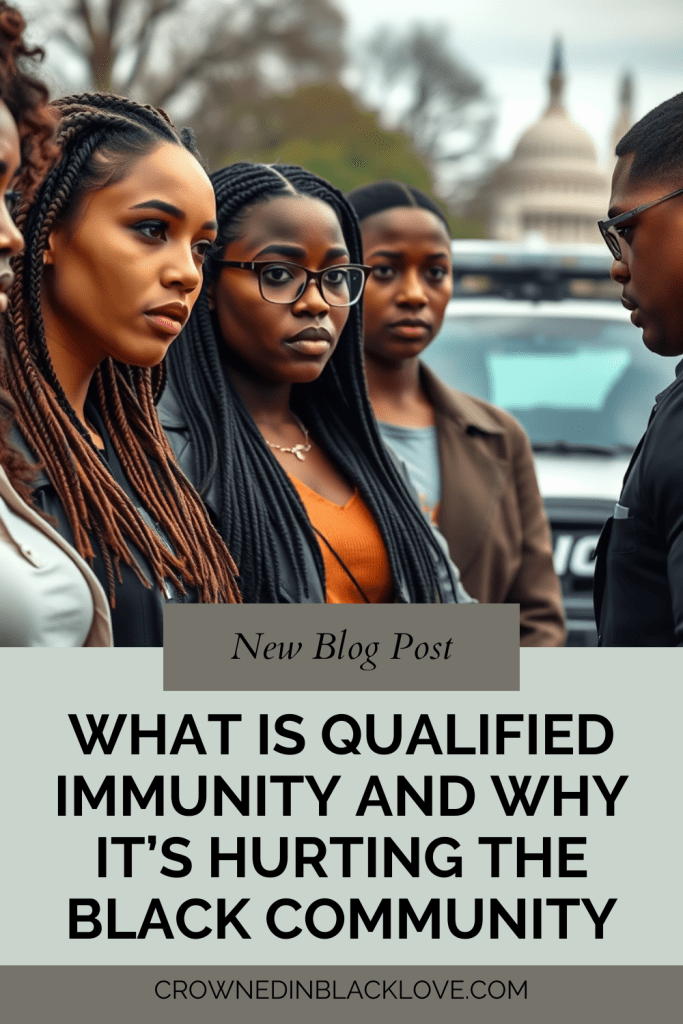
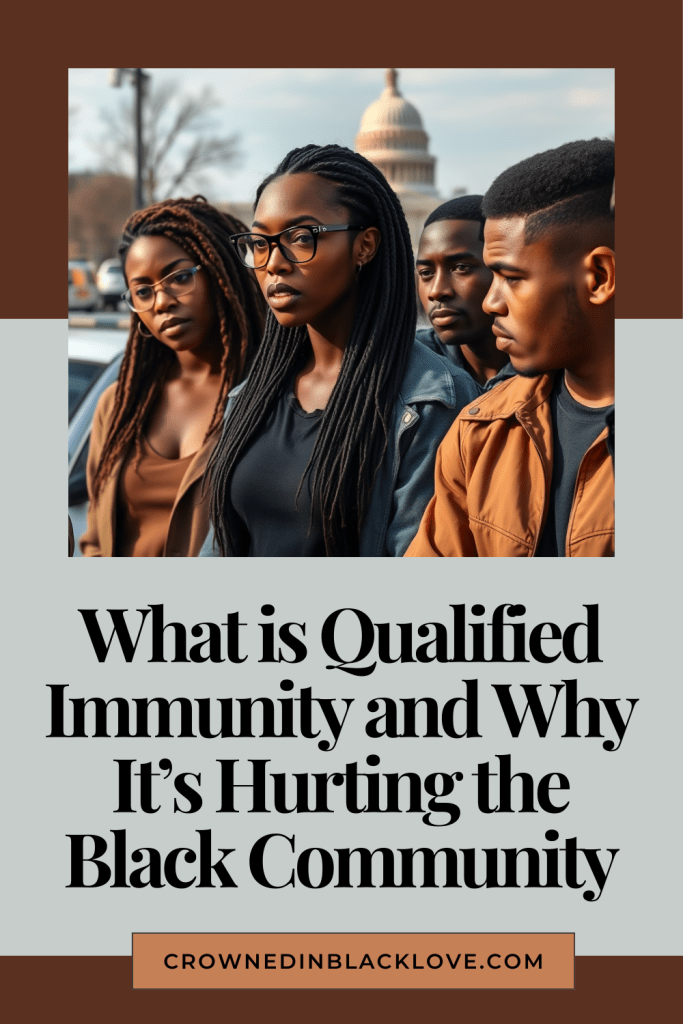
What is Qualified Immunity and Why It’s Hurting the Black Community

For years, the legal doctrine known as qualified immunity has shielded law enforcement officers from personal liability, even when they violate citizens’ rights. While this doctrine was initially intended to protect officers from frivolous lawsuits, it has instead become a barrier to justice, especially for Black communities. When police officers engage in misconduct, such as excessive force, racial profiling, or wrongful arrest, qualified immunity often makes it nearly impossible for victims to hold them accountable.

In this blog post, we’ll break down what qualified immunity is, how it operates, and why it has a disproportionately negative effect on Black communities, perpetuating cycles of injustice.

1. What Is Qualified Immunity?

Qualified immunity is a legal doctrine that protects government officials, including law enforcement officers, from personal liability for actions taken while performing their official duties—unless the officer violated “clearly established” law. In simpler terms, if a police officer’s actions don’t directly violate a specific, widely known law or constitutional right, they are often immune from lawsuits, even if their behavior is harmful or unjust.

The doctrine emerged from the courts in the 1960s to prevent frivolous lawsuits against public officials and allow officers to perform their duties without fear of constant legal challenges. However, over time, qualified immunity has evolved in a way that makes it nearly impossible for victims of police misconduct, particularly in Black communities, to seek justice.

2. How Does Qualified Immunity Impact the Black Community?

Black Americans, in particular, face disproportionate levels of police misconduct, including racial profiling, police brutality, and wrongful arrests. These issues are often exacerbated by qualified immunity, which prevents officers from being held personally accountable for their actions.

  • Lack of Accountability for Police Misconduct: When law enforcement officers are accused of misconduct, qualified immunity acts as a powerful shield. Even when it’s clear that a violation has occurred—such as in instances of excessive force or racial profiling—qualified immunity prevents victims from suing officers directly. This lack of accountability sends the message that police officers can act with impunity, particularly when Black individuals are involved.
  • Erosion of Trust in Law Enforcement: Qualified immunity undermines the trust that Black communities have in law enforcement. When police officers are not held accountable for harmful actions, the relationship between law enforcement and Black communities deteriorates. This erosion of trust creates a vicious cycle where law enforcement and the communities they serve are increasingly alienated from one another.
  • Perpetuation of Racial Injustice: Since Black individuals are disproportionately impacted by police violence and misconduct, the protections afforded by qualified immunity disproportionately hurt Black communities. The inability to hold officers accountable for violations—such as the killing of unarmed Black men and women—creates a system where racial injustice continues unchecked.

3. Real-Life Examples: How Qualified Immunity Fails Black Communities

To understand the true harm of qualified immunity, let’s look at a few real-life examples of how it has affected the Black community.

  • The Killing of George Floyd: The tragic death of George Floyd at the hands of Minneapolis police officers is a stark example of how qualified immunity hinders accountability. Despite the widespread condemnation of Officer Derek Chauvin’s actions—captured on video for the world to see—qualified immunity can protect officers from legal consequences, even in cases as blatant as this. Without significant reforms, victims like George Floyd have no recourse for justice outside of public protests and civil rights movements.
  • The Shooting of Breonna Taylor: Breonna Taylor’s death in her own home sparked protests across the nation, with calls for justice ringing out for the 26-year-old Black woman killed by police officers during a botched raid. While officers involved in the shooting were not held accountable for her death, qualified immunity acts as a roadblock to suing officers involved in excessive force, even when such incidents result in the loss of life.
  • The Arrest of Sandra Bland: Sandra Bland was arrested in Texas after a routine traffic stop, which escalated into her tragic death in police custody. Her case highlights how qualified immunity prevents accountability when it comes to wrongful arrests or unjust treatment by law enforcement. Despite significant questions surrounding her arrest and death, qualified immunity protects those responsible for her mistreatment.
Qualified immunity and the Black community

4. Why Reforming Qualified Immunity Is Critical for the Black Community

To achieve justice for Black communities and move toward a more equitable legal system, reforming qualified immunity is essential. Here’s why:

  • Restoring Accountability: Eliminating qualified immunity would allow victims of police misconduct to directly sue officers and hold them accountable for violations of rights. This is crucial for rebuilding trust in law enforcement and ensuring that officers are held responsible for their actions.
  • Reducing Police Violence: Without the shield of qualified immunity, officers may be more cautious in their use of force, knowing that they will be held accountable for their actions. This could lead to fewer instances of police brutality and a more thoughtful, responsible approach to law enforcement.
  • Strengthening Community Relations: Reforms that address qualified immunity would allow Black communities to feel that they have legal recourse when they face injustice. This would be an important step toward mending the fractured relationship between law enforcement and Black Americans, creating an environment of mutual respect and cooperation.
  • Challenging Systemic Racism: Qualified immunity is just one of many tools that perpetuate systemic racism within law enforcement. Reforming this doctrine would be a critical step in addressing broader issues of racial inequality and injustice within police departments. It would also send a message that Black lives are valued and deserving of protection under the law.

5. What Can Be Done to Address Qualified Immunity?

As public awareness grows around the harms of qualified immunity, many activists and policymakers are pushing for reform. Here are some steps that can be taken to address the issue:

  • Legislative Action: Advocacy for national or local reforms that limit or eliminate qualified immunity is essential. Several bills have been introduced to address the issue, including the George Floyd Justice in Policing Act, which seeks to hold officers accountable for misconduct and restrict the use of qualified immunity as a defense.
  • Community Pressure: Communities, especially those affected by police violence, can continue to advocate for reforms through protests, petitions, and organizing. By pressuring lawmakers to take action, we can help push for policies that remove qualified immunity and promote greater accountability.
  • Support for Civil Rights Organizations: Organizations like the ACLU and NAACP are fighting for changes to qualified immunity and working to protect the civil rights of Black communities. Supporting these organizations—whether through donations, participation, or spreading awareness—can help drive the fight for justice.

The Need for Change

Qualified immunity has long been a barrier to justice for Black Americans, shielding police officers from accountability even when they commit serious violations. By understanding the harmful effects of this doctrine, we can begin to push for reform and advocate for a more just and equitable legal system. Reforming or eliminating qualified immunity is essential to protect Black lives, rebuild trust in law enforcement, and ensure that those responsible for misconduct are held accountable.

The fight for justice continues, but through awareness, advocacy, and action, we can make meaningful change for Black communities and ensure that accountability is not just an ideal—but a reality.

Qualified immunity and the Black community

Qualified immunity shields officers from accountability for misconduct, disproportionately hurting Black communities. Learn why reforming it is essential to achieving justice and equality. #BlackLivesMatter #QualifiedImmunity