
The Power of Black Love: Building Strong Families, Thriving Together

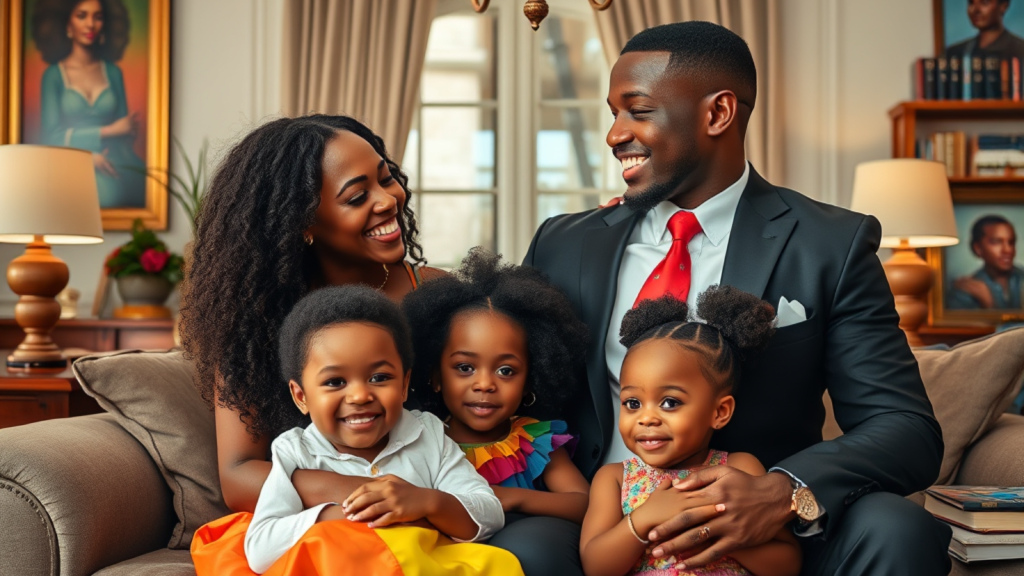
There’s something undeniably powerful about the bond of Black love. From the resilience of our ancestors to the strength of Black couples today, love has always been at the heart of our families. No matter the challenges we’ve faced—whether it’s slavery, segregation, or systemic racism—Black love has been a force that holds us together and helps us rise. It’s a love that survives storms and celebrates joy, that nurtures the next generation with pride, and that creates legacies that live on for years to come.

Resilience in Our Roots

From the beginning, love within Black families was a revolutionary act. Our ancestors, forced into slavery, found ways to love and protect each other despite being torn apart and abused. They built families, communities, and traditions, passing down the essence of Black love—strength, pride, and unity—through generations. This love was not just about romantic relationships, but also the bonds between parents and children, siblings, and extended families.

One of the most beautiful examples of Black love in history comes from the underground railroad. Couples like Harriet Tubman and her husband, William Still, and other freedom fighters who worked together to escape the horrors of slavery showed how love, when combined with courage, could change the course of history.

Love Against All Odds

Fast forward to today, and Black love still serves as a beacon of strength. Families are built on trust, loyalty, and a shared commitment to uplift each other. Black couples like Barack and Michelle Obama, who have been through the pressures of public life, show that love can not only survive challenges but can thrive in them. The way they support each other—whether it’s through politics, parenting, or personal growth—speaks volumes about the power of love in a Black family.

The history of Black families is often painted with struggles, but we know that, even through hard times, we show up for each other. We build legacies of excellence and pass them on. There’s a deep sense of cultural pride, an unspoken understanding that our love, unity, and resilience are the foundation of our success. Whether it’s running businesses, raising children with purpose, or fighting for justice, Black love fuels it all.

Celebrating Black Love Today

In today’s world, Black love continues to shape families in extraordinary ways. Whether it’s couples holding down businesses together, activists who support each other through the emotional weight of social justice work, or grandparents passing down wisdom to grandchildren, Black love is everywhere, and it’s thriving.

Look at the Johnson family—who’ve managed to build a generational wealth fund while staying grounded in love. Or the couples who have built up their communities through mentorship, sports, and cultural initiatives. Love is present in every moment, in every action. It’s about the little things: the way we support each other when life gets hard, the encouragement we give one another when we dream big, and the strength we draw from our history.

The power of Black love is unstoppable. It has been the backbone of our survival, our strength, and our success. As we continue to build strong families and legacies, we honor the love that has carried us this far, and we cherish the love that will lead us forward. Let’s continue to thrive, love fiercely, and pass down the beautiful traditions of Black family strength to the next generation. Because Black love isn’t just a feeling; it’s a way of life.


Black love is a force that transcends generations—resilient, empowering, and unwavering. From our ancestors to modern-day couples, it fuels families, legacies, and success. 🌟 #BlackLove #FamilyStrength #Resilience #BlackHistory


The Power of the Black Family and Its Impact on the Community

The Black family has always been the heart and soul of the community, a cornerstone of strength, love, and resilience. For centuries, despite facing adversity, systemic challenges, and hardships, the Black family has maintained its foundational importance, not only as a unit of love and support but as a powerful force shaping cultural identity and social progress.

The Black family is much more than just a household; it is a symbol of perseverance, wisdom, and unity. In times of struggle, the family unit has been a constant source of stability. Generations upon generations of Black families have fought, thrived, and uplifted one another, proving time and time again that the strength of their bonds transcends circumstances.

A Legacy of Love and Support

One of the most defining qualities of the Black family is its ability to provide unwavering love and support. Across all generations, the bond between family members has been a place for nurturing growth and resilience. Parents work tirelessly to create an environment where their children are supported, loved, and encouraged to be their best selves. These values are passed down, and in turn, children grow up understanding the importance of family, culture, and community.

This love and support often extend beyond the immediate family unit, encompassing extended family members, friends, and neighbors. This communal sense of togetherness is part of the fabric that binds the Black community, reinforcing the idea that we rise and fall together. Whether it’s helping a child with schoolwork or offering advice on life decisions, the Black family unit has been a guiding force.

The Importance of Cultural Heritage

The Black family is also a crucial keeper of cultural heritage. Through storytelling, traditions, and shared experiences, the family plays a vital role in preserving the rich history of Black culture. From teaching the importance of history, pride, and self-love to passing down ancestral knowledge, families ensure that the next generation understands their roots. This connection to the past not only strengthens familial bonds but also enables the community to honor the legacy of those who came before them.

Cultural heritage is carried forward in many ways: through music, dance, art, and, of course, the language and values that are shared within the family. These traditions provide a sense of identity and pride, helping Black children grow into individuals who understand and value their place in the broader cultural landscape.

Strengthening the Community

At the heart of every strong community is a strong family, and Black families have long been integral to building and sustaining the community. Beyond the home, Black families are involved in community activism, neighborhood support, education, and social initiatives that create positive change.

In many cases, the family acts as a bridge between the individual and the broader community, providing a network of support and shared responsibility. Whether it’s organizing local events, supporting a Black-owned business, or advocating for social justice, the unity and strength found in Black families play an essential role in uplifting and transforming their neighborhoods.

Moreover, the resilience within Black families extends to the broader community’s ability to endure hardships. Despite facing challenges such as economic disparity, educational inequality, and systemic racism, the Black community continues to thrive through its shared values and commitment to one another.

The Future of the Black Family

As we look toward the future, the importance of the Black family remains as strong as ever. While times may change and challenges evolve, the values of love, unity, support, and cultural pride will always be at the core of the Black family structure. It is these foundational principles that continue to nurture the leaders, educators, artists, activists, and change-makers of tomorrow.

The Black family is an indomitable force, and its impact on the community cannot be overstated. It is a testament to the enduring power of love, the strength of heritage, and the undeniable importance of unity in the face of adversity. As we move forward, we must continue to support and uplift one another, recognizing the critical role that family and community play in shaping a brighter, more inclusive future for all.

In the words of Maya Angelou, “We all should know that diversity makes for a rich tapestry, and we must understand that all the threads of the tapestry are equal in value no matter their colour.” The Black family, like every family, is a thread in the vibrant tapestry of humanity, making a profound impact on our shared journey.

The Black family has been the heart of resilience, love, & cultural heritage for generations. It’s time to celebrate their enduring strength and impact. 💪🏾💖 Read more about the Black family’s profound influence on our communities! #BlackFamily #CommunityImpact #BlackExcellence #CulturalHeritage

Kendrick Lamar’s Super Bowl Performance: A Bold Statement for the Culture

When Kendrick Lamar hit the stage for the 2025 Super Bowl halftime show, it wasn’t just about music. It was a powerful moment of defiance, resistance, and a call for change. Kendrick took over the biggest stage in the world to remind us all that the culture isn’t just something to be watched—it’s something to be felt, understood, and fought for.

This wasn’t your average halftime performance. Kendrick Lamar flipped the script on what it means to use your platform. Every lyric, every visual, and every moment spoke directly to the Black community’s ongoing fight for justice, recognition, and respect. Let’s break it down.

Uncle Sam Ain’t Who He Claims to Be

The opening moment of the show hit hard. Samuel L. Jackson as Uncle Sam isn’t the patriotic figure we all think of. Nah, this Uncle Sam represents the system that’s been holding us back for centuries. When Jackson said, “Welcome to the Great American Game,” he wasn’t just talking about football—he was talking about the game America’s been playing with our lives, our freedom, and our futures.

We’ve always been told we’re “too loud, too ghetto, too angry.” But Kendrick came out to flip that narrative and show that we’re not the problem—America is. Uncle Sam might represent “freedom,” but for us, that freedom’s always been denied. Kendrick stepped up to say, “We’re done with that,” and it was clear the world was about to hear what he had to say.

The Revolution Will Be Televised—And It’s Loud

Kendrick threw down the gauntlet when he said, “The revolution will be televised.” Now, anyone who knows their history knows this was a twist on Gil Scott-Heron’s famous line. Back in the day, the revolution was kept hidden from mainstream media. But in 2025? The revolution isn’t just happening—it’s front and center, during the Super Bowl halftime show.

Kendrick wasn’t just performing; he was making sure that the fight for Black liberation and justice wasn’t being ignored. By choosing the biggest stage in the world, Kendrick took control of the narrative. The revolution isn’t just a movement in the streets; it’s right here, on our screens, loud and clear.

Reversing Time: A Call to Undo the Past

One of the most powerful parts of Kendrick’s performance was how he and his dancers moved in reverse. That wasn’t just choreography—it was a statement: we need to undo the wrongs of the past. We can’t keep ignoring the history of Black oppression in this country. Time doesn’t need to be linear—it needs to go backward, to the moments we were robbed of justice, opportunity, and freedom.

When the dancers formed the American flag, it wasn’t just a tribute to the nation; it was a reminder of all the promises this country made but never kept. The flag has always represented liberty—but for us, it’s been anything but. Kendrick’s performance pushed the question: If the flag really stands for freedom and justice, why hasn’t it been granted to us?

40 Acres and a Mule: The Promise Never Kept

This line hit deep. When Kendrick brought up “40 acres and a mule,” he wasn’t just making a historical reference. He was talking about the government’s broken promises to Black Americans. After the Civil War, newly freed slaves were promised 40 acres of land and a mule to rebuild their lives. But we all know what happened—those promises were never fulfilled.

The idea behind 40 acres and a mule was meant to give us the tools for economic independence. But the government didn’t keep its word. Kendrick brought this up to remind us that this betrayal didn’t end in the 1800s—it continues today, through policies and practices that still limit our ability to thrive economically. It was a call to recognize that reparations are long overdue.

The “A Minor” Necklace: A Different Kind of Alpha

Now, let’s talk about that necklace Kendrick wore. The “A Minor” pendant had people talking, and for good reason. At first, many thought it was a jab at his ongoing tension with Drake, but it’s deeper than that. The lowercase “a” isn’t about playing a game of rap beef—it’s a symbol of Kendrick’s unique approach to power.

In a world where power is often loud and in your face, Kendrick’s subtle “A” says, “I’m the Alpha—but I don’t need to shout about it.” It’s a quiet confidence. He doesn’t need to dominate every conversation to prove he’s at the top. Kendrick’s power comes from his authenticity, his influence, and his refusal to be anyone other than himself. This is leadership that doesn’t need to flex—it just exists.

Kendrick Lamar: The Alpha, The GOAT, The One Who Leads

In the world of hip-hop, the term “Alpha” gets thrown around a lot. But Kendrick Lamar is the real deal. He doesn’t need to yell or boast. He shows up, and the world listens. He redefines what it means to be the greatest of all time—the GOAT. And it’s not just about bars or beats—it’s about shaping culture, speaking truth, and leading by example.

Kendrick’s impact goes far beyond music. He’s changing the way we look at power in hip-hop, in society, and in our communities. Being the “Alpha” isn’t about being loud or brash. It’s about having the vision to lead from the front, whether people realize it or not. Kendrick Lamar’s performance at the Super Bowl showed us that the real leaders in hip-hop aren’t the ones who shout the loudest—they’re the ones who speak truth, even when it’s uncomfortable.

America, It’s Time to Stand Up

Kendrick’s performance wasn’t just about calling out the music industry—it was about calling out America, too. Through songs like “Not Like Us,” Kendrick confronted the fact that the system’s been rigged for so long that it’s hard to even imagine real change. But with his performance, he showed us that we don’t have to accept the status quo.

The inclusion of Serena Williams, who performed the Crip walk alongside Kendrick, was a powerful visual of unity and resistance. It showed that no matter how much they try to suppress us, we’re gonna rise up. And we’re gonna do it together.

“GAME OVER”

Kendrick closed his performance with a simple but profound message: “GAME OVER.” He wasn’t just ending his set—he was making a statement. The old ways are done. It’s time for a new era, one where justice, equality, and respect are at the forefront. Kendrick Lamar isn’t just playing the game—he’s rewriting the rules.

Kendrick Lamar’s Legacy of Resistance

Kendrick’s Super Bowl halftime performance was more than just a show. It was a revolutionary moment for the culture, for the community, and for the world. From flipping the script on American symbols to calling out the government’s broken promises, Kendrick used this moment to say everything we’ve been waiting to hear: we’re here, we’re not backing down, and we won’t be ignored anymore.

Kendrick Lamar isn’t just a rapper—he’s a leader, a revolutionary, and a symbol of the power we hold when we come together and demand change. The revolution isn’t coming—it’s here, and Kendrick Lamar is leading the way.

Kendrick Lamar’s Super Bowl halftime show wasn’t just a performance—it was a statement. 🎤 Watch how Kendrick used the world’s biggest stage to flip the script on power & injustice. #KendrickLamar #SuperBowl2025 #Culture #Resistance

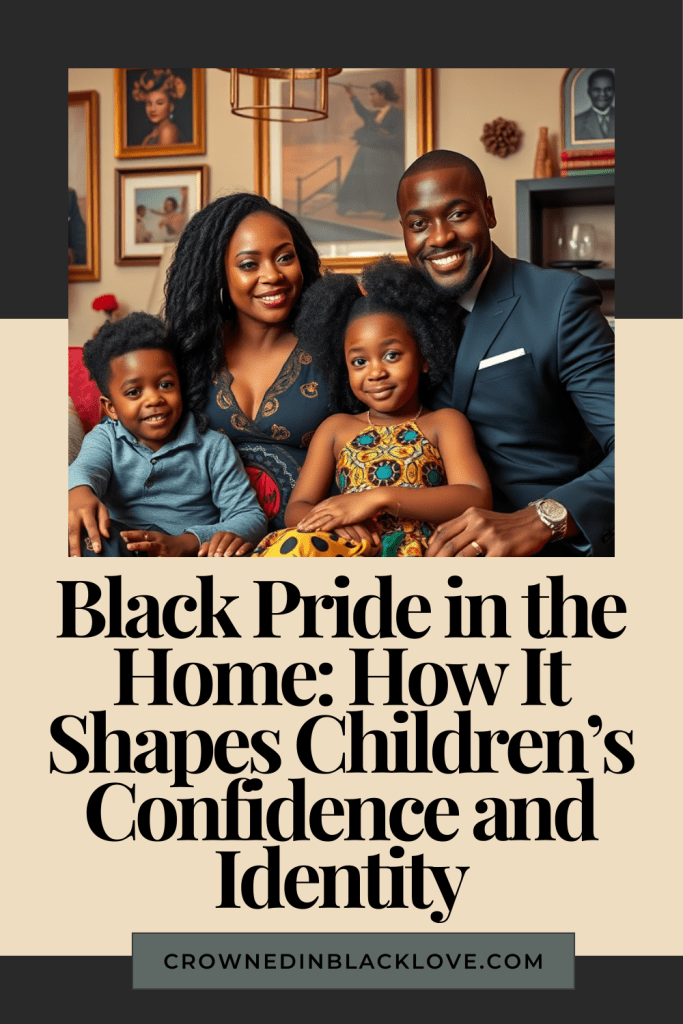
Black Pride in the Home: How It Shapes Children’s Confidence and Identity

Black pride is more than just a feeling—it’s a powerful force that shapes the way children see themselves and the world around them. It’s the pride of knowing where you come from, understanding your heritage, and embracing all the strength and beauty that comes with being Black. When Black pride is nurtured in the home, it creates an environment where children feel confident, valued, and empowered to overcome any obstacle.

In this blog, we’ll explore how Black pride in the home not only boosts children’s self-esteem but also helps them develop a strong sense of identity. We’ll see how parents who embrace their cultural heritage and teach their children to do the same create a foundation of confidence that lasts a lifetime.

Building Confidence Through Cultural Awareness:

One of the most significant ways that Black pride shapes children is by boosting their confidence. When children grow up in homes where they see their parents embrace their culture, they learn that their Black identity is something to be proud of. Whether it’s through storytelling, celebrating Black History Month, or learning about their ancestors’ accomplishments, children who grow up surrounded by Black pride develop a deep sense of self-worth.

For Black children, knowing the history of their culture—from the achievements of leaders like Martin Luther King Jr. to the contributions of everyday heroes—helps them understand their place in the world. They learn that their heritage is rich and filled with stories of strength, resilience, and excellence. This awareness helps them carry themselves with pride and confidence, no matter what challenges they may face.

Instilling a Strong Sense of Identity:

Black pride also plays a key role in shaping a child’s sense of identity. When children are taught to embrace their culture and appreciate their history, they develop a strong sense of who they are. This sense of identity is foundational in helping children navigate the world around them with confidence and clarity.

In homes where Black pride is celebrated, children are encouraged to express themselves without fear of judgment or shame. They learn that their natural hair, skin color, and cultural traditions are beautiful and valuable. These positive affirmations are essential for helping Black children develop a strong, healthy sense of self that will stay with them as they grow older.

As Dr. Joy DeGruy, a renowned educator and researcher, emphasizes, “When we affirm the value of Black children through cultural pride, we give them the tools to combat negative stereotypes and build a sense of resilience and dignity” (DeGruy, 2005).

Teaching Self-Love and Empowerment:

Black pride in the home goes beyond cultural awareness—it’s also about teaching children to love themselves and believe in their own potential. When parents model self-love and pride in their Blackness, children internalize these lessons and carry them into their own lives. This self-love is a crucial building block for mental and emotional well-being, especially for Black children who may face racism or discrimination in society.

A child who is raised to value their identity will be better equipped to handle the challenges that life throws their way. They will have the inner strength to rise above negativity and take pride in their accomplishments. The confidence that comes from loving oneself is a powerful tool for success, and it begins with the pride that parents instill at home.

Positive Role Models and Cultural Representation:

When Black pride is nurtured in the home, it’s often reflected in the media, books, music, and role models that parents expose their children to. Children raised in homes where Black pride is celebrated are more likely to see positive representations of themselves in the world around them. From books that feature Black heroes to films that showcase the richness of Black culture, these positive images reinforce the message that Black lives matter, that Black history is important, and that Black children have the power to change the world.

Seeing role models who look like them—whether in history, sports, music, or everyday life—helps children build a sense of possibility and hope. Black children grow up knowing that they can be anything they set their minds to, because they have countless examples of Black individuals who have made an impact in various fields.

Fostering a Sense of Community and Belonging:

In homes where Black pride is nurtured, children also develop a sense of belonging to a larger community. Black pride helps children connect with others who share their culture, creating a network of support, solidarity, and shared experiences. This sense of community is crucial for developing a positive outlook on life and knowing that they are part of something greater than themselves.

By teaching children to take pride in their heritage, parents are fostering a sense of unity and cultural strength that will serve them throughout their lives. Whether it’s attending cultural events, connecting with extended family, or simply talking about their roots, children who grow up with a strong sense of Black pride feel grounded in a rich legacy that continues to inspire them.

In Conclusion:

Black pride in the home is one of the most powerful gifts parents can give their children. It shapes their confidence, strengthens their identity, and equips them with the tools they need to navigate the world with self-love and resilience. When Black pride is nurtured from an early age, children grow up knowing that they are beautiful, valuable, and capable of achieving anything they set their minds to.

In a world that sometimes tries to diminish the importance of Black culture and identity, Black pride remains a beacon of strength. It teaches children that their heritage is something to be proud of and that they have the power to shape their own futures. Let’s continue to embrace Black pride in our homes, knowing that the next generation will carry that pride into a brighter, more inclusive world.

Black pride in the home shapes children’s confidence, self-love, and identity. By embracing culture and heritage, parents empower the next generation to thrive. #BlackPride #CulturalHeritage #Parenting #BlackChildren

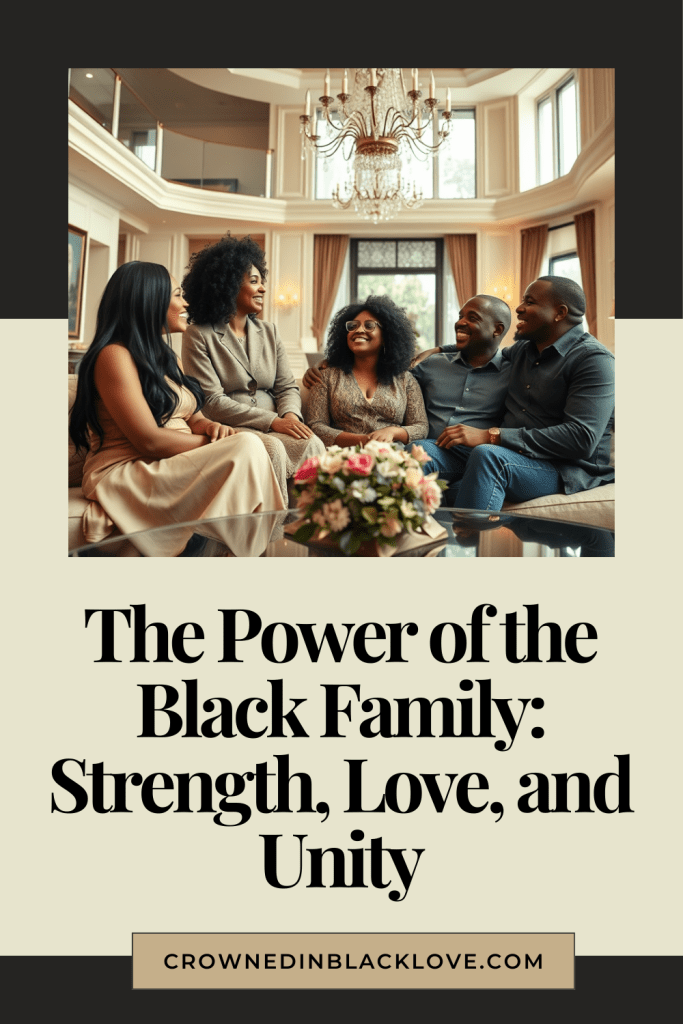
The Power of the Black Family: Strength, Love, and Unity

Have you ever wondered what makes a community truly strong? It’s not just the buildings, the schools, or the streets. It’s the people—especially the family. The Black family has always been at the heart of the community, providing strength, love, and a sense of belonging. It’s more than just a group of people living together—it’s a powerful force that shapes history and builds a brighter future.

The Backbone of the Community:

When we talk about the Black family, we’re not just talking about mom, dad, and kids. We’re talking about a deep sense of unity and support. The Black family is often a close-knit group that helps each other through thick and thin. Whether it’s grandparents, cousins, or close family friends, everyone plays a role in raising the next generation.

In times of hardship, the Black family sticks together. Parents work hard to provide for their children, not only by making sure they have food and shelter but by teaching them important values like respect, love, and pride in their heritage. The strength of the Black family has helped many overcome struggles and push forward, no matter what challenges come their way.

Cultural Pride and Heritage:

The Black family also carries an important responsibility: to pass on the culture and history of their ancestors. This includes teaching the next generation about their roots, their achievements, and their role in shaping the world. From storytelling to celebrating Black History Month, the family helps children understand how far they’ve come and how much more they can achieve.

By celebrating their culture, the Black family teaches children to be proud of who they are. They show that being connected to one’s roots isn’t just about the past—it’s about empowering future generations.

Building a Strong Future Together:

While families provide love and strength, they also play a major role in building strong communities. In the Black community, family members support each other in many ways: helping with schoolwork, starting businesses, volunteering, and standing up for what’s right. When one family member succeeds, the whole family and community feel uplifted.

Today’s Black families continue to break barriers, whether in the fields of education, politics, art, or social justice. The love and support in Black families inspire the next generation to dream big and reach for the stars. Together, they make the world a better place—one family at a time.

In Conclusion:

At the end of the day, the Black family is about much more than just living together. It’s about love, strength, resilience, and the power of unity. Black families continue to make an incredible impact on their communities and the world. Let’s celebrate the role of the Black family today and every day. Because when families are strong, communities are strong. And when communities are strong, the world becomes a brighter, better place for all of us.

The Black family is the backbone of the community, passing down love, strength, and culture for generations. Learn more about the incredible impact they make every day! #BlackFamily #CommunityStrength #Heritage #Unity #BlackHistory