

Book Review: The Color of Law: A Forgotten History of How Our Government Segregated America by Richard Rothstein

 A Vital Look at Segregation and Its Lasting Effects

When we talk about segregation in America, we often think of the Civil Rights Movement or the brave individuals who fought against oppressive systems. But what if I told you that segregation wasn’t just a product of individual prejudice or private actions? Richard Rothstein’s book, The Color of Law, takes a deep dive into the forgotten history of how government policies actively created and reinforced racial segregation in this country. For Black communities today, this book is a crucial read that not only informs but also challenges our understanding of the systemic forces shaping inequality.

Why This Book Is Essential for the Black Community:

Rothstein’s The Color of Law uncovers the dark history of how government policies—from federal housing laws to local zoning ordinances—purposefully segregated Black Americans from white communities. This history isn’t just academic; it has real-world implications that continue to impact Black families and communities today. For us, understanding this history is the first step toward dismantling the structures that continue to perpetuate racial inequality.

Through this book, Rothstein makes it clear that segregation wasn’t just the result of private choices or random incidents; it was deliberately enforced by law and government action. From redlining practices in the 1930s to discriminatory housing policies in the mid-20th century, these government actions set in motion patterns of poverty, limited opportunity, and inequality that continue to harm Black communities. Rothstein argues that we cannot fully understand the inequality in our society without recognizing that segregation was, and still is, a government-sponsored system.

Key Lessons from The Color of Law for the Black Community:

  1. The Role of Government in Creating Segregation: One of the most striking revelations in The Color of Law is how deeply involved the government was in fostering segregation. From the New Deal to post-World War II programs, policies were put in place that made it incredibly difficult for Black families to access housing in neighborhoods that would have allowed them to build wealth. By understanding the historical role of the government in creating these systems, we can more effectively advocate for the change that’s needed.
  2. The Impact of Redlining and Housing Discrimination: Rothstein discusses redlining, where banks and government agencies systematically denied Black Americans access to loans or housing in certain neighborhoods. This policy kept many Black families from building the kind of generational wealth that white families were able to accumulate through homeownership. The long-term effects of this practice are still visible today in the wealth gap between Black and white Americans. By addressing these historical injustices, we can begin to close that gap and create more opportunities for future generations.
  3. The Persistence of Segregation in Modern Times: Many people think that segregation ended with the Civil Rights Movement, but Rothstein shows that its effects are still deeply ingrained in our cities and communities. Even after the Fair Housing Act of 1968, discriminatory practices continued to make it difficult for Black Americans to move into previously white neighborhoods, reinforcing patterns of inequality. This ongoing segregation limits educational and economic opportunities for Black families, further entrenching racial disparities.
  4. Why We Need Policy Changes to Undo the Damage: Rothstein doesn’t just provide a history lesson; he also offers solutions. He calls for comprehensive policy changes, including reparations for those who were directly harmed by discriminatory policies, and for policies that promote integrated communities. The Color of Law urges us to understand that true justice requires not just acknowledgment but also reparative actions to fix the systems that continue to oppress Black Americans.

How This Book Helps the Black Community Today:

In today’s society, understanding the historical roots of racial inequality is crucial for advocating for systemic change. The Color of Law helps illuminate the origins of many modern-day issues—such as the wealth gap, segregated schools, and police violence—by connecting them to policies that intentionally isolated and disenfranchised Black communities. By recognizing the role of government in perpetuating these problems, we can better organize and push for legislation that addresses the needs of Black families today.

This book also serves as an educational tool for young Black people who may not fully grasp how deeply racism is embedded in our country’s laws and policies. For those looking to advocate for fair housing or more inclusive communities, Rothstein’s work provides a foundation for understanding why these fights are so important and how historical policies have created the inequality we see today.

Closing Thoughts:

The Color of Law is an essential read for anyone who wants to understand how segregation wasn’t just a social issue—it was a governmental practice that still affects Black communities today. It is not only a history book but a call to action, urging readers to recognize the systemic racism that still exists in America and to take steps to dismantle it. For the Black community, this book is a tool for education, advocacy, and empowerment. By understanding our history and the lasting impacts of government-imposed segregation, we can better fight for the equitable future we deserve.
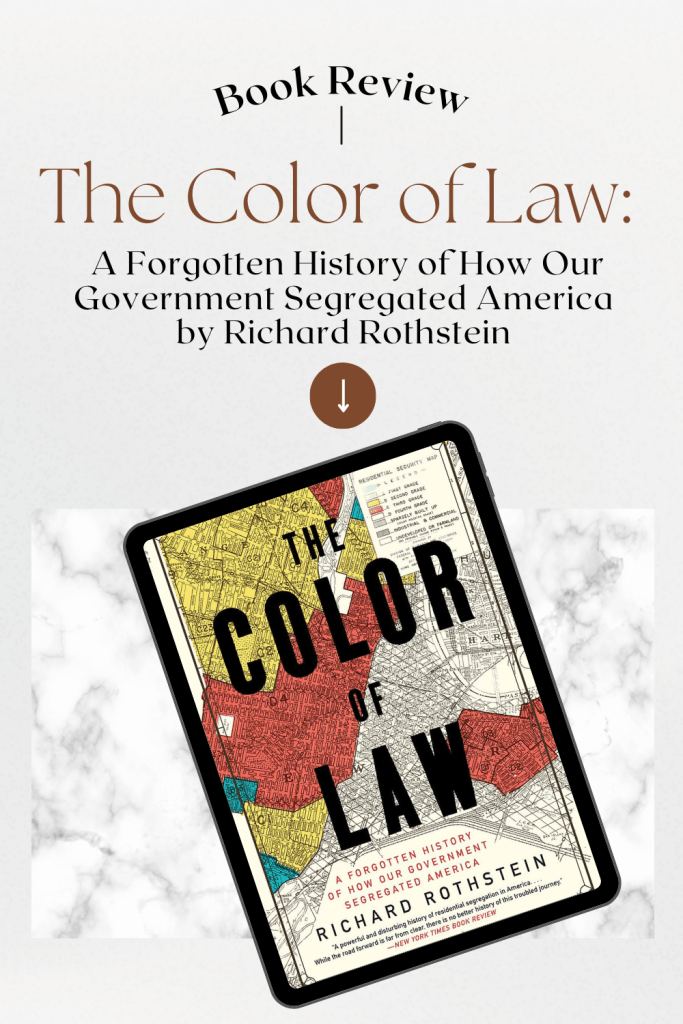
The Color of Law reveals how government policies created and reinforced racial segregation in America. A must-read for understanding how these practices still affect Black communities today. #SystemicRacism #BlackHistory #TheColorOfLaw #HousingDiscrimination

The Power of Black Love: Building Strong Families, Thriving Together

There’s something undeniably powerful about the bond of Black love. From the resilience of our ancestors to the strength of Black couples today, love has always been at the heart of our families. No matter the challenges we’ve faced—whether it’s slavery, segregation, or systemic racism—Black love has been a force that holds us together and helps us rise. It’s a love that survives storms and celebrates joy, that nurtures the next generation with pride, and that creates legacies that live on for years to come.

Resilience in Our Roots

From the beginning, love within Black families was a revolutionary act. Our ancestors, forced into slavery, found ways to love and protect each other despite being torn apart and abused. They built families, communities, and traditions, passing down the essence of Black love—strength, pride, and unity—through generations. This love was not just about romantic relationships, but also the bonds between parents and children, siblings, and extended families.

One of the most beautiful examples of Black love in history comes from the underground railroad. Couples like Harriet Tubman and her husband, William Still, and other freedom fighters who worked together to escape the horrors of slavery showed how love, when combined with courage, could change the course of history.

Love Against All Odds

Fast forward to today, and Black love still serves as a beacon of strength. Families are built on trust, loyalty, and a shared commitment to uplift each other. Black couples like Barack and Michelle Obama, who have been through the pressures of public life, show that love can not only survive challenges but can thrive in them. The way they support each other—whether it’s through politics, parenting, or personal growth—speaks volumes about the power of love in a Black family.

The history of Black families is often painted with struggles, but we know that, even through hard times, we show up for each other. We build legacies of excellence and pass them on. There’s a deep sense of cultural pride, an unspoken understanding that our love, unity, and resilience are the foundation of our success. Whether it’s running businesses, raising children with purpose, or fighting for justice, Black love fuels it all.

Celebrating Black Love Today

In today’s world, Black love continues to shape families in extraordinary ways. Whether it’s couples holding down businesses together, activists who support each other through the emotional weight of social justice work, or grandparents passing down wisdom to grandchildren, Black love is everywhere, and it’s thriving.

Look at the Johnson family—who’ve managed to build a generational wealth fund while staying grounded in love. Or the couples who have built up their communities through mentorship, sports, and cultural initiatives. Love is present in every moment, in every action. It’s about the little things: the way we support each other when life gets hard, the encouragement we give one another when we dream big, and the strength we draw from our history.

The power of Black love is unstoppable. It has been the backbone of our survival, our strength, and our success. As we continue to build strong families and legacies, we honor the love that has carried us this far, and we cherish the love that will lead us forward. Let’s continue to thrive, love fiercely, and pass down the beautiful traditions of Black family strength to the next generation. Because Black love isn’t just a feeling; it’s a way of life.

Black love is a force that transcends generations—resilient, empowering, and unwavering. From our ancestors to modern-day couples, it fuels families, legacies, and success. 🌟 #BlackLove #FamilyStrength #Resilience #BlackHistory

The Impact of Target’s DEI Rollback: A Call for Black Love, Unity, and Power

Love is the foundation of everything—especially when it comes to building strong families and leaving a lasting legacy. At Crowned in Black Love, we celebrate the beauty, resilience, and power of Black love and the families it nurtures. Together, we’re building a legacy that honors our history, our culture, and our collective strength.

Why We Take a Stand

As Black families, our love is both a source of strength and a means of resilience in a world that often undermines our worth. That’s why we’re calling on all of our community members to join us in the boycott against Target, Amazon, and other major corporations who are rolling back their Diversity, Equity, and Inclusion (DEI) initiatives. These actions impact us, our children, and our future. As we stand together in unity, we send a message: We will not be erased.

We want to protect and nurture our legacies, and to do that, we must remind these companies that Black love and Black families are the backbone of the economy, and they cannot ignore us.

A Call to Action: Stand with Us on February 28th

We’re calling for an economic blackout on February 28, 2025. On that day, we ask all of our community members to refrain from spending money at major retailers like Target, Amazon, and Walmart. This action is not just about boycotting—it’s about honoring our power and reminding these corporations that we matter.

When we unite and take action, we send a clear message: Black love and unity are forces to be reckoned with. Our choices and our voices will drive the change we want to see in the world.

Why We Boycott

The People’s Union is leading the call to boycott corporations that have chosen to roll back DEI initiatives under the leadership of individuals like former President Donald Trump. These decisions impact our communities by undermining the principles of equity and inclusion. On February 28, we are asking for one day of action.

This 24-hour boycott will help to remind corporate giants that Black love is powerful, and we are the ones who drive their success. We’re telling them that we will not continue to support businesses that do not support us.

Support Small, Support Local: Choose Love

If you need essential items or have an emergency, we encourage you to support Black-owned businesses or local community stores instead. On February 28, let’s invest in the businesses that support us, that uplift our families, and that invest in the future of Black love and prosperity.

Join Us: Building Legacies Through Love

Let’s celebrate love, unity, and power as Black families. When we stand together, we not only create change in the marketplace—we build a future filled with hope and opportunity. Together, we’ll create a legacy of Black love that lasts for generations. Join us on February 28th to take action, to raise our voices, and to show the world that Black love is here to stay.

🖤 On February 28, join the #EconomicBlackout and stand against the rollback of DEI initiatives by Target, Amazon, & Walmart. It’s time to honor #BlackLove, #BlackFamilies, and our collective power. Let’s build legacies of love. #BoycottDEI #BlackUnity

How Redlining Affected and Continues to Impact Black Communities

In the early 20th century, a practice known as redlining became a systematic tool of racial segregation and inequality in the United States. Though it’s been outlawed for decades, the effects of redlining are still felt by Black communities today. Redlining was a government-backed policy that denied Black families access to mortgages and homeownership in certain neighborhoods, based on their race. This practice not only trapped Black people in poverty but also created barriers to wealth-building, education, and community development that continue to impact Black families across generations.

In this blog post, we’ll dive into the history of redlining, how it shaped the landscape of racial inequality in housing, and why its legacy continues to affect Black communities in significant ways.

1. What Was Redlining?

Redlining refers to a discriminatory practice that started in the 1930s, where the federal government and private banks systematically denied mortgages to Black families and other communities of color. This was done by marking certain neighborhoods on maps with red ink, which indicated that these areas were “too risky” for investment. The reasoning behind this “risk” was often tied to the racial makeup of the neighborhood rather than actual economic factors.

The Home Owners’ Loan Corporation (HOLC), a federal agency, was responsible for creating these redlined maps, which were then used by banks to decide whether to approve home loans. Neighborhoods predominantly inhabited by Black families or other people of color were often marked as “hazardous,” making it nearly impossible for residents to purchase homes or secure loans for home improvements.

In short, redlining kept Black families from owning homes in areas with higher property values, greater access to quality schools, and better employment opportunities.

2. The Effects of Redlining on Black Communities

The long-term effects of redlining have been profound and continue to affect Black communities today. Here’s how this practice shaped the experiences of Black families:

  • Denial of Homeownership: Homeownership has long been a key way for Americans to build wealth. For Black families, however, redlining blocked access to homeownership in desirable neighborhoods, locking them out of the chance to build equity. As a result, Black families were often forced to rent in areas with lower property values, which limited their ability to accumulate generational wealth.
  • Disinvestment in Neighborhoods: Because redlined areas were deemed “unfit” for investment, many of these neighborhoods were systematically neglected by both government and private institutions. This led to a lack of infrastructure, poor schools, and underfunded community services. Without access to resources or investment, neighborhoods that were predominantly Black faced economic stagnation.
  • Education and Employment Barriers: Redlining not only kept Black families from owning homes in better neighborhoods but also contributed to a cycle of poverty. Schools in redlined neighborhoods were often underfunded, which resulted in a lower quality of education. This lack of access to quality education made it more difficult for Black children to access higher education and better job opportunities, further entrenching the cycle of inequality.
  • Health and Safety Impacts: Redlined neighborhoods often lacked investment in health services, public parks, and other amenities that contribute to overall well-being. These areas were also more likely to be located near industrial zones, exposing residents to pollution and health hazards. As a result, Black communities living in these areas faced higher rates of chronic illnesses, mental health challenges, and lower life expectancy.

3. How Redlining Continues to Affect Black Communities Today

The effects of redlining did not disappear with the official end of the practice in the 1960s. In fact, its legacy still shapes housing patterns and wealth distribution today.

  • Wealth Inequality: Homeownership remains one of the primary ways that American families build wealth. Because redlining denied Black families the opportunity to purchase homes in areas that appreciated in value, many Black families were never able to build the wealth that could have been passed down through generations. Today, Black Americans have less wealth on average than white Americans, with a significant portion of that wealth gap stemming from the lack of homeownership opportunities.
  • Segregation of Communities: Though redlining ended decades ago, the legacy of segregated housing patterns remains. Many predominantly Black neighborhoods continue to face high levels of poverty and limited access to quality education and healthcare. Redlined areas are often still underfunded, and neighborhoods remain segregated by race and income. As a result, Black communities still face barriers to upward mobility.
  • Access to Loans and Mortgages: Discriminatory practices similar to redlining still exist today. Black families often face greater challenges when applying for loans or mortgages, even in areas where redlining maps no longer exist. Studies show that Black applicants are more likely to be denied home loans and are often charged higher interest rates than white applicants, even when they have similar credit scores.
  • Neighborhood Disinvestment: The lack of investment in historically redlined neighborhoods has left many Black communities struggling to catch up. Even in cities where gentrification is happening in other parts of town, many redlined neighborhoods remain economically depressed. The disinvestment that started with redlining has created long-lasting effects on local businesses, public services, and housing stock, making it difficult for these communities to thrive.

4. What Can Be Done to Address the Legacy of Redlining?

While the practice of redlining is illegal today, the impact it has had on Black communities is still felt. To truly combat the legacy of redlining, several actions must be taken:

  • Affordable Housing Policies: Policies that promote affordable housing, such as increasing funding for housing subsidies or incentivizing the construction of affordable homes in underfunded areas, can help provide access to homeownership for Black families.
  • Investment in Redlined Neighborhoods: Revitalizing historically redlined neighborhoods through targeted investment in infrastructure, schools, healthcare, and businesses is critical. By reinvesting in these communities, we can help break the cycle of disinvestment and provide opportunities for growth and development.
  • Addressing Discriminatory Lending Practices: To combat the lingering effects of discriminatory lending, we must enforce anti-discrimination laws that ensure Black families have equal access to mortgages and loans. Support for policies like the Fair Housing Act and Community Reinvestment Act can help reduce modern-day discrimination in the housing market.
  • Education and Workforce Development: Investing in education and workforce development programs in historically marginalized communities can help create economic opportunities for Black families. By providing access to quality education and job training, we can help lift entire communities out of poverty.
  • Legal and Policy Advocacy: Continued advocacy from civil rights organizations and lawmakers is essential to hold institutions accountable for discriminatory practices and push for policies that address the legacy of redlining.

Conclusion: The Fight for Housing Equality Continues

Redlining was a deliberate attempt to deny Black families access to homeownership and the opportunities that come with it. Though the practice is no longer legal, its legacy continues to affect Black communities, contributing to wealth inequality, segregation, and lack of opportunity. Understanding the impact of redlining is essential in addressing the persistent racial disparities that still exist today.

To make meaningful progress, we must advocate for policies that promote housing equality, investment in disenfranchised communities, and an end to discriminatory lending practices. Only by confronting the history and legacy of redlining can we begin to build a more equitable future for Black families and communities.

Redlining may have ended decades ago, but its legacy continues to impact Black communities today—limiting wealth, opportunities, and equality. Learn why addressing redlining’s impact is crucial for justice. #HousingEquality #BlackCommunities

The Broken Promise of 40 Acres and a Mule: A Legacy of Injustice

The concept of 40 acres and a mule is one of the most significant yet unfulfilled promises in American history. Originating from Special Field Order No. 15, issued by Union General William T. Sherman in 1865, this radical policy aimed to redistribute land from Confederate landowners to newly freed Black families. It was a groundbreaking moment, as for the first time, the U.S. government directly engaged with Black leaders to determine what was needed to secure their future after slavery. Their answer was clear: land—40 acres of tillable land and a mule to work it.

A Vision for Economic Independence

After centuries of forced labor, oppression, and systemic disenfranchisement, this policy represented a glimmer of hope. Land ownership meant more than just a place to live; it was a direct pathway to economic independence, stability, and self-sufficiency. With land, formerly enslaved people could grow their own food, build communities, and establish generational wealth—something that had been systematically denied to them.

The Betrayal of a Nation

Unfortunately, this promise was never fulfilled. After President Abraham Lincoln’s assassination, his successor, Andrew Johnson, quickly overturned Sherman’s order. The land that had been designated for freed Black families was taken back and returned to its original Confederate owners. The government not only reneged on its commitment but actively stripped Black Americans of the opportunity to build a future on land they had rightfully earned through centuries of unpaid labor.

The Long Shadow of Broken Promises

The failure to deliver 40 acres and a mule was not just a denial of land—it was a denial of justice, equity, and progress. This betrayal marked the beginning of a long history of systemic exclusion from economic opportunities for Black Americans. From Jim Crow laws to redlining, from discriminatory lending practices to mass incarceration, the ripple effects of this broken promise have been felt for generations.

Reparations and the Ongoing Fight for Justice

Today, the conversation around reparations is gaining momentum, as many recognize that economic disparities between Black and white Americans are rooted in policies like the failure to provide 40 acres and a mule. While land itself may not be the singular solution, acknowledgment, policy changes, and direct economic investments are necessary steps toward rectifying historical injustices.

Conclusion

The story of 40 acres and a mule is not just a historical anecdote—it is a symbol of the unfulfilled promises and systemic barriers that continue to impact Black communities today. Understanding this history is essential to shaping a future where justice is not just promised but delivered. The fight for economic equity and reparations continues, and recognizing the legacy of broken promises is the first step toward meaningful change.

Twitter Post: The promise of 40 acres and a mule was a chance for Black economic independence—one that was never fulfilled. Learn about its impact & the ongoing fight for reparations. #BlackHistory #Reparations #EconomicJustice [Insert Link]