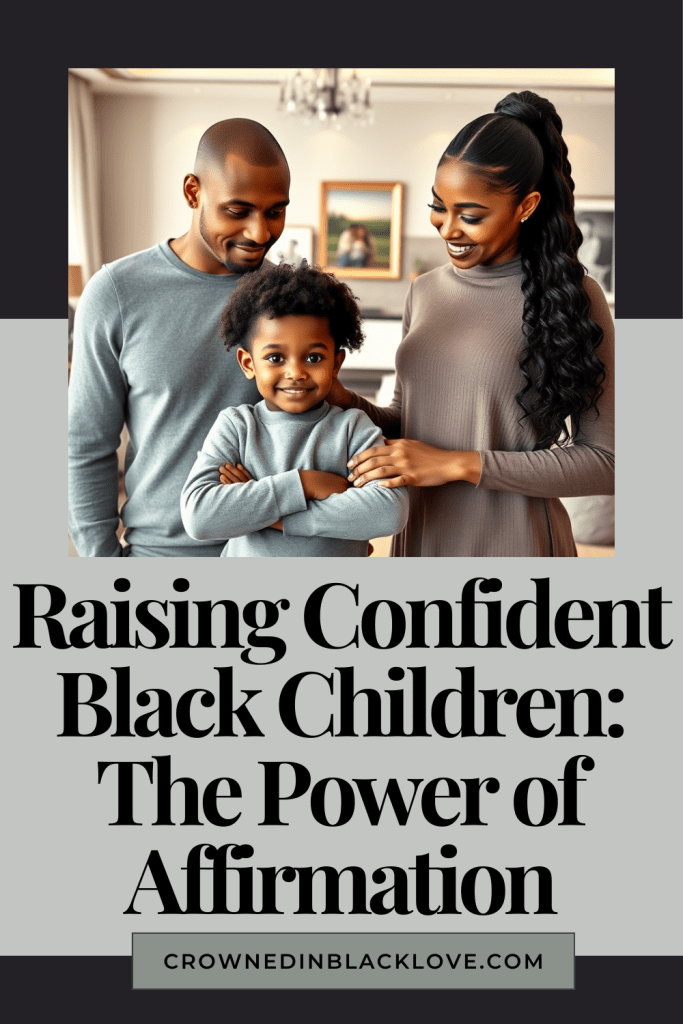
Building Emotional Intelligence: A Key to Raising Confident Black Children

Hey there, beautiful families! As parents, one of the most important gifts we can give our children is emotional intelligence. It’s more than just making them feel good about themselves—it’s about helping them understand and manage their emotions in a world that sometimes doesn’t give them enough space to express who they really are. Teaching emotional intelligence in Black children is a powerful way to set them up for a lifetime of confidence, resilience, and self-love. Let’s dive into why it’s so crucial and how we can raise our children to not only survive but thrive.


1. Teaching the Vocabulary of Emotions

It’s important to help your child learn how to name and understand their emotions. This means going beyond just “happy” and “sad” and introducing words like “frustrated,” “excited,” “nervous,” “grateful,” and “proud.” The more emotionally literate our children become, the better they can navigate their feelings and communicate effectively.

Example:
When your child is upset after an argument with a sibling, you might say, “It seems like you’re feeling really frustrated right now. What made you feel that way?” This helps your child not only recognize their own emotions but also gives them the language to express themselves more clearly.

Ways to Help:

  • Use books or media that focus on emotions and how characters feel in different situations. After reading, ask questions about the characters’ emotions: “How do you think they felt when that happened?”
  • Create a “feelings chart” with different facial expressions or emotions written on it. Encourage your child to point to how they’re feeling each day.

2. Encourage Open Conversations About Emotions

Creating a space where your child feels comfortable talking about their emotions is crucial. Emotional intelligence starts with the ability to talk about and process one’s feelings. As parents, we need to listen actively, validate those feelings, and provide a safe, nonjudgmental environment where they can express themselves.

Example:
After a long school day, ask your child, “How was your day today? Did anything make you feel really happy or upset?” When they share their feelings, make sure to listen with empathy and say things like, “I hear you. That sounds tough.”

Ways to Help:

  • Set aside a specific time each day to talk about emotions. This could be during dinner, while driving home, or just before bed. Make it a routine so they know it’s okay to share their feelings at any time.
  • When your child expresses frustration or anger, rather than dismissing it, say something like, “I understand that you’re upset. Let’s talk about why.”
emotional intelligence in Black children

3. Modeling Emotional Regulation

Children learn by example. As parents, showing how we regulate our emotions teaches them how to do the same. Emotional intelligence is about knowing when to step back, take a deep breath, and choose a calm response over an emotional reaction.

Example:
If you’re feeling stressed, you might say to your child, “I’m feeling frustrated right now, but I’m going to take a deep breath and calm down before we continue this conversation.” Modeling this gives them the tools they need to cope with their own emotions.

Ways to Help:

  • Practice deep breathing or mindfulness techniques with your child. For instance, “Let’s take a deep breath together. In through your nose, out through your mouth.”
  • Use positive self-talk: When you feel overwhelmed, say something like, “I’m feeling frustrated, but I know I can handle it.” This helps your child see how to approach emotions calmly.

4. Encouraging Empathy and Perspective-Taking

Emotional intelligence isn’t just about understanding your own emotions—it’s also about understanding the feelings of others. Teaching your child empathy is crucial for their social development and emotional maturity. Empathy helps them connect with others and respond in thoughtful, kind ways.

Example:
If your child accidentally hurts a friend’s feelings, guide them to think about the other person’s emotions. You could say, “How do you think your friend feels right now? What can we do to make it right?”

Ways to Help:

  • Play “feelings charades,” where you both act out different emotions, and the other person guesses what emotion you’re expressing. This helps your child recognize emotions in others.
  • Discuss real-life situations—like news stories or things they’ve witnessed—and ask your child how they think the people involved might feel. This encourages them to consider others’ emotions.

5. Providing Positive Reinforcement for Emotional Growth

Positive reinforcement plays a key role in emotional development. When your child successfully manages their emotions or shows empathy, it’s important to praise and celebrate these moments. This not only boosts their confidence but also reinforces emotionally intelligent behaviors.

Example:
If your child successfully calms down after a tantrum or expresses their feelings in a healthy way, praise them by saying, “I’m really proud of how you calmed yourself down when you felt frustrated. That shows a lot of strength!”

Ways to Help:

  • Create a reward system for emotional milestones. For example, after a week of consistently expressing emotions in healthy ways, give your child an extra special treat or time with you.
  • Praise the effort, not just the result. Acknowledge the emotional work your child put in: “You did a great job of taking a break when you felt upset. That’s a really mature choice.”

6. Teaching Conflict Resolution

Part of emotional intelligence is knowing how to resolve conflicts in a healthy way. Conflict is inevitable, but teaching your child how to resolve disagreements with kindness and understanding is key to their emotional growth.

Example:
When your child has a disagreement with a sibling, guide them toward a peaceful resolution: “Instead of yelling, let’s use our words to explain how we feel. What could you say to your brother to help him understand?”

Ways to Help:

  • Teach problem-solving skills. Ask your child, “What do you think is a fair way to solve this?” This helps them learn to work through problems thoughtfully.
  • Role-play conflict scenarios with your child. Practice resolving disagreements calmly, using phrases like, “I don’t like it when you do that. It makes me feel sad. Can we try something different next time?”

Closing Thoughts:

Building emotional intelligence in Black children is one of the most powerful gifts we can give them. It’s not just about helping them identify their emotions, but about empowering them to express, understand, and manage their feelings in a way that promotes confidence, empathy, and resilience. In a world that often doesn’t validate our children’s experiences, let’s be the ones who give them the tools to navigate life with emotional strength and love.

Together, we’re raising the next generation of emotionally intelligent leaders—one child at a time.


Nurturing emotional intelligence in Black children is key to raising confident, resilient, and self-assured individuals. Learn how to foster emotional expression, empathy, and confidence in your little ones. #BlackParenting #EmotionalIntelligence #BlackExcellence


Raising Confident Black Children: The Power of Affirmation

As parents, one of the most important gifts we can give our children is the ability to stand tall, proud of who they are and where they come from. Raising confident Black children means equipping them with the tools to navigate a world that often doesn’t recognize their full worth. Affirmation is one of the most powerful tools we have to build their self-esteem, cultural pride, and emotional intelligence. By regularly affirming their value, we teach them to embrace their Black identity with strength and pride. Let’s explore how we can raise confident Black children through the power of positive reinforcement and affirmation.


1. The Power of Affirmations

Positive affirmations are more than just words—they are seeds that grow into strong, confident mindsets. For Black children, hearing affirmations about their worth and potential is crucial. Phrases like “You are brilliant,” “Your Black skin is beautiful,” and “Your voice matters” help to counter negative stereotypes and reinforce their self-worth.

  • Pro Tip: Start each day with affirmations. Make it a ritual to say empowering statements that remind your child of their brilliance and beauty. It can be something as simple as “You are amazing just as you are.”

2. Instilling Cultural Pride

Children who are proud of their heritage carry that pride wherever they go. Teaching Black children about the rich history, culture, and accomplishments of their ancestors not only helps them feel connected to their roots but also instills confidence in their identity. Let them know that they come from a long line of kings, queens, freedom fighters, scholars, and creators who have shaped the world.

  • Pro Tip: Share stories of influential Black figures, both past and present, with your child. Books, movies, and family conversations are great ways to celebrate Black culture. Maya Angelou, Thurgood Marshall, and Oprah Winfrey are just a few role models to start with.

3. Building Emotional Intelligence

Confidence is not just about how a child sees themselves, but also how they understand and manage their emotions. Encouraging emotional intelligence in Black children helps them handle challenges with resilience and self-assurance. Teaching them to express their feelings, communicate effectively, and build empathy is a critical part of raising a well-rounded and confident individual.

  • Pro Tip: Encourage your child to talk about how they feel—whether they’re happy, sad, frustrated, or proud. Provide a safe space for emotional expression and validate their feelings. This teaches them that it’s okay to be vulnerable and that their emotions are important.

4. Modeling Confidence and Self-Love

Children learn by example, so modeling self-love and confidence is key. When they see you celebrating your own identity and embracing who you are, they’ll be more likely to do the same. Show your child how to stand tall, be proud of who they are, and treat themselves with love and respect.

  • Pro Tip: Show your child how you affirm your own worth. Whether it’s speaking positively about yourself in front of them or practicing self-care, your actions speak louder than words. They will learn from the way you carry yourself.

5. Creating a Supportive Environment

Confidence grows in a supportive environment where children feel safe to be themselves. Surround your child with people who uplift them, celebrate their uniqueness, and encourage them to reach for their dreams. A strong community can help reinforce their confidence, especially when they see others who look like them succeeding.

  • Pro Tip: Foster relationships with other families and communities that value Black culture and identity. Create spaces where your child can be surrounded by like-minded individuals who encourage and support each other.

In Closing:

Raising confident Black children isn’t just about helping them navigate the world—it’s about teaching them to embrace their identity, their heritage, and their greatness. Through affirmations, cultural pride, emotional intelligence, and a supportive environment, we can raise children who are strong, proud, and ready to take on the world. Their confidence will not only empower them but will inspire future generations to carry that torch forward.

The power of affirmation can raise confident Black children who are proud of who they are. Start with daily affirmations, cultural pride, and emotional intelligence! #BlackParenting #Confidence #BlackLove 💫

P.A.R.E.N.T.I.N.G.: The Blueprint for Raising Strong Black Families

Parenting is one of the most rewarding, yet challenging, roles anyone can take on. As a Black parent, you’re not just raising your children; you’re also preparing them for a world that can sometimes be tough on us. That’s why it’s so important to build a foundation of love, strength, and resilience. When I first came across the P.A.R.E.N.T.I.N.G. acronym, it struck me as the perfect guide for how we can shape the next generation in the Black community. Each letter represents qualities that, when embraced, can help us raise empowered, confident, and loving children. Let’s dive into why P.A.R.E.N.T.I.N.G. is more than just an acronym—it’s a way of life.

P – Patience: The Key to Nurturing Growth

Parenting requires an immense amount of patience. Our children are growing, learning, and sometimes challenging us at every turn. In the Black community, patience is even more important as we often have to teach our children about the unique challenges they may face in the world. Patience allows us to guide them with understanding, rather than frustration. It’s about nurturing their growth, not rushing it.

A – Accountability: Teaching Responsibility from the Start

Accountability is crucial for both parents and children. As parents, we have to model accountability by owning our actions and setting a good example. For our kids, we need to teach them responsibility and the importance of their choices. In the Black community, where our children are often faced with systemic challenges, teaching accountability helps them understand the importance of standing by their actions and decisions—good or bad.

R – Respect: Building a Foundation of Mutual Understanding

Respect is one of the most important qualities we can teach our children. This means respecting others, respecting themselves, and respecting their environment. In our community, respect goes beyond just the home; it extends to understanding the broader cultural and societal values that shape us. Teaching our children respect ensures that they grow into individuals who value and uplift others, creating a more harmonious world for everyone.

E – Empathy: Walking in Someone Else’s Shoes

Empathy is a quality that every parent should aim to instill in their children. It’s about teaching them to understand and share the feelings of others. In the Black community, where we often face adversity, empathy becomes even more important. By teaching our children to be compassionate and kind, we prepare them to be leaders who will stand up for justice, equality, and the well-being of others.

N – Nurturing: Creating an Environment of Love and Safety

Every child needs a nurturing environment to thrive. This means providing love, security, and a safe space where they can be themselves. In the Black community, nurturing our children involves celebrating their uniqueness and helping them see the beauty in their culture, identity, and history. A nurturing home helps children feel loved and accepted, which boosts their self-esteem and confidence.

T – Teamwork: Working Together as a Family

Parenting is never a one-person job. Teamwork between partners, extended family members, and the community is essential in raising strong children. In the Black community, where we often rely on our family units for support, teaching teamwork at home shows children the value of working together for the greater good. It helps them understand that strong relationships are built on collaboration, trust, and mutual support.

I – Integrity: Standing Firm in Our Values

Integrity is about doing what’s right, even when it’s not easy. As parents, we must lead by example, showing our children the importance of honesty, trustworthiness, and sticking to their values. In the Black community, where our integrity is sometimes questioned, it’s important to teach our children the strength of being true to themselves and their beliefs, no matter what.

N – Nurturing: Encouraging Personal Growth

Another important aspect of nurturing is encouraging personal growth. It’s about being there to support your child’s development, whether that’s academic, emotional, or social. We must empower our children to explore their talents, chase their dreams, and never settle for less than they deserve. In our community, where access to opportunities can sometimes be limited, nurturing personal growth means giving them the tools and mindset to succeed against all odds.

G – Gratitude: Cultivating a Spirit of Appreciation

Gratitude is a key part of creating a positive and resilient mindset in children. Teaching them to appreciate what they have, even in challenging circumstances, helps them develop a sense of humility and contentment. In the Black community, where we often don’t have as many resources, gratitude can help our children value the small victories and the blessings in their lives.

E – Equality: Teaching Fairness and Justice

Teaching equality and fairness is crucial for parenting in today’s world. It’s about helping our children understand that everyone deserves to be treated equally and with respect. In the Black community, where we face inequality, it’s vital that we equip our children with the knowledge and courage to stand up for justice and equity, ensuring they grow up to be advocates for positive change.

In Conclusion:

Parenting is one of the most important jobs we’ll ever have, and the P.A.R.E.N.T.I.N.G. acronym provides us with a powerful guide for raising the next generation. By incorporating Patience, Accountability, Respect, Empathy, Nurturing, Teamwork, Integrity, Nurturing (again!), Gratitude, and Equality into our parenting approach, we create a strong foundation for our children to succeed and thrive.

As Black parents, we know the importance of raising children who are not only resilient but also compassionate and empowered. So, let’s embrace the P.A.R.E.N.T.I.N.G. blueprint and build stronger families, stronger communities, and a brighter future for our children.

Raising strong, resilient kids in the Black community starts with love and guidance. Check out how the P.A.R.E.N.T.I.N.G. acronym can help parents nurture empowered, confident children today. 💪🏽👶🏽 #BlackParenting #FamilyGoals #ParentingTips

How to Prepare Your Children for Future Success in the Black Community

As parents and caregivers, one of the most important roles we have is preparing our children for success. This preparation isn’t just about academic achievement—it’s about equipping them with the confidence, resilience, and sense of identity they need to navigate the world and contribute meaningfully to their communities. For children in the Black community, this process includes teaching them to embrace their cultural heritage, advocating for their future, and empowering them to succeed, no matter the challenges they may face.

In this guide, we’ll explore ways to help your children succeed within the Black community by focusing on cultural pride, educational empowerment, emotional well-being, and fostering a strong sense of community. Let’s dive into practical steps you can take to set your children up for success in the future.

1. Instill Cultural Pride and Identity

A strong sense of cultural pride is essential for children to feel grounded in their identity. When your children are proud of who they are and where they come from, they are more likely to have the confidence to navigate challenges and celebrate their successes.

  • Teach Black history: Make sure your children learn about the rich history, accomplishments, and struggles of Black individuals in the U.S. and around the world. From influential historical figures like Martin Luther King Jr., Rosa Parks, and Harriet Tubman to modern-day heroes, understanding their heritage builds a sense of pride and purpose.
  • Celebrate Black culture: Expose your children to various aspects of Black culture, including art, music, literature, food, and traditions. This not only deepens their cultural knowledge but also strengthens their connection to their community.
  • Role models and mentors: Surround your children with positive Black role models—whether they are family members, community leaders, or public figures. Representation is key to showing children that they too can achieve great things.

2. Focus on Education and Lifelong Learning

Education is one of the most powerful tools for success. Encouraging your children to excel in school and become lifelong learners is a key part of preparing them for the future.

  • Emphasize the importance of school: Help your children understand that education is the foundation for their future success. Show them how the knowledge and skills they gain today will serve them in achieving their goals tomorrow.
  • Support their academic interests: Take an active interest in their schooling. Help with homework, attend parent-teacher conferences, and ensure they have the resources they need to thrive academically. If your child shows interest in a particular subject or career, encourage them to explore it further.
  • Promote critical thinking: Encourage your children to think critically about the world around them. Teach them how to ask questions, analyze information, and form their own opinions. These skills will help them navigate life’s challenges with clarity and confidence.
  • Access to resources: Make sure your child has access to resources like tutors, extracurricular activities, and educational tools that can enhance their learning experience.

3. Teach Financial Literacy and Responsibility

Financial independence is a crucial component of success, and teaching your children about money management from a young age can set them up for a successful future.

  • Basic financial concepts: Teach your children the basics of managing money, such as budgeting, saving, and the importance of credit. Start with simple concepts like earning an allowance and working toward saving for a goal, and gradually introduce more complex ideas like investments and building wealth.
  • Entrepreneurial mindset: The Black community has a long tradition of entrepreneurship. Encourage your children to explore their own business ideas, develop skills, and learn about the importance of self-sufficiency.
  • Be a financial role model: Lead by example. Show your children how to manage money wisely and demonstrate the value of financial responsibility.

4. Encourage Emotional Well-being and Resilience

To succeed in life, children need emotional resilience and the ability to handle challenges with grace. Teaching them how to process their emotions, bounce back from setbacks, and maintain a positive outlook is vital.

  • Teach emotional intelligence: Help your children identify their emotions and learn how to express them in healthy ways. Encourage open conversations about feelings and how to cope with stress, disappointment, or frustration.
  • Build resilience: Life will present obstacles, and teaching your children how to persevere through difficulties is one of the most important lessons you can offer. Share stories of Black individuals who have overcome adversity, and encourage your children to face challenges with determination.
  • Self-care: Show your children the importance of taking care of their mental and emotional health. Teach them how to practice self-care, whether it’s through journaling, exercising, talking to someone they trust, or engaging in hobbies they enjoy.

5. Foster Community Involvement and Social Responsibility

Success isn’t just about individual achievement—it’s also about how we contribute to our communities. Teaching your children the value of giving back and being engaged in their community helps them build strong connections and create positive change.

  • Volunteer and give back: Encourage your children to get involved in community service. Volunteering teaches empathy, responsibility, and the importance of helping others. It can also provide opportunities for leadership development and networking.
  • Support local businesses: Teach your children the importance of supporting Black-owned businesses and local entrepreneurs. This fosters a sense of solidarity and strengthens the community’s economic growth.
  • Civic engagement: Teach your children about the importance of civic engagement—whether it’s voting, advocating for causes they believe in, or getting involved in local organizations that uplift the Black community.

6. Teach Leadership and Empowerment

Encouraging leadership skills can help your child build confidence and become an empowered individual who leads by example. Leadership isn’t just about taking charge—it’s also about supporting others, being compassionate, and standing up for what is right.

  • Model leadership: Be a positive role model by demonstrating leadership qualities in your own life. Show your children how to take initiative, make decisions, and lead with empathy and integrity.
  • Empowerment through choice: Allow your children to make decisions and take responsibility for their choices. This helps them feel empowered and in control of their future.
  • Develop their voice: Encourage your children to speak up for themselves and others. Help them understand the importance of using their voice for positive change, whether it’s in school, at home, or in the community.

7. Prepare for the Challenges They May Face

While preparing your children for success is essential, it’s equally important to prepare them for the challenges they may encounter, particularly as they navigate life in the Black community.

  • Talk about systemic issues: Have open discussions about racism, discrimination, and the history of inequality in America. Teach your children how to handle such challenges with confidence and strength while also equipping them with the knowledge of their rights.
  • Equip them with coping strategies: Help your children develop strategies for coping with negative experiences, whether it’s dealing with discrimination or overcoming obstacles in school. Resilience and a strong support system will help them thrive despite these challenges.

Conclusion: Empowering Your Children for Success

By providing your children with a strong foundation of cultural pride, education, financial literacy, emotional resilience, and community engagement, you are empowering them to achieve success both within the Black community and beyond.

As they grow, the lessons you instill today will help them face challenges with confidence, pursue their dreams with determination, and make meaningful contributions to the world around them. By preparing them for success in the Black community, you are helping to shape a future of empowered, resilient, and successful young leaders.

Preparing your children for future success starts with fostering confidence, teaching cultural pride, and providing the right resources. In this guide, we share strategies to empower your children to thrive in the Black community and beyond.

Want to set your children up for future success? Here’s how to prepare them for success in the Black community with cultural pride, education, financial literacy, and more. #BlackCommunity #Parenting #Empowerment

How a Loving Black Marriage Impacts Children’s Futures

When we think about what makes a child feel safe, loved, and secure, a strong, loving home environment comes to mind. But what truly builds that environment? While the love of both parents is important, the dynamic between them—especially in a loving Black marriage—has a profound impact on the emotional growth and development of their children. In Black families, where there can be extra challenges due to systemic issues, the strength of the parents’ relationship becomes even more essential in shaping children’s future success and self-esteem.

In this post, we will explore why a loving Black marriage isn’t just important for the couple, but for their children too. It’s about setting an example, teaching respect, and offering an emotional foundation that will stay with children for the rest of their lives.

The Impact on Children’s Emotional Well-Being:

Children are highly influenced by their home environment, and a loving marriage between their parents provides them with an emotional safe space. In households where parents have a strong bond, children feel loved and supported, which helps them develop emotional stability. Research shows that children raised in homes with involved parents who have a strong relationship tend to be more confident and emotionally resilient (American Psychological Association, 2020).

In a loving Black marriage, children grow up knowing that love, respect, and communication are the cornerstones of any relationship. For Black children, seeing their parents navigate life with a sense of partnership and support is a vital lesson in creating their own positive relationships as they grow older.

This emotional security is especially critical in Black communities, where external pressures like racism can affect children’s confidence. A healthy, loving marriage can act as a strong buffer against these pressures, providing children with a sense of belonging and pride in their identity.

The Role of Modeling Healthy Relationships:

Parents serve as the first role models in a child’s life, and their relationship with each other can have a profound influence on how children perceive love and relationships. In a loving Black marriage, children witness firsthand how to communicate effectively, resolve conflicts with respect, and show affection. These are lessons that go far beyond what children learn in school.

For Black boys, a loving marriage demonstrates how to treat women with respect and equality. For Black girls, it shows them what a healthy, loving relationship looks like, and what they should expect in their own partnerships as they grow older. When parents model these behaviors, they set the stage for children to develop their own positive relationships throughout their lives.

In a world where many children experience unhealthy or broken relationships, having the example of a loving marriage offers hope and teaches them what is possible. The beauty of a loving Black marriage is that it shows children how strong and empowering love can be, even when facing challenges outside the home.

Building Confidence and Self-Esteem:

One of the most powerful ways that a loving Black marriage impacts children is by boosting their self-esteem. Children who grow up in households where both parents are actively involved and share a loving bond are more likely to feel secure in their identities. They learn that they are worthy of love, respect, and care, which translates into higher levels of self-worth.

For Black children, this is especially important. In a society where Black children may face negative stereotypes or discrimination, having two parents who love each other and are involved in their lives can create a solid foundation for pride in their Black identity. The strength of the parents’ relationship provides children with a model of how to love themselves, how to take pride in their culture, and how to stand up against negative influences.

This boost in self-esteem leads to better outcomes in other areas of life, including school performance, friendships, and personal growth. When children feel supported and loved, they are more likely to pursue their goals, take risks, and believe in their ability to succeed.

The Long-Term Impact on Future Relationships and Success:

The lessons learned from a loving Black marriage go beyond childhood. As children grow into adults, they carry these lessons with them into their own relationships and careers. Children who witness love, respect, and communication in their parents’ marriage are more likely to have healthy romantic relationships themselves.

Research shows that children of strong marriages are more likely to have better social skills, fewer behavioral problems, and higher academic achievement (National Fatherhood Initiative, 2020). The positive influence of a loving Black marriage ripples out into the community as children grow into compassionate, responsible, and confident adults.

Moreover, children who grow up in stable homes with loving relationships are also more likely to contribute positively to society. They understand the value of collaboration, mutual support, and respect—key qualities that help create strong communities.

In Conclusion:

The impact of a loving Black marriage on children is immeasurable. By offering a foundation of emotional security, teaching respect, and fostering self-esteem, a strong partnership between Black parents helps raise confident, resilient children who are prepared to face life’s challenges. A loving Black marriage provides not only a model for how to love, communicate, and respect but also a sense of pride and identity that stays with children throughout their lives.

In a world that often tries to undermine the Black family, it’s important to remember that love is the glue that holds it all together. Strong, loving Black marriages give children the tools they need to grow into successful, happy, and empowered adults, continuing the cycle of love and strength for generations to come.

A loving Black marriage shapes the future of children, building confidence, respect, and a sense of identity. Learn how strong partnerships in the home create empowered kids ready to succeed. #BlackMarriage #FamilyStrength #Parenting