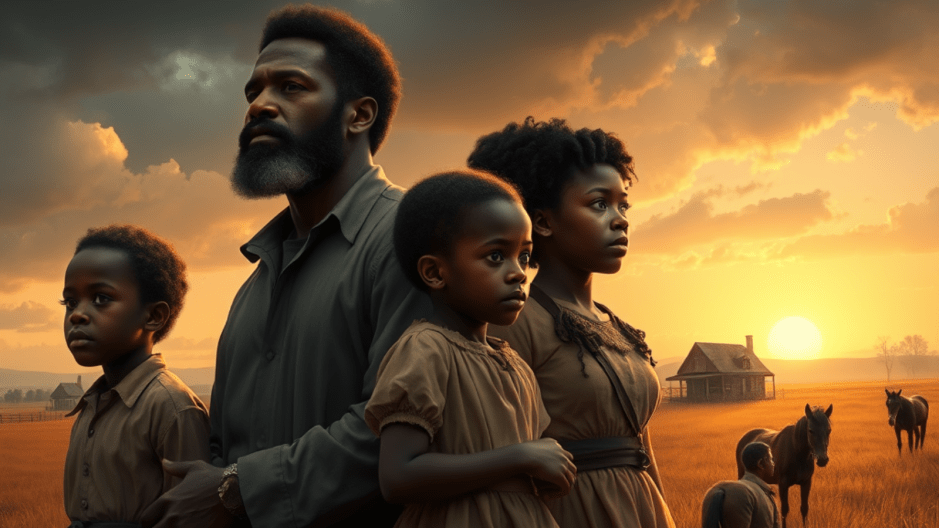
The concept of 40 acres and a mule is one of the most significant yet unfulfilled promises in American history. Originating from Special Field Order No. 15, issued by Union General William T. Sherman in 1865, this radical policy aimed to redistribute land from Confederate landowners to newly freed Black families. It was a groundbreaking moment, as for the first time, the U.S. government directly engaged with Black leaders to determine what was needed to secure their future after slavery. Their answer was clear: land—40 acres of tillable land and a mule to work it.
A Vision for Economic Independence
After centuries of forced labor, oppression, and systemic disenfranchisement, this policy represented a glimmer of hope. Land ownership meant more than just a place to live; it was a direct pathway to economic independence, stability, and self-sufficiency. With land, formerly enslaved people could grow their own food, build communities, and establish generational wealth—something that had been systematically denied to them.
The Betrayal of a Nation
Unfortunately, this promise was never fulfilled. After President Abraham Lincoln’s assassination, his successor, Andrew Johnson, quickly overturned Sherman’s order. The land that had been designated for freed Black families was taken back and returned to its original Confederate owners. The government not only reneged on its commitment but actively stripped Black Americans of the opportunity to build a future on land they had rightfully earned through centuries of unpaid labor.
The Long Shadow of Broken Promises
The failure to deliver 40 acres and a mule was not just a denial of land—it was a denial of justice, equity, and progress. This betrayal marked the beginning of a long history of systemic exclusion from economic opportunities for Black Americans. From Jim Crow laws to redlining, from discriminatory lending practices to mass incarceration, the ripple effects of this broken promise have been felt for generations.
Reparations and the Ongoing Fight for Justice
Today, the conversation around reparations is gaining momentum, as many recognize that economic disparities between Black and white Americans are rooted in policies like the failure to provide 40 acres and a mule. While land itself may not be the singular solution, acknowledgment, policy changes, and direct economic investments are necessary steps toward rectifying historical injustices.
Conclusion
The story of 40 acres and a mule is not just a historical anecdote—it is a symbol of the unfulfilled promises and systemic barriers that continue to impact Black communities today. Understanding this history is essential to shaping a future where justice is not just promised but delivered. The fight for economic equity and reparations continues, and recognizing the legacy of broken promises is the first step toward meaningful change.
Twitter Post: The promise of 40 acres and a mule was a chance for Black economic independence—one that was never fulfilled. Learn about its impact & the ongoing fight for reparations. #BlackHistory #Reparations #EconomicJustice [Insert Link]
Black pride is more than just a feeling—it’s a powerful force that shapes the way children see themselves and the world around them. It’s the pride of knowing where you come from, understanding your heritage, and embracing all the strength and beauty that comes with being Black. When Black pride is nurtured in the home, it creates an environment where children feel confident, valued, and empowered to overcome any obstacle.
In this blog, we’ll explore how Black pride in the home not only boosts children’s self-esteem but also helps them develop a strong sense of identity. We’ll see how parents who embrace their cultural heritage and teach their children to do the same create a foundation of confidence that lasts a lifetime.
Building Confidence Through Cultural Awareness:
One of the most significant ways that Black pride shapes children is by boosting their confidence. When children grow up in homes where they see their parents embrace their culture, they learn that their Black identity is something to be proud of. Whether it’s through storytelling, celebrating Black History Month, or learning about their ancestors’ accomplishments, children who grow up surrounded by Black pride develop a deep sense of self-worth.
For Black children, knowing the history of their culture—from the achievements of leaders like Martin Luther King Jr. to the contributions of everyday heroes—helps them understand their place in the world. They learn that their heritage is rich and filled with stories of strength, resilience, and excellence. This awareness helps them carry themselves with pride and confidence, no matter what challenges they may face.
Instilling a Strong Sense of Identity:
Black pride also plays a key role in shaping a child’s sense of identity. When children are taught to embrace their culture and appreciate their history, they develop a strong sense of who they are. This sense of identity is foundational in helping children navigate the world around them with confidence and clarity.
In homes where Black pride is celebrated, children are encouraged to express themselves without fear of judgment or shame. They learn that their natural hair, skin color, and cultural traditions are beautiful and valuable. These positive affirmations are essential for helping Black children develop a strong, healthy sense of self that will stay with them as they grow older.
As Dr. Joy DeGruy, a renowned educator and researcher, emphasizes, “When we affirm the value of Black children through cultural pride, we give them the tools to combat negative stereotypes and build a sense of resilience and dignity” (DeGruy, 2005).
Teaching Self-Love and Empowerment:
Black pride in the home goes beyond cultural awareness—it’s also about teaching children to love themselves and believe in their own potential. When parents model self-love and pride in their Blackness, children internalize these lessons and carry them into their own lives. This self-love is a crucial building block for mental and emotional well-being, especially for Black children who may face racism or discrimination in society.
A child who is raised to value their identity will be better equipped to handle the challenges that life throws their way. They will have the inner strength to rise above negativity and take pride in their accomplishments. The confidence that comes from loving oneself is a powerful tool for success, and it begins with the pride that parents instill at home.
Positive Role Models and Cultural Representation:
When Black pride is nurtured in the home, it’s often reflected in the media, books, music, and role models that parents expose their children to. Children raised in homes where Black pride is celebrated are more likely to see positive representations of themselves in the world around them. From books that feature Black heroes to films that showcase the richness of Black culture, these positive images reinforce the message that Black lives matter, that Black history is important, and that Black children have the power to change the world.
Seeing role models who look like them—whether in history, sports, music, or everyday life—helps children build a sense of possibility and hope. Black children grow up knowing that they can be anything they set their minds to, because they have countless examples of Black individuals who have made an impact in various fields.
Fostering a Sense of Community and Belonging:
In homes where Black pride is nurtured, children also develop a sense of belonging to a larger community. Black pride helps children connect with others who share their culture, creating a network of support, solidarity, and shared experiences. This sense of community is crucial for developing a positive outlook on life and knowing that they are part of something greater than themselves.
By teaching children to take pride in their heritage, parents are fostering a sense of unity and cultural strength that will serve them throughout their lives. Whether it’s attending cultural events, connecting with extended family, or simply talking about their roots, children who grow up with a strong sense of Black pride feel grounded in a rich legacy that continues to inspire them.
In Conclusion:
Black pride in the home is one of the most powerful gifts parents can give their children. It shapes their confidence, strengthens their identity, and equips them with the tools they need to navigate the world with self-love and resilience. When Black pride is nurtured from an early age, children grow up knowing that they are beautiful, valuable, and capable of achieving anything they set their minds to.
In a world that sometimes tries to diminish the importance of Black culture and identity, Black pride remains a beacon of strength. It teaches children that their heritage is something to be proud of and that they have the power to shape their own futures. Let’s continue to embrace Black pride in our homes, knowing that the next generation will carry that pride into a brighter, more inclusive world.
Black pride in the home shapes children’s confidence, self-love, and identity. By embracing culture and heritage, parents empower the next generation to thrive. #BlackPride #CulturalHeritage #Parenting #BlackChildren
Have you ever wondered what makes a community truly strong? It’s not just the buildings, the schools, or the streets. It’s the people—especially the family. The Black family has always been at the heart of the community, providing strength, love, and a sense of belonging. It’s more than just a group of people living together—it’s a powerful force that shapes history and builds a brighter future.
The Backbone of the Community:
When we talk about the Black family, we’re not just talking about mom, dad, and kids. We’re talking about a deep sense of unity and support. The Black family is often a close-knit group that helps each other through thick and thin. Whether it’s grandparents, cousins, or close family friends, everyone plays a role in raising the next generation.
In times of hardship, the Black family sticks together. Parents work hard to provide for their children, not only by making sure they have food and shelter but by teaching them important values like respect, love, and pride in their heritage. The strength of the Black family has helped many overcome struggles and push forward, no matter what challenges come their way.
Cultural Pride and Heritage:
The Black family also carries an important responsibility: to pass on the culture and history of their ancestors. This includes teaching the next generation about their roots, their achievements, and their role in shaping the world. From storytelling to celebrating Black History Month, the family helps children understand how far they’ve come and how much more they can achieve.
By celebrating their culture, the Black family teaches children to be proud of who they are. They show that being connected to one’s roots isn’t just about the past—it’s about empowering future generations.
Building a Strong Future Together:
While families provide love and strength, they also play a major role in building strong communities. In the Black community, family members support each other in many ways: helping with schoolwork, starting businesses, volunteering, and standing up for what’s right. When one family member succeeds, the whole family and community feel uplifted.
Today’s Black families continue to break barriers, whether in the fields of education, politics, art, or social justice. The love and support in Black families inspire the next generation to dream big and reach for the stars. Together, they make the world a better place—one family at a time.
In Conclusion:
At the end of the day, the Black family is about much more than just living together. It’s about love, strength, resilience, and the power of unity. Black families continue to make an incredible impact on their communities and the world. Let’s celebrate the role of the Black family today and every day. Because when families are strong, communities are strong. And when communities are strong, the world becomes a brighter, better place for all of us.
The Black family is the backbone of the community, passing down love, strength, and culture for generations. Learn more about the incredible impact they make every day! #BlackFamily #CommunityStrength #Heritage #Unity #BlackHistory
In 1964, Sam Cooke penned a song that would become an anthem of hope and resilience: “A Change Is Gonna Come.” In the wake of the Civil Rights Movement, Cooke’s soulful ballad echoed the struggles of Black Americans, while igniting a deep sense of perseverance and belief in the inevitable triumph of justice and equality. Inspired by Cooke’s message, this poem reflects that same powerful belief in change. It is a call to action, a reminder of the tireless fight for freedom, and an affirmation that brighter days are ahead, despite the darkness of the present.
A Change Is Gonna Come
I’ve walked through the shadows, been lost in the night, Searched for the dawn, and held on to the light. The chains that bind us, they may seem too strong, But I’ve known from the start: we’ve been right all along.
Through the rivers of sorrow, through mountains so tall, We’ve cried, we’ve bled, yet we stand tall, A storm may rage, and the winds may scream, But we’re warriors born, with an unbreakable dream.
They’ve tried to keep us down, tried to bury our soul, But still, we rise, and we take control. Our voices unite, like a force untamed, No more silence—our power reclaimed.
I’ve seen the pain, the injustice, the lie, But I won’t give up, and I won’t deny, The truth in my heart, and the strength in my hand, We are the future, and together we’ll stand.
A change is gonna come, you can hear it in the air, A ripple of hope, so strong, so rare. For the world can’t silence what it cannot fight, The will of the people, the flame of the light.
The road may be long, and the journey unclear, But we’ve traveled this way before—don’t fear. The change is rising, it’s ready to roar, And when it arrives, we’ll be stronger than before.
So hold fast, my people, hold fast to the dream, A future of justice, of peace, of esteem. The world may bend, and the winds may roar, But we’ll rise again, and we’ll open the door.
Closing Thoughts:
Much like Sam Cooke’s song, this poem honors the struggles, resilience, and eventual triumph of Black people throughout history. The fight for justice, equality, and love is ongoing—but change, powerful change, is inevitable. We continue to rise, despite the darkness, and we will see the dawn of a brighter, better future for ourselves, our children, and generations to come.
Inspired by Sam Cooke’s anthem, this poem is a reminder that change is coming. We rise, we fight, and we’ll see the dawn of justice. #ChangeIsComing #Hope #Resilience #BlackHistory
















 Crowned in Black Love