
The Power of Black Love: Building Strong Families, Thriving Together

There’s something undeniably powerful about the bond of Black love. From the resilience of our ancestors to the strength of Black couples today, love has always been at the heart of our families. No matter the challenges we’ve faced—whether it’s slavery, segregation, or systemic racism—Black love has been a force that holds us together and helps us rise. It’s a love that survives storms and celebrates joy, that nurtures the next generation with pride, and that creates legacies that live on for years to come.

Resilience in Our Roots

From the beginning, love within Black families was a revolutionary act. Our ancestors, forced into slavery, found ways to love and protect each other despite being torn apart and abused. They built families, communities, and traditions, passing down the essence of Black love—strength, pride, and unity—through generations. This love was not just about romantic relationships, but also the bonds between parents and children, siblings, and extended families.

One of the most beautiful examples of Black love in history comes from the underground railroad. Couples like Harriet Tubman and her husband, William Still, and other freedom fighters who worked together to escape the horrors of slavery showed how love, when combined with courage, could change the course of history.

Love Against All Odds

Fast forward to today, and Black love still serves as a beacon of strength. Families are built on trust, loyalty, and a shared commitment to uplift each other. Black couples like Barack and Michelle Obama, who have been through the pressures of public life, show that love can not only survive challenges but can thrive in them. The way they support each other—whether it’s through politics, parenting, or personal growth—speaks volumes about the power of love in a Black family.

The history of Black families is often painted with struggles, but we know that, even through hard times, we show up for each other. We build legacies of excellence and pass them on. There’s a deep sense of cultural pride, an unspoken understanding that our love, unity, and resilience are the foundation of our success. Whether it’s running businesses, raising children with purpose, or fighting for justice, Black love fuels it all.

Celebrating Black Love Today

In today’s world, Black love continues to shape families in extraordinary ways. Whether it’s couples holding down businesses together, activists who support each other through the emotional weight of social justice work, or grandparents passing down wisdom to grandchildren, Black love is everywhere, and it’s thriving.

Look at the Johnson family—who’ve managed to build a generational wealth fund while staying grounded in love. Or the couples who have built up their communities through mentorship, sports, and cultural initiatives. Love is present in every moment, in every action. It’s about the little things: the way we support each other when life gets hard, the encouragement we give one another when we dream big, and the strength we draw from our history.

The power of Black love is unstoppable. It has been the backbone of our survival, our strength, and our success. As we continue to build strong families and legacies, we honor the love that has carried us this far, and we cherish the love that will lead us forward. Let’s continue to thrive, love fiercely, and pass down the beautiful traditions of Black family strength to the next generation. Because Black love isn’t just a feeling; it’s a way of life.


Black love is a force that transcends generations—resilient, empowering, and unwavering. From our ancestors to modern-day couples, it fuels families, legacies, and success. 🌟 #BlackLove #FamilyStrength #Resilience #BlackHistory

How to Start a Business for the Black Community: A Guide to Empowerment and Economic Growth

Starting a business is one of the most powerful ways to build generational wealth, support the community, and empower individuals within the Black community. As a Black entrepreneur, you have the opportunity to create a business that serves your community, celebrates culture, and provides opportunities for economic growth. While starting a business can seem daunting, the rewards—both personal and communal—are well worth the effort.

In this guide, we’ll walk you through the essential steps to starting a business that not only benefits you but also has a lasting impact on the Black community.

1. Identify Your Passion and Purpose

Every successful business begins with a clear vision and a strong sense of purpose. Starting a business in the Black community should be about more than just profits—it should have a positive impact, serve a need, and celebrate the values of the community.

  • Find your passion: What are you passionate about? What problems do you want to solve for the Black community? Whether it’s creating products that cater to Black culture or offering services that address community needs, your business should reflect your values and passions.
  • Purpose-driven business: Think about how your business can empower and uplift others. Is there a way to hire, mentor, or support others within the community through your business model?

2. Choose a Niche and Market Research

To build a sustainable and successful business, it’s important to identify a niche that meets the needs of your target audience. The Black community is diverse, so it’s essential to focus on an area that both excites you and provides real value.

  • Identify a problem or gap: Look for issues that need to be addressed or areas where current businesses are not meeting the needs of the community. It could be in education, technology, fashion, health, food, or even services.
  • Conduct market research: Understand the market demand for your product or service. Who is your target audience? What are their needs, preferences, and pain points? Knowing this will help you tailor your offerings and develop a competitive advantage.

3. Create a Business Plan

A business plan is the blueprint for your business and will help you stay focused and organized as you start your entrepreneurial journey. It should outline your business goals, strategies, financial projections, and long-term vision.

  • Executive summary: A brief overview of your business, including your mission and vision.
  • Market analysis: Details about the industry, target market, and competition.
  • Products or services: What you’re selling and how it addresses the needs of the Black community.
  • Marketing and sales strategy: How you plan to attract customers and promote your business.
  • Financial projections: Your estimated startup costs, revenue goals, and profit margins.

4. Secure Funding and Resources

One of the biggest challenges for Black entrepreneurs is securing funding. However, there are many funding options available, especially for businesses focused on empowering communities.

  • Grants and funding for minority-owned businesses: Look for grants, scholarships, or funding programs specifically designed to support Black entrepreneurs, such as the Minority Business Development Agency (MBDA), National Black MBA Association, or Black Business Loan Program.
  • Crowdfunding: Platforms like Kickstarter, GoFundMe, and Patreon allow you to raise money for your business while also engaging with your community.
  • Business loans: Consider applying for small business loans, including those from organizations focused on supporting minority businesses.
  • Investment from family and friends: If you have a strong support network, reaching out to family and friends for initial funding can be a viable option.

5. Register Your Business and Obtain Necessary Licenses

Once you have a clear business plan and secured funding, it’s time to get official. Register your business and obtain any licenses or permits you may need to operate legally.

  • Choose a business structure: Whether it’s a sole proprietorship, partnership, LLC, or corporation, your business structure will determine how you file taxes, liabilities, and other legal aspects.
  • Register with the state: You’ll need to register your business name with your state’s business division and obtain a Federal Employer Identification Number (EIN) from the IRS for tax purposes.
  • Licenses and permits: Depending on your business type and location, you may need specific licenses or permits (e.g., food safety, building codes, health regulations).

6. Build an Online Presence and Market Your Business

In today’s digital age, having a strong online presence is essential for the success of any business. Social media, websites, and digital marketing can help you connect with your target audience and grow your business.

  • Create a website: A professional website is key to building trust with your customers. Make sure it’s user-friendly, mobile-optimized, and reflects your business’s brand.
  • Social media marketing: Use platforms like Instagram, Twitter, Facebook, and TikTok to engage with your audience, share updates, and promote your products or services.
  • Local advertising: If you’re focusing on your local community, consider sponsoring events, hosting pop-up shops, or partnering with other Black-owned businesses for cross-promotion.
  • Branding: Establish a brand identity that speaks to the values of the Black community. This includes your logo, colors, voice, and overall aesthetic.

7. Provide Exceptional Customer Service

Building a loyal customer base is crucial to the long-term success of your business. Providing excellent customer service can set you apart from competitors and make your customers feel valued.

  • Personalize the experience: Make sure your customers feel seen and heard. Whether it’s a handwritten thank-you note or quick responses to inquiries, small personal touches can go a long way.
  • Listen to feedback: Ask for customer feedback to improve your products and services. Actively listening to your audience shows that you care about their needs and are willing to evolve.
  • Community involvement: Support your community through charitable donations, hosting community events, or collaborating with other Black-owned businesses to create positive change.

8. Build and Strengthen Your Network

Networking is a powerful tool for Black entrepreneurs. By connecting with other business owners, mentors, and leaders in your industry, you can gain valuable advice, resources, and support.

  • Join local business associations: Look for local or national Black business groups such as the National Black Chamber of Commerce or Black Business Association to network and gain access to resources.
  • Collaborate with other Black businesses: Create mutually beneficial partnerships with other Black-owned businesses to support one another and expand your reach.
  • Mentorship: Seek out mentors who have experience in business and can guide you through the challenges of entrepreneurship.

9. Stay Focused and Be Patient

Building a successful business takes time, especially when you’re focusing on serving the Black community. Challenges may arise, but persistence, hard work, and resilience will help you overcome obstacles and continue making an impact.

  • Stay connected to your mission: Always remember why you started your business and keep that vision at the forefront.
  • Celebrate small wins: Every milestone is worth celebrating. Whether it’s your first sale or your first big collaboration, take the time to appreciate the journey.

Conclusion: Empowering the Black Community Through Entrepreneurship

Starting a business that serves and empowers the Black community is an incredible way to create lasting change, build generational wealth, and make an impact. By finding your purpose, connecting with others, and staying focused on your goals, you can create a thriving business that not only benefits you but uplifts your entire community.

Ready to start your business and empower the Black community? Check out this step-by-step guide to turning your vision into reality and creating lasting change! #BlackEntrepreneurs #BlackBusiness #CommunityEmpowerment

How to Prepare Your Children for Future Success in the Black Community

As parents and caregivers, one of the most important roles we have is preparing our children for success. This preparation isn’t just about academic achievement—it’s about equipping them with the confidence, resilience, and sense of identity they need to navigate the world and contribute meaningfully to their communities. For children in the Black community, this process includes teaching them to embrace their cultural heritage, advocating for their future, and empowering them to succeed, no matter the challenges they may face.

In this guide, we’ll explore ways to help your children succeed within the Black community by focusing on cultural pride, educational empowerment, emotional well-being, and fostering a strong sense of community. Let’s dive into practical steps you can take to set your children up for success in the future.

1. Instill Cultural Pride and Identity

A strong sense of cultural pride is essential for children to feel grounded in their identity. When your children are proud of who they are and where they come from, they are more likely to have the confidence to navigate challenges and celebrate their successes.

  • Teach Black history: Make sure your children learn about the rich history, accomplishments, and struggles of Black individuals in the U.S. and around the world. From influential historical figures like Martin Luther King Jr., Rosa Parks, and Harriet Tubman to modern-day heroes, understanding their heritage builds a sense of pride and purpose.
  • Celebrate Black culture: Expose your children to various aspects of Black culture, including art, music, literature, food, and traditions. This not only deepens their cultural knowledge but also strengthens their connection to their community.
  • Role models and mentors: Surround your children with positive Black role models—whether they are family members, community leaders, or public figures. Representation is key to showing children that they too can achieve great things.

2. Focus on Education and Lifelong Learning

Education is one of the most powerful tools for success. Encouraging your children to excel in school and become lifelong learners is a key part of preparing them for the future.

  • Emphasize the importance of school: Help your children understand that education is the foundation for their future success. Show them how the knowledge and skills they gain today will serve them in achieving their goals tomorrow.
  • Support their academic interests: Take an active interest in their schooling. Help with homework, attend parent-teacher conferences, and ensure they have the resources they need to thrive academically. If your child shows interest in a particular subject or career, encourage them to explore it further.
  • Promote critical thinking: Encourage your children to think critically about the world around them. Teach them how to ask questions, analyze information, and form their own opinions. These skills will help them navigate life’s challenges with clarity and confidence.
  • Access to resources: Make sure your child has access to resources like tutors, extracurricular activities, and educational tools that can enhance their learning experience.

3. Teach Financial Literacy and Responsibility

Financial independence is a crucial component of success, and teaching your children about money management from a young age can set them up for a successful future.

  • Basic financial concepts: Teach your children the basics of managing money, such as budgeting, saving, and the importance of credit. Start with simple concepts like earning an allowance and working toward saving for a goal, and gradually introduce more complex ideas like investments and building wealth.
  • Entrepreneurial mindset: The Black community has a long tradition of entrepreneurship. Encourage your children to explore their own business ideas, develop skills, and learn about the importance of self-sufficiency.
  • Be a financial role model: Lead by example. Show your children how to manage money wisely and demonstrate the value of financial responsibility.

4. Encourage Emotional Well-being and Resilience

To succeed in life, children need emotional resilience and the ability to handle challenges with grace. Teaching them how to process their emotions, bounce back from setbacks, and maintain a positive outlook is vital.

  • Teach emotional intelligence: Help your children identify their emotions and learn how to express them in healthy ways. Encourage open conversations about feelings and how to cope with stress, disappointment, or frustration.
  • Build resilience: Life will present obstacles, and teaching your children how to persevere through difficulties is one of the most important lessons you can offer. Share stories of Black individuals who have overcome adversity, and encourage your children to face challenges with determination.
  • Self-care: Show your children the importance of taking care of their mental and emotional health. Teach them how to practice self-care, whether it’s through journaling, exercising, talking to someone they trust, or engaging in hobbies they enjoy.

5. Foster Community Involvement and Social Responsibility

Success isn’t just about individual achievement—it’s also about how we contribute to our communities. Teaching your children the value of giving back and being engaged in their community helps them build strong connections and create positive change.

  • Volunteer and give back: Encourage your children to get involved in community service. Volunteering teaches empathy, responsibility, and the importance of helping others. It can also provide opportunities for leadership development and networking.
  • Support local businesses: Teach your children the importance of supporting Black-owned businesses and local entrepreneurs. This fosters a sense of solidarity and strengthens the community’s economic growth.
  • Civic engagement: Teach your children about the importance of civic engagement—whether it’s voting, advocating for causes they believe in, or getting involved in local organizations that uplift the Black community.

6. Teach Leadership and Empowerment

Encouraging leadership skills can help your child build confidence and become an empowered individual who leads by example. Leadership isn’t just about taking charge—it’s also about supporting others, being compassionate, and standing up for what is right.

  • Model leadership: Be a positive role model by demonstrating leadership qualities in your own life. Show your children how to take initiative, make decisions, and lead with empathy and integrity.
  • Empowerment through choice: Allow your children to make decisions and take responsibility for their choices. This helps them feel empowered and in control of their future.
  • Develop their voice: Encourage your children to speak up for themselves and others. Help them understand the importance of using their voice for positive change, whether it’s in school, at home, or in the community.

7. Prepare for the Challenges They May Face

While preparing your children for success is essential, it’s equally important to prepare them for the challenges they may encounter, particularly as they navigate life in the Black community.

  • Talk about systemic issues: Have open discussions about racism, discrimination, and the history of inequality in America. Teach your children how to handle such challenges with confidence and strength while also equipping them with the knowledge of their rights.
  • Equip them with coping strategies: Help your children develop strategies for coping with negative experiences, whether it’s dealing with discrimination or overcoming obstacles in school. Resilience and a strong support system will help them thrive despite these challenges.

Conclusion: Empowering Your Children for Success

By providing your children with a strong foundation of cultural pride, education, financial literacy, emotional resilience, and community engagement, you are empowering them to achieve success both within the Black community and beyond.

As they grow, the lessons you instill today will help them face challenges with confidence, pursue their dreams with determination, and make meaningful contributions to the world around them. By preparing them for success in the Black community, you are helping to shape a future of empowered, resilient, and successful young leaders.

Preparing your children for future success starts with fostering confidence, teaching cultural pride, and providing the right resources. In this guide, we share strategies to empower your children to thrive in the Black community and beyond.

Want to set your children up for future success? Here’s how to prepare them for success in the Black community with cultural pride, education, financial literacy, and more. #BlackCommunity #Parenting #Empowerment

The Power of the Black Family and Its Impact on the Community

The Black family has always been the heart and soul of the community, a cornerstone of strength, love, and resilience. For centuries, despite facing adversity, systemic challenges, and hardships, the Black family has maintained its foundational importance, not only as a unit of love and support but as a powerful force shaping cultural identity and social progress.

The Black family is much more than just a household; it is a symbol of perseverance, wisdom, and unity. In times of struggle, the family unit has been a constant source of stability. Generations upon generations of Black families have fought, thrived, and uplifted one another, proving time and time again that the strength of their bonds transcends circumstances.

A Legacy of Love and Support

One of the most defining qualities of the Black family is its ability to provide unwavering love and support. Across all generations, the bond between family members has been a place for nurturing growth and resilience. Parents work tirelessly to create an environment where their children are supported, loved, and encouraged to be their best selves. These values are passed down, and in turn, children grow up understanding the importance of family, culture, and community.

This love and support often extend beyond the immediate family unit, encompassing extended family members, friends, and neighbors. This communal sense of togetherness is part of the fabric that binds the Black community, reinforcing the idea that we rise and fall together. Whether it’s helping a child with schoolwork or offering advice on life decisions, the Black family unit has been a guiding force.

The Importance of Cultural Heritage

The Black family is also a crucial keeper of cultural heritage. Through storytelling, traditions, and shared experiences, the family plays a vital role in preserving the rich history of Black culture. From teaching the importance of history, pride, and self-love to passing down ancestral knowledge, families ensure that the next generation understands their roots. This connection to the past not only strengthens familial bonds but also enables the community to honor the legacy of those who came before them.

Cultural heritage is carried forward in many ways: through music, dance, art, and, of course, the language and values that are shared within the family. These traditions provide a sense of identity and pride, helping Black children grow into individuals who understand and value their place in the broader cultural landscape.

Strengthening the Community

At the heart of every strong community is a strong family, and Black families have long been integral to building and sustaining the community. Beyond the home, Black families are involved in community activism, neighborhood support, education, and social initiatives that create positive change.

In many cases, the family acts as a bridge between the individual and the broader community, providing a network of support and shared responsibility. Whether it’s organizing local events, supporting a Black-owned business, or advocating for social justice, the unity and strength found in Black families play an essential role in uplifting and transforming their neighborhoods.

Moreover, the resilience within Black families extends to the broader community’s ability to endure hardships. Despite facing challenges such as economic disparity, educational inequality, and systemic racism, the Black community continues to thrive through its shared values and commitment to one another.

The Future of the Black Family

As we look toward the future, the importance of the Black family remains as strong as ever. While times may change and challenges evolve, the values of love, unity, support, and cultural pride will always be at the core of the Black family structure. It is these foundational principles that continue to nurture the leaders, educators, artists, activists, and change-makers of tomorrow.

The Black family is an indomitable force, and its impact on the community cannot be overstated. It is a testament to the enduring power of love, the strength of heritage, and the undeniable importance of unity in the face of adversity. As we move forward, we must continue to support and uplift one another, recognizing the critical role that family and community play in shaping a brighter, more inclusive future for all.

In the words of Maya Angelou, “We all should know that diversity makes for a rich tapestry, and we must understand that all the threads of the tapestry are equal in value no matter their colour.” The Black family, like every family, is a thread in the vibrant tapestry of humanity, making a profound impact on our shared journey.

The Black family has been the heart of resilience, love, & cultural heritage for generations. It’s time to celebrate their enduring strength and impact. 💪🏾💖 Read more about the Black family’s profound influence on our communities! #BlackFamily #CommunityImpact #BlackExcellence #CulturalHeritage

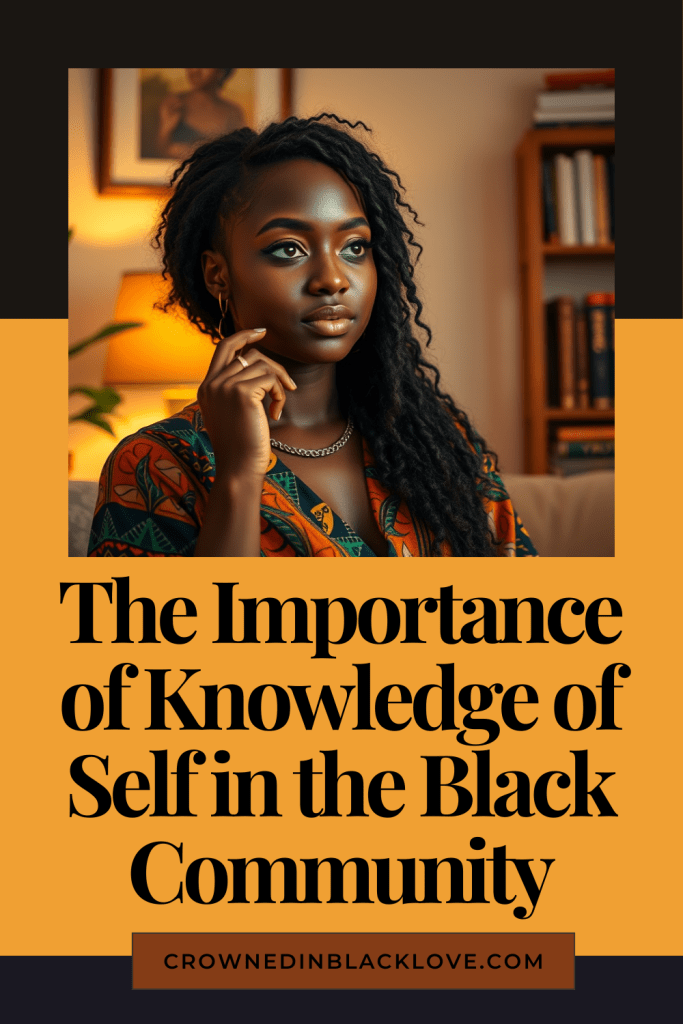
The Importance of Knowledge of Self in the Black Community

Have you ever stopped to think about how important it is to really know yourself? To understand your history, your identity, and your worth? Knowledge of self isn’t just about learning facts—it’s about connecting to who you truly are, where you come from, and what you can contribute to the world. For the Black community, this understanding is crucial. It strengthens our communities, empowers our families, and helps us break barriers.

In this blog, we’ll explore why knowledge of self is so important for the Black community and how embracing it can lead to lasting change.

1. Connecting to Our Roots:

One of the most powerful aspects of knowledge of self is understanding your history. For many Black people, our history was hidden or erased for a long time, but learning about our ancestors and their contributions to the world gives us a sense of pride and belonging. Knowing our roots allows us to honor the struggles and triumphs of those who came before us, giving us the strength to continue their legacies.

When you know where you come from, it helps you build a sense of pride in who you are and where you’re going. Whether it’s learning about the civil rights movement, the Harlem Renaissance, or the countless Black leaders, artists, and innovators throughout history, that knowledge helps us understand our value and the importance of our presence in society.

2. Building Stronger Communities:

Knowledge of self isn’t just a personal journey—it’s a communal one. When we, as individuals, understand our own worth and identity, we can work together more effectively to uplift our communities. For the Black community, this means creating environments where we support each other, encourage personal growth, and fight for equality and justice.

By teaching younger generations about their heritage, we pass down wisdom and values that create a stronger sense of unity and pride. Families, schools, and community groups play an essential role in this process. Encouraging open dialogue about Black history, culture, and identity helps everyone in the community feel seen, heard, and understood.

3. Empowering the Next Generation:

One of the most important reasons for embracing knowledge of self is its impact on future generations. When children and young adults are taught to value themselves and their culture, they grow up with a deeper sense of self-worth. They’re better equipped to face challenges, pursue their dreams, and advocate for what’s right.

Empowered individuals can break the cycles of discrimination and systemic inequality. Children who grow up knowing the stories of their ancestors—who fought for freedom, equality, and opportunity—will be inspired to keep pushing forward. This empowerment isn’t just about academic success, it’s about mental and emotional resilience, and it’s about fostering a sense of pride and belonging that is foundational to success in all areas of life.

4. Overcoming Stereotypes and Challenges:

Black people often face stereotypes and discrimination that can make it difficult to succeed. However, when you have knowledge of self, you can challenge these negative images and rise above the obstacles that society may place in your path. Knowing your worth allows you to reject stereotypes and be unapologetically yourself, even when the world may try to make you feel otherwise.

Understanding that you are more than the labels others place on you helps you embrace your unique identity. This mental shift allows you to stay focused on your goals and pursue your passions with confidence, knowing that your success is not limited by other people’s expectations.

5. Mental Health and Self-Care:

A strong sense of self also plays an important role in mental health. When we understand who we are and what we stand for, we develop a deeper sense of peace and self-acceptance. In the Black community, mental health is often a topic that has been ignored or misunderstood, but having knowledge of self can help shift this narrative.

Taking time to connect with your roots, acknowledging your worth, and practicing self-care can improve mental health, foster emotional stability, and create resilience. By prioritizing knowledge of self, we’re laying the foundation for healthier, stronger individuals and families.

6. Reclaiming Our Power:

At the core of knowledge of self is the idea of empowerment. When you know who you are and understand your history, you’re in a better position to claim your power. For Black communities, this means not only recognizing the hardships faced in the past but also understanding the immense strength and potential we possess.

From the resilience shown during slavery to the brilliance of Black innovators today, the history of Black people is full of strength, intelligence, and hope. Embracing this knowledge allows us to step into our power, as individuals and as a collective force for change. We no longer wait for others to define us—we create our own narrative.

Conclusion:

Knowledge of self is a tool for empowerment, unity, and personal growth. For the Black community, understanding who we are and where we come from creates a foundation for success, strength, and resilience. When we embrace our history, our identity, and our worth, we become a stronger, more connected community capable of overcoming challenges and making lasting change.

The more we learn about ourselves, the more we empower the next generation to do the same. And together, we can continue to build a future where our culture, history, and voices are celebrated and valued. Knowledge of self is not just a personal journey—it’s a journey that impacts all of us.

Knowledge of self is key to building a stronger Black community. Understanding our roots, culture, and identity empowers us all to create positive change. Let’s pass this wisdom on! #BlackCommunity #Empowerment #KnowledgeOfSelf