
How to Start a Blog for the Black Community: Empower, Share, and Connect

In today’s digital age, blogs have become one of the most influential ways to share stories, spread ideas, and connect with a wider audience. For Black individuals, starting a blog is not just about creating content; it’s about amplifying voices, celebrating culture, and fostering a space of empowerment and education. Whether you’re passionate about Black history, arts, culture, cooking, or community issues, blogging allows you to connect with like-minded individuals and make an impact.

If you’re ready to get started, here’s a step-by-step guide on how to create a blog that speaks to the Black community, uplifts others, and shares valuable content that resonates.

1. Define Your Purpose and Niche

The first step to starting a blog is understanding why you want to write and what message you want to share with your readers. Identifying your purpose will help guide the content you create and how you connect with your audience. The Black community is diverse, and your blog can touch on various topics that impact the community.

  • Ask yourself: What do I want my blog to achieve? Do I want to uplift, educate, entertain, or inspire?
  • Identify a niche: Your blog could focus on a specific area such as Black history, social justice, lifestyle, arts, business, mental health, or community empowerment. Defining your niche will help you stand out and attract a dedicated audience.
  • Example ideas for Black-focused blogs: A blog about Black entrepreneurship, a space for discussing mental health in the Black community, or a blog showcasing Black artists and creatives.

2. Choose a Blogging Platform

Next, you’ll need to choose the platform that works best for your blog. Here are some popular platforms to consider:

  • WordPress: One of the most customizable platforms that allow for easy blogging. It’s great for bloggers looking to grow their platform over time.
  • Wix: An easy-to-use drag-and-drop website builder. It’s great for beginners who want to quickly set up a blog with a beautiful design.
  • Blogger: A free and straightforward blogging platform, ideal for beginners who just want to write and publish content.
  • Medium: A platform that’s easy to start on and already has a built-in audience, perfect for those who want to write and engage with a larger community.

3. Create Compelling and Authentic Content

The heart of any successful blog lies in its content. To create meaningful and impactful posts, you need to be both authentic and consistent with your writing.

  • Be yourself: Share your personal experiences, opinions, and stories. Authenticity helps build trust with your audience.
  • Be consistent: Create a content schedule and try to post regularly. Whether it’s weekly, bi-weekly, or monthly, consistency helps keep readers engaged.
  • Write about what matters: Focus on topics that are important to you and the Black community. Whether it’s cultural celebrations, discussing historical figures, or spotlighting Black excellence, your blog should offer something valuable and unique.
  • Incorporate diverse voices: Feature guest writers, interviews, and spotlight different individuals from the community. Diversity in your content will resonate with a wider audience.

4. Engage and Build a Community

A blog isn’t just about sharing content; it’s about creating a space for engagement and dialogue. Building a community around your blog will help it grow and allow for meaningful connections.

  • Encourage comments: Ask your readers to share their thoughts, experiences, and feedback in the comments section. This creates a conversation around your posts.
  • Use social media: Share your blog posts on social platforms like Instagram, Twitter, and Facebook to reach a larger audience and interact with your readers.
  • Collaborate: Reach out to other bloggers or influencers within the Black community. Collaborations allow you to expand your reach and share ideas that benefit both audiences.

5. Promote and Market Your Blog

Now that you have content, you’ll want to promote it to reach a larger audience. Here are some ways to market your blog:

  • SEO (Search Engine Optimization): Optimize your blog posts for search engines by using relevant keywords. This will make it easier for people to find your content when they search for topics related to the Black community.
  • Social Media: Use Instagram, Twitter, and Facebook to share your posts, engage with followers, and build your online presence. Consider using hashtags like #BlackBloggers, #BlackCreatives, or #BlackExcellence to increase visibility.
  • Email List: Start an email newsletter so that your readers can receive updates whenever you post something new. This allows you to stay connected with your audience directly.
  • Networking: Engage with other bloggers and influencers in your niche. Share each other’s content, guest post on each other’s blogs, and collaborate on projects that benefit the community.

6. Monetize Your Blog (When You’re Ready)

Once your blog has gained traction and you’ve built an audience, you may want to consider monetizing it. While monetization isn’t the focus in the early stages, it can help you sustain and grow your blog over time.

  • Affiliate marketing: Partner with brands that align with your values and promote their products to your audience in exchange for a commission on sales.
  • Sponsored posts: Companies may approach you to write blog posts about their products or services in exchange for payment.
  • Selling your own products: If you have a talent for design, consider selling Black-themed merchandise or ebooks that promote your blog’s message.
  • Donations: Set up a donation button or join platforms like Patreon to receive support from your audience in exchange for exclusive content.

7. Stay Inspired and Keep Learning

Blogging is a long-term commitment, so it’s important to stay inspired and keep learning about new trends, writing techniques, and topics that resonate with the Black community. Join online blogging communities, read other blogs, and attend events or webinars to stay motivated and continue growing as a content creator.

Conclusion: Create a Legacy of Empowerment

Starting a blog for the Black community is a powerful way to share your voice, educate others, and connect with people who care about the same issues. With authenticity, consistency, and a strong mission, you can create a platform that impacts lives and amplifies Black voices. Your blog has the potential to create lasting change and inspire future generations to make their mark in the digital world.

Ready to share your voice and empower the Black community? Here’s your step-by-step guide on starting a blog to connect, educate, and uplift. Your platform for change starts now! #BlackBloggers #ContentCreation #BlackVoices

The Power of Consistency: Why It’s Crucial in Raising Black Children

Raising children comes with its fair share of challenges, but there is one key element that can make all the difference: consistency. As parents, it’s easy to get caught up in the hustle and bustle of daily life, but maintaining consistency in parenting can have a profound impact on your child’s emotional well-being and overall growth. This is especially true when raising Black children, who face unique challenges and pressures due to systemic racism and societal stereotypes.

Consistency in parenting—whether it’s in discipline, love, or emotional support—helps children feel secure, loved, and understood. In a world that can sometimes be unpredictable or even unfair, consistency offers Black children the stability they need to thrive. In this blog, we’ll explore why consistency is so important when raising Black children and how it builds resilience, confidence, and a strong sense of identity.

Consistency Builds Emotional Security:

Children, regardless of race, thrive in environments where they feel safe and secure. Consistency in the home creates a predictable atmosphere that helps children understand what to expect and how to behave. When parents set clear boundaries, expectations, and routines, children feel emotionally safe because they know what is expected of them. This sense of security is vital in building their emotional resilience and confidence.

For Black children, emotional security is even more important. As they navigate the world, they may encounter racism, bias, or negative stereotypes that challenge their sense of self. When parents provide a consistent, loving environment at home, children have a safe space to process these challenges and learn how to deal with them in healthy ways. Consistent parenting teaches them that, no matter what the world may throw their way, their home is a place of unconditional love and support.

Creating Stability Through Routine:

Consistency is also about routine. Children—especially young children—thrive on routine because it gives them a sense of control and predictability. Whether it’s regular meal times, bedtimes, or designated family time, routines help children feel secure and reduce anxiety.

For Black children, routines also help combat some of the unpredictability and instability they may face due to external factors, like negative stereotypes or systemic obstacles. Knowing that there is consistency in the home—where love and structure are always present—helps children feel grounded and confident in their daily lives. This stability provides a foundation that they can rely on, regardless of the challenges outside their home.

Consistency in Discipline:

Discipline is an important aspect of parenting, and consistency is key to ensuring children understand the difference between right and wrong. When parents consistently enforce rules and consequences, children learn responsibility, respect, and accountability.

For Black children, consistency in discipline can be particularly empowering. In a society that sometimes unfairly stereotypes Black children as being unruly or disrespectful, it’s essential for parents to instill respect, accountability, and self-control. Consistent discipline teaches Black children that they are capable of making good choices and that their actions have consequences, both positive and negative.

Moreover, consistent discipline helps build a sense of justice and fairness in children. They learn that rules apply to everyone, and this understanding can help them navigate their interactions with the world outside the home. Parents who model fairness and consistency teach their children to advocate for themselves and stand up for what is right, which is an important lesson in the face of societal challenges.

Fostering Resilience Through Consistency:

Raising Black children often involves preparing them for a world that can be unfair and even discriminatory. The key to helping children navigate these challenges is fostering resilience, and consistency plays a crucial role in that process.

When parents are consistent in offering support, encouragement, and love, children build the emotional tools they need to bounce back from adversity. Consistency in showing up for your child, regardless of the ups and downs, teaches them that they are capable of handling challenges. They know that, no matter what happens, their parents will be there to help them work through it.

This sense of resilience is especially important for Black children, who may encounter racism or prejudice in many areas of life. Consistent emotional support helps them understand that they are strong and valuable, and that they can rise above negativity. The consistency with which parents provide love and guidance is what helps Black children develop the inner strength needed to confront adversity head-on.

Building Confidence Through Consistent Praise:

Consistency in praise is just as important as consistency in discipline. When parents consistently recognize and celebrate their children’s achievements, they build confidence and self-esteem. Black children who receive consistent positive reinforcement learn to appreciate their abilities and value their unique qualities.

For Black children, consistent praise also encourages them to embrace their identity. By regularly affirming their worth, their culture, and their potential, parents help children develop a strong sense of pride in who they are. Consistency in acknowledging their efforts—whether big or small—helps build a resilient, confident child who believes in their own abilities.

In Closing:

Raising Black children requires patience, love, and—above all—consistency. Consistent parenting builds emotional security, strengthens resilience, and fosters a deep sense of self-worth and pride. In a world that often challenges Black children’s identity and place in society, the consistent love and guidance from parents provide a crucial foundation for their growth and success.

When parents remain consistent in their actions—whether in discipline, praise, or emotional support—they equip their children with the tools they need to face life’s challenges with confidence. Consistency offers Black children the stability and security they need to thrive, building the foundation for a future filled with possibility, pride, and self-love.

Consistency in parenting builds confidence, resilience, and emotional security in Black children. Learn why it’s essential for their growth and success. #Parenting #BlackChildren #Consistency #FamilyStrength

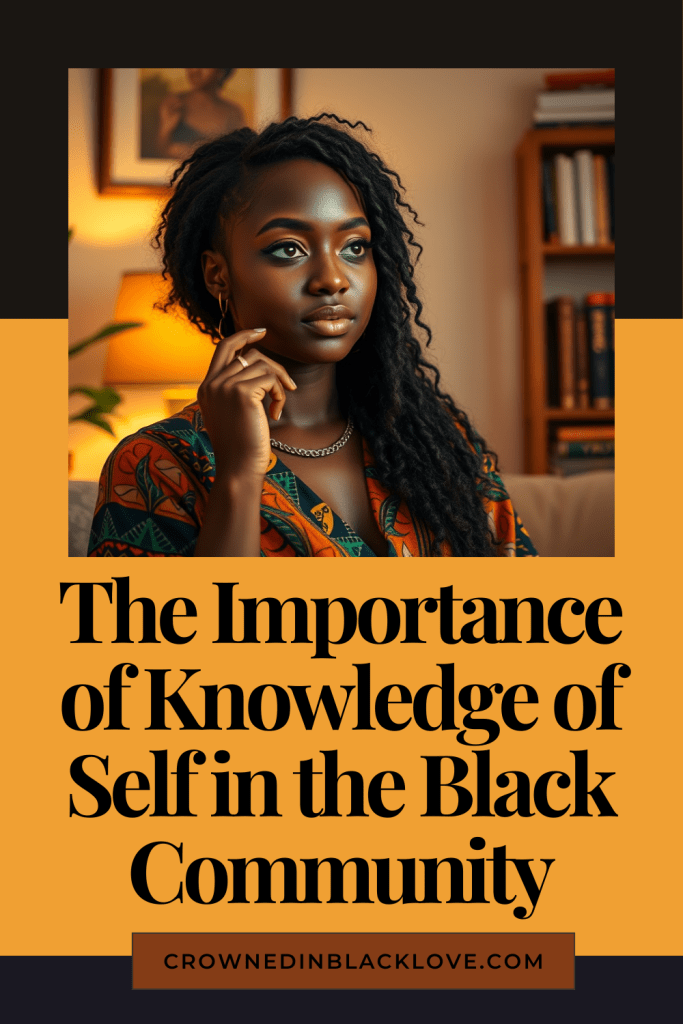
The Importance of Knowledge of Self in the Black Community

Have you ever stopped to think about how important it is to really know yourself? To understand your history, your identity, and your worth? Knowledge of self isn’t just about learning facts—it’s about connecting to who you truly are, where you come from, and what you can contribute to the world. For the Black community, this understanding is crucial. It strengthens our communities, empowers our families, and helps us break barriers.

In this blog, we’ll explore why knowledge of self is so important for the Black community and how embracing it can lead to lasting change.

1. Connecting to Our Roots:

One of the most powerful aspects of knowledge of self is understanding your history. For many Black people, our history was hidden or erased for a long time, but learning about our ancestors and their contributions to the world gives us a sense of pride and belonging. Knowing our roots allows us to honor the struggles and triumphs of those who came before us, giving us the strength to continue their legacies.

When you know where you come from, it helps you build a sense of pride in who you are and where you’re going. Whether it’s learning about the civil rights movement, the Harlem Renaissance, or the countless Black leaders, artists, and innovators throughout history, that knowledge helps us understand our value and the importance of our presence in society.

2. Building Stronger Communities:

Knowledge of self isn’t just a personal journey—it’s a communal one. When we, as individuals, understand our own worth and identity, we can work together more effectively to uplift our communities. For the Black community, this means creating environments where we support each other, encourage personal growth, and fight for equality and justice.

By teaching younger generations about their heritage, we pass down wisdom and values that create a stronger sense of unity and pride. Families, schools, and community groups play an essential role in this process. Encouraging open dialogue about Black history, culture, and identity helps everyone in the community feel seen, heard, and understood.

3. Empowering the Next Generation:

One of the most important reasons for embracing knowledge of self is its impact on future generations. When children and young adults are taught to value themselves and their culture, they grow up with a deeper sense of self-worth. They’re better equipped to face challenges, pursue their dreams, and advocate for what’s right.

Empowered individuals can break the cycles of discrimination and systemic inequality. Children who grow up knowing the stories of their ancestors—who fought for freedom, equality, and opportunity—will be inspired to keep pushing forward. This empowerment isn’t just about academic success, it’s about mental and emotional resilience, and it’s about fostering a sense of pride and belonging that is foundational to success in all areas of life.

4. Overcoming Stereotypes and Challenges:

Black people often face stereotypes and discrimination that can make it difficult to succeed. However, when you have knowledge of self, you can challenge these negative images and rise above the obstacles that society may place in your path. Knowing your worth allows you to reject stereotypes and be unapologetically yourself, even when the world may try to make you feel otherwise.

Understanding that you are more than the labels others place on you helps you embrace your unique identity. This mental shift allows you to stay focused on your goals and pursue your passions with confidence, knowing that your success is not limited by other people’s expectations.

5. Mental Health and Self-Care:

A strong sense of self also plays an important role in mental health. When we understand who we are and what we stand for, we develop a deeper sense of peace and self-acceptance. In the Black community, mental health is often a topic that has been ignored or misunderstood, but having knowledge of self can help shift this narrative.

Taking time to connect with your roots, acknowledging your worth, and practicing self-care can improve mental health, foster emotional stability, and create resilience. By prioritizing knowledge of self, we’re laying the foundation for healthier, stronger individuals and families.

6. Reclaiming Our Power:

At the core of knowledge of self is the idea of empowerment. When you know who you are and understand your history, you’re in a better position to claim your power. For Black communities, this means not only recognizing the hardships faced in the past but also understanding the immense strength and potential we possess.

From the resilience shown during slavery to the brilliance of Black innovators today, the history of Black people is full of strength, intelligence, and hope. Embracing this knowledge allows us to step into our power, as individuals and as a collective force for change. We no longer wait for others to define us—we create our own narrative.

Conclusion:

Knowledge of self is a tool for empowerment, unity, and personal growth. For the Black community, understanding who we are and where we come from creates a foundation for success, strength, and resilience. When we embrace our history, our identity, and our worth, we become a stronger, more connected community capable of overcoming challenges and making lasting change.

The more we learn about ourselves, the more we empower the next generation to do the same. And together, we can continue to build a future where our culture, history, and voices are celebrated and valued. Knowledge of self is not just a personal journey—it’s a journey that impacts all of us.

Knowledge of self is key to building a stronger Black community. Understanding our roots, culture, and identity empowers us all to create positive change. Let’s pass this wisdom on! #BlackCommunity #Empowerment #KnowledgeOfSelf

How Redlining Affected and Continues to Impact Black Communities

In the early 20th century, a practice known as redlining became a systematic tool of racial segregation and inequality in the United States. Though it’s been outlawed for decades, the effects of redlining are still felt by Black communities today. Redlining was a government-backed policy that denied Black families access to mortgages and homeownership in certain neighborhoods, based on their race. This practice not only trapped Black people in poverty but also created barriers to wealth-building, education, and community development that continue to impact Black families across generations.

In this blog post, we’ll dive into the history of redlining, how it shaped the landscape of racial inequality in housing, and why its legacy continues to affect Black communities in significant ways.

1. What Was Redlining?

Redlining refers to a discriminatory practice that started in the 1930s, where the federal government and private banks systematically denied mortgages to Black families and other communities of color. This was done by marking certain neighborhoods on maps with red ink, which indicated that these areas were “too risky” for investment. The reasoning behind this “risk” was often tied to the racial makeup of the neighborhood rather than actual economic factors.

The Home Owners’ Loan Corporation (HOLC), a federal agency, was responsible for creating these redlined maps, which were then used by banks to decide whether to approve home loans. Neighborhoods predominantly inhabited by Black families or other people of color were often marked as “hazardous,” making it nearly impossible for residents to purchase homes or secure loans for home improvements.

In short, redlining kept Black families from owning homes in areas with higher property values, greater access to quality schools, and better employment opportunities.

2. The Effects of Redlining on Black Communities

The long-term effects of redlining have been profound and continue to affect Black communities today. Here’s how this practice shaped the experiences of Black families:

  • Denial of Homeownership: Homeownership has long been a key way for Americans to build wealth. For Black families, however, redlining blocked access to homeownership in desirable neighborhoods, locking them out of the chance to build equity. As a result, Black families were often forced to rent in areas with lower property values, which limited their ability to accumulate generational wealth.
  • Disinvestment in Neighborhoods: Because redlined areas were deemed “unfit” for investment, many of these neighborhoods were systematically neglected by both government and private institutions. This led to a lack of infrastructure, poor schools, and underfunded community services. Without access to resources or investment, neighborhoods that were predominantly Black faced economic stagnation.
  • Education and Employment Barriers: Redlining not only kept Black families from owning homes in better neighborhoods but also contributed to a cycle of poverty. Schools in redlined neighborhoods were often underfunded, which resulted in a lower quality of education. This lack of access to quality education made it more difficult for Black children to access higher education and better job opportunities, further entrenching the cycle of inequality.
  • Health and Safety Impacts: Redlined neighborhoods often lacked investment in health services, public parks, and other amenities that contribute to overall well-being. These areas were also more likely to be located near industrial zones, exposing residents to pollution and health hazards. As a result, Black communities living in these areas faced higher rates of chronic illnesses, mental health challenges, and lower life expectancy.

3. How Redlining Continues to Affect Black Communities Today

The effects of redlining did not disappear with the official end of the practice in the 1960s. In fact, its legacy still shapes housing patterns and wealth distribution today.

  • Wealth Inequality: Homeownership remains one of the primary ways that American families build wealth. Because redlining denied Black families the opportunity to purchase homes in areas that appreciated in value, many Black families were never able to build the wealth that could have been passed down through generations. Today, Black Americans have less wealth on average than white Americans, with a significant portion of that wealth gap stemming from the lack of homeownership opportunities.
  • Segregation of Communities: Though redlining ended decades ago, the legacy of segregated housing patterns remains. Many predominantly Black neighborhoods continue to face high levels of poverty and limited access to quality education and healthcare. Redlined areas are often still underfunded, and neighborhoods remain segregated by race and income. As a result, Black communities still face barriers to upward mobility.
  • Access to Loans and Mortgages: Discriminatory practices similar to redlining still exist today. Black families often face greater challenges when applying for loans or mortgages, even in areas where redlining maps no longer exist. Studies show that Black applicants are more likely to be denied home loans and are often charged higher interest rates than white applicants, even when they have similar credit scores.
  • Neighborhood Disinvestment: The lack of investment in historically redlined neighborhoods has left many Black communities struggling to catch up. Even in cities where gentrification is happening in other parts of town, many redlined neighborhoods remain economically depressed. The disinvestment that started with redlining has created long-lasting effects on local businesses, public services, and housing stock, making it difficult for these communities to thrive.

4. What Can Be Done to Address the Legacy of Redlining?

While the practice of redlining is illegal today, the impact it has had on Black communities is still felt. To truly combat the legacy of redlining, several actions must be taken:

  • Affordable Housing Policies: Policies that promote affordable housing, such as increasing funding for housing subsidies or incentivizing the construction of affordable homes in underfunded areas, can help provide access to homeownership for Black families.
  • Investment in Redlined Neighborhoods: Revitalizing historically redlined neighborhoods through targeted investment in infrastructure, schools, healthcare, and businesses is critical. By reinvesting in these communities, we can help break the cycle of disinvestment and provide opportunities for growth and development.
  • Addressing Discriminatory Lending Practices: To combat the lingering effects of discriminatory lending, we must enforce anti-discrimination laws that ensure Black families have equal access to mortgages and loans. Support for policies like the Fair Housing Act and Community Reinvestment Act can help reduce modern-day discrimination in the housing market.
  • Education and Workforce Development: Investing in education and workforce development programs in historically marginalized communities can help create economic opportunities for Black families. By providing access to quality education and job training, we can help lift entire communities out of poverty.
  • Legal and Policy Advocacy: Continued advocacy from civil rights organizations and lawmakers is essential to hold institutions accountable for discriminatory practices and push for policies that address the legacy of redlining.

Conclusion: The Fight for Housing Equality Continues

Redlining was a deliberate attempt to deny Black families access to homeownership and the opportunities that come with it. Though the practice is no longer legal, its legacy continues to affect Black communities, contributing to wealth inequality, segregation, and lack of opportunity. Understanding the impact of redlining is essential in addressing the persistent racial disparities that still exist today.

To make meaningful progress, we must advocate for policies that promote housing equality, investment in disenfranchised communities, and an end to discriminatory lending practices. Only by confronting the history and legacy of redlining can we begin to build a more equitable future for Black families and communities.

Redlining may have ended decades ago, but its legacy continues to impact Black communities today—limiting wealth, opportunities, and equality. Learn why addressing redlining’s impact is crucial for justice. #HousingEquality #BlackCommunities

The Heart of the Family: How a Loving Black Marriage Impacts Children’s Futures

When we think about what makes a child feel safe, loved, and secure, a strong, loving home environment comes to mind. But what truly builds that environment? While the love of both parents is important, the dynamic between them—especially in a loving Black marriage—has a profound impact on the emotional growth and development of their children. In Black families, where there can be extra challenges due to systemic issues, the strength of the parents’ relationship becomes even more essential in shaping children’s future success and self-esteem.

In this post, we will explore why a loving Black marriage isn’t just important for the couple, but for their children too. It’s about setting an example, teaching respect, and offering an emotional foundation that will stay with children for the rest of their lives.

The Impact on Children’s Emotional Well-Being:

Children are highly influenced by their home environment, and a loving marriage between their parents provides them with an emotional safe space. In households where parents have a strong bond, children feel loved and supported, which helps them develop emotional stability. Research shows that children raised in homes with involved parents who have a strong relationship tend to be more confident and emotionally resilient (American Psychological Association, 2020).

In a loving Black marriage, children grow up knowing that love, respect, and communication are the cornerstones of any relationship. For Black children, seeing their parents navigate life with a sense of partnership and support is a vital lesson in creating their own positive relationships as they grow older.

This emotional security is especially critical in Black communities, where external pressures like racism can affect children’s confidence. A healthy, loving marriage can act as a strong buffer against these pressures, providing children with a sense of belonging and pride in their identity.

The Role of Modeling Healthy Relationships:

Parents serve as the first role models in a child’s life, and their relationship with each other can have a profound influence on how children perceive love and relationships. In a loving Black marriage, children witness firsthand how to communicate effectively, resolve conflicts with respect, and show affection. These are lessons that go far beyond what children learn in school.

For Black boys, a loving marriage demonstrates how to treat women with respect and equality. For Black girls, it shows them what a healthy, loving relationship looks like, and what they should expect in their own partnerships as they grow older. When parents model these behaviors, they set the stage for children to develop their own positive relationships throughout their lives.

In a world where many children experience unhealthy or broken relationships, having the example of a loving marriage offers hope and teaches them what is possible. The beauty of a loving Black marriage is that it shows children how strong and empowering love can be, even when facing challenges outside the home.

Building Confidence and Self-Esteem:

One of the most powerful ways that a loving Black marriage impacts children is by boosting their self-esteem. Children who grow up in households where both parents are actively involved and share a loving bond are more likely to feel secure in their identities. They learn that they are worthy of love, respect, and care, which translates into higher levels of self-worth.

For Black children, this is especially important. In a society where Black children may face negative stereotypes or discrimination, having two parents who love each other and are involved in their lives can create a solid foundation for pride in their Black identity. The strength of the parents’ relationship provides children with a model of how to love themselves, how to take pride in their culture, and how to stand up against negative influences.

This boost in self-esteem leads to better outcomes in other areas of life, including school performance, friendships, and personal growth. When children feel supported and loved, they are more likely to pursue their goals, take risks, and believe in their ability to succeed.

The Long-Term Impact on Future Relationships and Success:

The lessons learned from a loving Black marriage go beyond childhood. As children grow into adults, they carry these lessons with them into their own relationships and careers. Children who witness love, respect, and communication in their parents’ marriage are more likely to have healthy romantic relationships themselves.

Research shows that children of strong marriages are more likely to have better social skills, fewer behavioral problems, and higher academic achievement (National Fatherhood Initiative, 2020). The positive influence of a loving Black marriage ripples out into the community as children grow into compassionate, responsible, and confident adults.

Moreover, children who grow up in stable homes with loving relationships are also more likely to contribute positively to society. They understand the value of collaboration, mutual support, and respect—key qualities that help create strong communities.

Conclusion:

The impact of a loving Black marriage on children is immeasurable. By offering a foundation of emotional security, teaching respect, and fostering self-esteem, a strong partnership between Black parents helps raise confident, resilient children who are prepared to face life’s challenges. A loving Black marriage provides not only a model for how to love, communicate, and respect but also a sense of pride and identity that stays with children throughout their lives.

In a world that often tries to undermine the Black family, it’s important to remember that love is the glue that holds it all together. Strong, loving Black marriages give children the tools they need to grow into successful, happy, and empowered adults, continuing the cycle of love and strength for generations to come.

A loving Black marriage shapes the future of children, building confidence, respect, and a sense of identity. Learn how strong partnerships in the home create empowered kids ready to succeed. #BlackMarriage #FamilyStrength #Parenting [link]